Technical Knowledge
How to treat floor amour joints with epoxy flooring
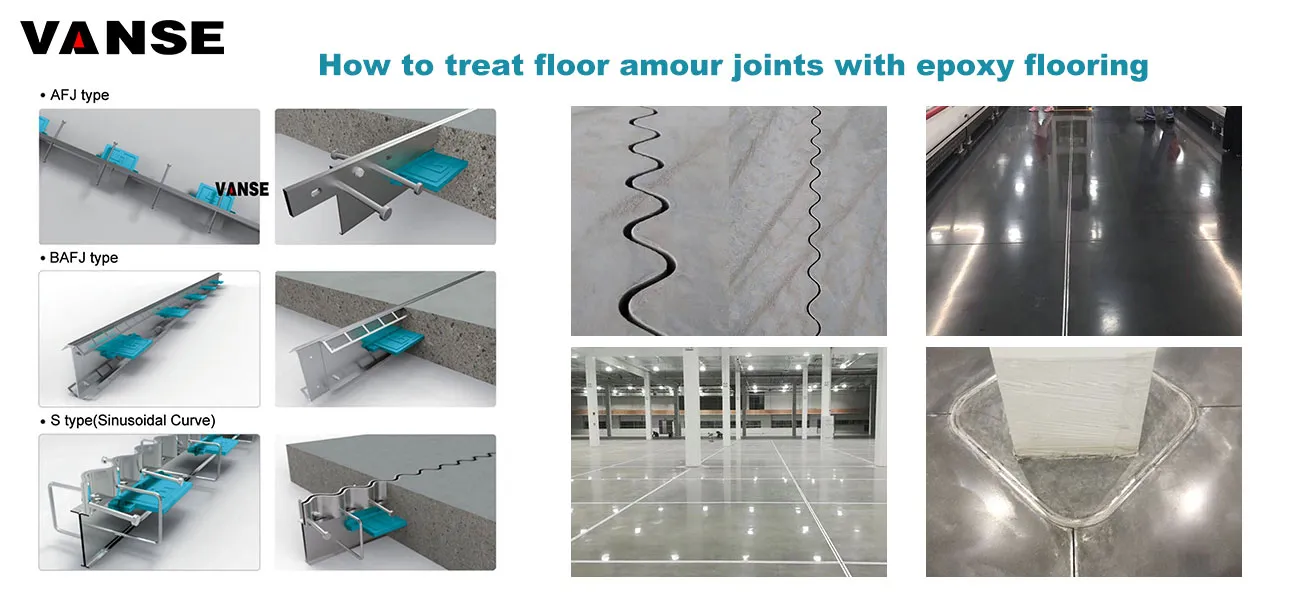
We all know that the finished effect of epoxy flooring is seamless. Therefore, when constructing epoxy flooring, it is necessary to deal with some expansion joints on the concrete floor. No matter how good the quality of the materials used to construct the epoxy floor coating is, after one year, it will experience thermal expansion and contraction. If the original concrete floor cracks, the epoxy floor layer attached to the upper layer will also crack. Therefore, it is even more necessary to handle the expansion joints properly. To avoid project quality disputes. Because we often decorate large areas of workshop floors, our company has accumulated a lot of construction experience, so we also have some methods on how to deal with expansion joints. Today we list these construction plans for your reference.
1. Fill the expansion joints with epoxy resin mortar material, and then carry out construction according to the original plan we designed for the customer. However, this method cannot guarantee that the floor coating at or near the expansion joint will not crack and peel. Because the epoxy mortar material is inelastic and cannot resist the stress when concrete shrinks and cracks, cracking on the ground cannot be avoided in the end.
2. After the epoxy floor is completed, use a cutting machine to cut a 2-5mm wide expansion joint at the original expansion joint position, then clean up the debris in the joint, and then use an elastic material (such as polyurethane elastic glue) to seal the expansion joint. The seams are filled. During this process, care should be taken to avoid contamination of the outside of the seams with glue. Finally apply the epoxy midcoat and topcoat. The filling of elastic glue needs to be to a certain depth, otherwise the elastic glue may not be firmly attached to the concrete and may detach. Compared with the first method, the second treatment method is that because the elastic glue disperses the stress caused by the shrinkage of the concrete, the possibility of cracking of the coating on the expansion joints is greatly reduced. The overall color of the ground is consistent, but due to the coating on the elastic glue It is still rigid. When the concrete shrinks more severely, the floor coating (middle coat and topcoat) on the elastic glue may crack, but the cracks will not be large.
3.
When constructing the floor, try to keep the expansion joints first, cover them immediately, and record the location.
Then after the floor painting is completed, cut the expansion joints neatly and make sure the width is above 5mm. It is best to modify them. Make it into a trapezoid shape with a wide top and narrow bottom, then clean the dust and debris in the seam, stick tape on both sides of the seam, use polyurethane elastic glue to fill the gap until it is straight, and remove the tape when the elastic glue is half dry. The third method is often used in electronics factories and pharmaceutical factories that have high requirements for cleanliness and aesthetics. It can basically avoid the cracking of the floor coating at the expansion joints and make the floor more beautiful. Disadvantages of this method: Because the polyurethane elastic material has relatively few colors, it is difficult to achieve the same color as the overall floor coating.
4.
Local expansion joints on the ground are often paved with fiberglass cloth to enhance crack resistance.
The construction method is: first fill the expansion joints flat with epoxy clay pot slurry material, then apply primer material, and then paste it. Apply 1-2 layers of glass fiber cloth with a width of about 10mm, and then roll-coat the middle coating material, top coating, etc.
This method can not only ensure that the overall color of the ground is consistent, but also resist cracking caused by concrete shrinkage. However, if the design thickness of the floor coating is too thin, it is difficult to operate, and the ground where the application is applied is prone to be higher than other places. Therefore, at least epoxy floors above 2MM will adopt this solution.
Note: The parameters provided in this document are for reference only and are not mandatory. Due to differences in technical characteristics between different brands and models of laser levelers, please consult the manufacturer for a suitable solution before actual operation. This reference document assumes no responsibility for any issues arising from failure to follow the manufacturer's instructions.
Thanks to All the Friends Who Support and Trust Shandong Vanse Machinery Technology Co., Ltd.
If you want to know more about Shandong Vanse Machinery Technology Co., Ltd. or have any questions, please feel free to contact us:
Our Factory
Shandong Vanse Machinery Technology Co., Ltd.








Share this article

About the Author: Shandong Vanse Machinery Technology Co., Ltd.
Shandong Vanse Machinery Technology Co., Ltd. is a high-tech manufacturer specializing in concrete construction machinery, including laser screeds and related equipment. The company integrates R&D, production, and global sales, with products exported to over 60 countries and widely used in infrastructure projects worldwide.
Previous Post
Next Post
Related Articles
You Might Also Like
Failures of laser leveling machines are inevitable after long-term use
Early treatment to ensure safety: The application of laser leveling machines has been very extensive. It can be said that leveling machines are required in all places where floor construction is required, because the effect of using leveling machines for floor construction is great. Very good, the ground is compacted flat and dense, that's why so many people like to use laser leveling machines for work. Of course, some faults will also occur during the work of the leveling machine. Let's learn about the following two common faults. ★★Hydraulic oil overheating: If the oil temperature of the hydraulic system of the laser leveling machine is too high, the viscosity of the oil will decrease, the amount of leakage will increase, the oil film on the lubricated parts will be destroyed, and the wear of the components will increase; at the same time, high temperature will also cause rubber and other materials to The resulting gasket is damaged due to premature aging. Therefore, it is very important to control the appropriate oil temperature. When the oil temperature is too high, the laser leveling machine must be shut down for inspection. ▲Generally, we can start from the following aspects: 1. Check whether the liquid level in the fuel tank is too low. Experience shows that high oil temperature is often caused by a lack of oil in the fuel tank, so it should be replenished in time when there is a lack of oil. 2. Whether the hydraulic oil filter element and circuit are blocked. 3. Is the radiator of the laser leveling machine normal? If a large amount of dust adheres to the radiator, it can lead to poor heat dissipation and increase the oil temperature. Since the working environment of the laser leveling machine is dusty, the radiator should be cleaned in time. 4. Whether the quality of hydraulic oil is qualified. If the quality of the added oil is not up to standard, it will also cause the system oil temperature to be too high. In addition, when the hydraulic system works when there is a lack of oil, it is easy to cause damage to the pump and motor. Therefore, after troubleshooting the oil shortage, you must also check the operating status of the pump and motor, and replace damaged parts of the pump and motor if necessary. ★★The spiral distributor does not work: Sometimes the left and right distributors of the laser leveling machine do not work. The reason is usually that the oil supply system is faulty. The reasons for low pressure in the oil charge system include: poor oil inlet passage of the oil charge pump; low pressure in the relief valve of the oil charge pump; failure of the oil charge pump itself; and serious leakage of the hydraulic motor. Generally, you should focus on checking the charge pump and its relief valve. Hydraulic oil should be filled in a clean container before being added to the hydraulic oil tank. The hydraulic oil must be filtered by an oil filter before being added to the hydraulic oil tank; the replacement cycle of the hydraulic oil depends on the quality of the oil used (generally replaced once every 1000 hours); replacement Hydraulic oil should be used at working temperature; in order to ensure good heat dissipation of the hydraulic system, the hydraulic oil radiator should also be cleaned regularly.Floor slab construction adopts the concrete laser leveling/ leveling technology
With the continuous advancement of construction technology, concrete laser leveling technology has been widely used in floor slab construction due to its high precision and high efficiency. This technology uses a laser control system to achieve precise leveling of the concrete surface, effectively improving the construction quality of floor slabs. This article will discuss in detail the specific application of concrete laser leveling technology in floor slab construction, including its working principle, technical advantages, implementation steps and quality control. •••◆••• How Concrete Laser Leveling Technology Works Concrete laser leveling technology mainly uses the principle of laser ranging, emitting a laser beam through a laser transmitter, and the laser receiver receives the reflected laser signal, thereby achieving high-precision measurement of the concrete surface. During the construction process, the laser leveler automatically adjusts the height and angle of the leveling blade based on the data provided by the laser control system, so that the concrete surface reaches the preset flatness requirements. •••◆••• Advantages of Concrete Laser Leveling Technology ① High precision: Laser leveling technology can achieve millimeter-level precision control to ensure the flatness and parallelism of the floor board surface. ② High efficiency: Compared with traditional manual leveling methods, laser leveling machines can greatly improve construction efficiency and shorten construction periods. ③Save materials: By accurately controlling the thickness and distribution of concrete, you can reduce the waste of concrete and reduce project costs. ④Stable quality: Laser leveling technology can reduce the impact of human factors on construction quality and ensure the stability and consistency of floor slab quality. •••◆••• Implementation steps of concrete laser leveling technology ①Construction preparation: Before construction, the base layer of the floor slab needs to be processed to ensure that the base layer is flat, dry, and free of oil stains. At the same time, prepare laser leveling machines, laser transmitters, laser receivers and other equipment and work bodies. ② Lay out laser transmitters and receivers: Arrange laser transmitters and receivers reasonably according to the size and shape of the floor board. Ensure that the laser beam can cover the entire construction area and the receiver can accurately receive the reflected laser signal. ③Adjust the laser control system: According to the construction requirements, set the parameters of the laser control system, such as flatness, slope, etc. Ensure that the laser leveling machine can perform leveling operations according to preset requirements. ④Concrete laying: Lay the concrete evenly on the floor slab, paying attention to controlling the thickness and distribution of the concrete. During the laying process, adjust the position and height of the laser leveler in time to ensure the leveling effect. ⑤ Leveling operation: Start the laser leveling machine and automatically adjust the height and angle of the leveling blade according to the data provided by the laser control system. During the leveling process, keep the laser leveler moving forward at a constant speed to ensure that the concrete surface is evenly leveled. ⑥ Inspection and adjustment: During the leveling process, the construction area should be inspected regularly to detect and deal with unevenness, waves and other problems in a timely manner. According to the inspection results, adjust the parameters of the laser control system or adjust the operating mode of the laser leveling machine to achieve the best leveling effect. ⑦ Maintenance and protection: After leveling is completed, maintain and protect the concrete surface in time. Avoid damage or contamination of the concrete surface during curing and ensure the quality and service life of the floor slabs. •••◆••• Quality Control Points ① Equipment calibration and maintenance: Ensure that laser leveling machines, laser transmitters, receivers and other equipment are in good working condition, and perform regular calibration and maintenance to ensure the accuracy and reliability of the equipment. ②Construction environment control: During the construction process, pay close attention to changes in the construction environment, such as temperature, humidity, wind speed, etc. Timely adjust construction technology and equipment parameters according to environmental changes to ensure the stability and reliability of leveling operations. ③Operator training: Strengthen the training and education of operators to improve their skill level and sense of responsibility. Ensure that the operators are proficient in the operating skills of laser leveling technology and operate in strict accordance with the construction requirements. ④ Process monitoring and recording: During the leveling process, monitor the construction progress and quality in real time, and make records and analyses. Timely discover and deal with problems that arise during the construction process to ensure the continuity and stability of leveling operations. •••◆••• Conclusion The application of medium-temperature concrete laser leveling technology in floor slab construction has significantly improved construction quality and efficiency and reduced project costs. Through the precise measurement of the laser control system and the automatic adjustment of the leveling machine, high-precision leveling of the warm concrete surface is achieved. During the construction process, attention needs to be paid to quality control points such as equipment calibration and maintenance, construction environment control, operator training, and process monitoring and recording. In the future, with the continuous advancement of technology and the upgrading of equipment, concrete laser leveling technology will play a greater role in floor slab construction and contribute to the sustainable development of the construction industry.How to ensure the safety of concrete laser leveling machine operators?
The key to ensuring the safety of concrete laser leveling machine operators is to build a full-chain protection system of "personnel qualifications + equipment control + environmental investigation + process specifications" to avoid risks such as mechanical injuries, electric shock, and overturning from the source. Operators must undergo specialized training (covering equipment principles, safety procedures, and emergency response) and obtain a Special Operations Operator Certificate (Construction Special Operations Personnel Certificate) before they can begin work. Unlicensed operation or operation of multiple equipment types is strictly prohibited. Before each operation, a specific safety briefing based on the day's construction scenario (such as the size of the work surface, ground slope, and surrounding obstacles) must be conducted. Risk points (such as electrical wires, deep pits, and intersecting personnel) and avoidance measures must be identified, and all personnel must sign and confirm. Inspection Areas Core inspection content Safety Requirements Mechanical System Travel wheel, leveling scraper, hydraulic rod No sticking, no oil leakage, no loosening of fastening bolts, and flexible scraper lift and lowering. Electrical System Power cord, plug, control switch No damaged or exposed wires, ground resistance ≤ 4Ω (to prevent electric shock), and a sensitive emergency stop button. Safety Devices Guardrail, warning light, buzzer Guardrails intact and undeformed, with warning lights/buzzers functioning properly (to alert nearby personnel). Auxiliary Equipment Laser transmitter and receiver Securely fixed and unobstructed to prevent direct laser exposure to the human body (especially eyes). After daily operations, clean concrete debris from the equipment and check the hydraulic and engine oil levels. Weekly check the braking system (for example, brake pad wear) and tire pressure (to prevent tire blowouts and rollovers during operations). Perform a comprehensive monthly inspection and replace aging components (such as worn scrapers and cracked wiring). Clear obstacles (such as rebar, water pipes, and tools) on and around the work surface to prevent the equipment from running over or scratching them. Confirm that temporary electrical wiring (such as vibrator cables) within the work area is overhead or buried. Strictly prohibit equipment from running over electrical wiring. If the work surface has a slope (≥5°), use warning tape to demarcate the danger zone in advance. Prohibit standing behind or to the side of the equipment to prevent it from sliding down the slope. If other workers, such as rebar workers and scaffolders, are working in the same area, a dedicated person should coordinate to ensure that no other personnel remain within 5 meters of the laser leveler while it is operating. If cross-operation is necessary, hard barriers (such as protective barriers) must be set up. Startup: First, inspect the equipment → Start the laser transmitter → Confirm that the receiver signal is normal → Perform a low-speed test run (1 minute); Operation: Maintain a constant speed (≤1.5m/min). Avoid sudden acceleration or sudden turns. If the scraper height needs to be adjusted, the machine must be stopped. Shutdown: First, turn off the laser transmitter → Clean the equipment → Park the machine on a flat, water-free area. Apply the handbrake and place a triangular block to prevent rolling. Operators must wear a hard hat, non-slip safety shoes, and a reflective vest. If the working environment is dusty, a dust mask must be worn. Wearing slippers or shorts while working is strictly prohibited. Using a mobile phone or being distracted while the equipment is operating is strictly prohibited. Clearly define emergency response procedures for accidents such as equipment tipping over, electric shock, and mechanical injuries. For example, in the event of electric shock, first disconnect the power supply (rather than directly pulling the person out); in the event of mechanical injuries, shut down the machine before providing first aid. The work site should be equipped with a first aid kit (including bandages and disinfectant), a fire extinguisher, and insulating gloves. Conduct emergency drills quarterly to ensure operators are familiar with emergency procedures. The essence of safety management for concrete laser screeds is "prevention first." By "training qualified personnel, using intact equipment, maintaining a safe environment, and implementing standardized procedures," risks are controlled before operations begin, rather than relying on post-processing measures. Only by ensuring that every step is implemented can safety accidents be truly avoided. ARMOUR JOINT view more CONCRETE LASER LEVELING MACHINE view more POWER TROWEL view more SLIPFORM MACHINE view more STEEL FIBER view more TOPPING SPREADER view more