Technical Knowledge
The construction process and requirements of laser leveling concrete wear-resistant floor
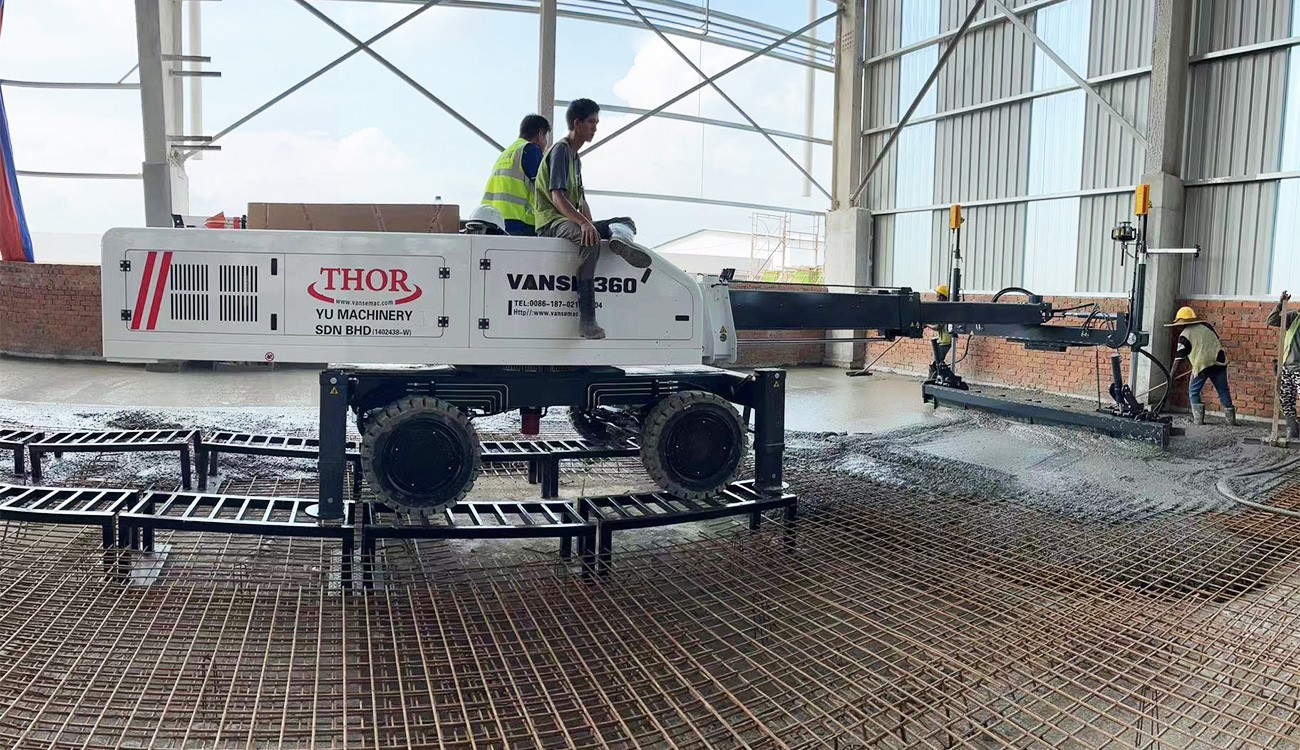
The construction process and requirements of laser leveling concrete wear-resistant floor
Definition
Laser leveling concrete wear-resistant floor refers to the use of laser leveling machines to perform high-precision and rapid leveling operations on concrete, thereby obtaining a concrete wear-resistant floor that meets high standards in terms of flatness, levelness, density and strength.
Working principle of concrete laser leveling machine
The concrete laser leveling machine uses laser as the reference plane, and emits rotating laser through the laser transmitter. The laser signal is captured by the laser receiver on the leveling machine. The received signal is deeply analyzed by the laser measurement and control system, and any deviation will be accurately identified and fed back to the highly sensitive computer control system on the leveling machine. Based on this feedback information, the leveling machine will intelligently adjust the height of the scraper or leveling head to ensure the accuracy of the leveling operation. At the same time, the hydraulically driven vibration motor drives the vibration plate to vibrate the concrete to further compact the ground.
Concrete laser leveling machine wear-resistant floor construction process
(1) Construction preparation Material preparation:
Ensure the quality of concrete materials. Polycondensate high-efficiency water reducer can be added to reduce the risk of cracking. At the same time, prepare the required wear-resistant aggregates, interface agents and other materials.
Equipment preparation: Transport and place laser leveling machines, trowels, trimmers, vacuum cleaners and other equipment to the designated location on site, and perform maintenance work to ensure that the equipment is in good standby condition.
Base treatment: Mill the base to increase the adhesion between the leveling layer concrete and the base. Clean the surface of the concrete base plate and use a high-pressure water gun to thoroughly rinse the floor surface. Sweep mortar or apply special interface agent as needed.
(2) Formwork setting and steel bar laying
Formwork setting:
Set the formwork according to the design requirements, ensure that the formwork support is on the same horizontal line as the elevation, and use a special formwork frame to set it at an inclined angle to facilitate subsequent construction.
Rebar laying:
Adding steel bars to concrete can effectively increase the tensile strength of concrete and prevent cracking. The steel mesh should be placed 20mm~30mm away from the floor surface, which not only increases the tensile strength of concrete but also protects the surface from cracks.
(3) Concrete paving and laser leveling
Concrete paving:
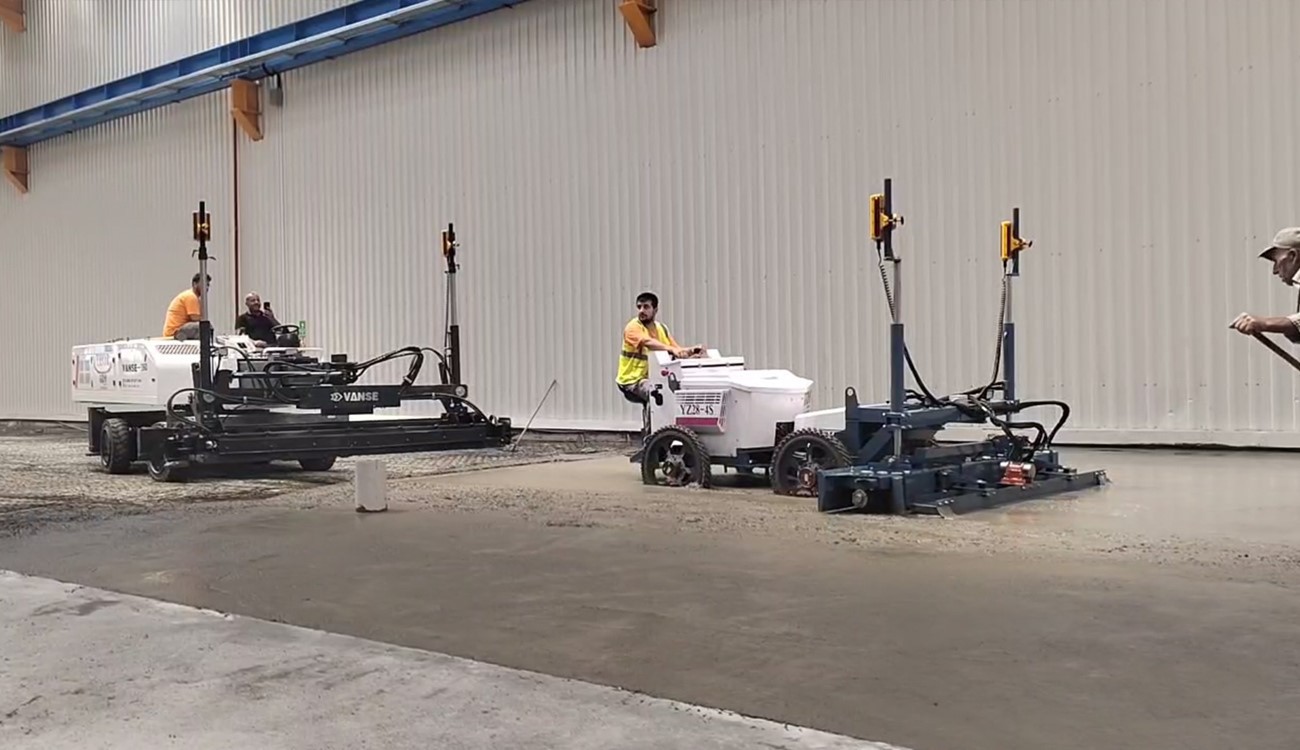
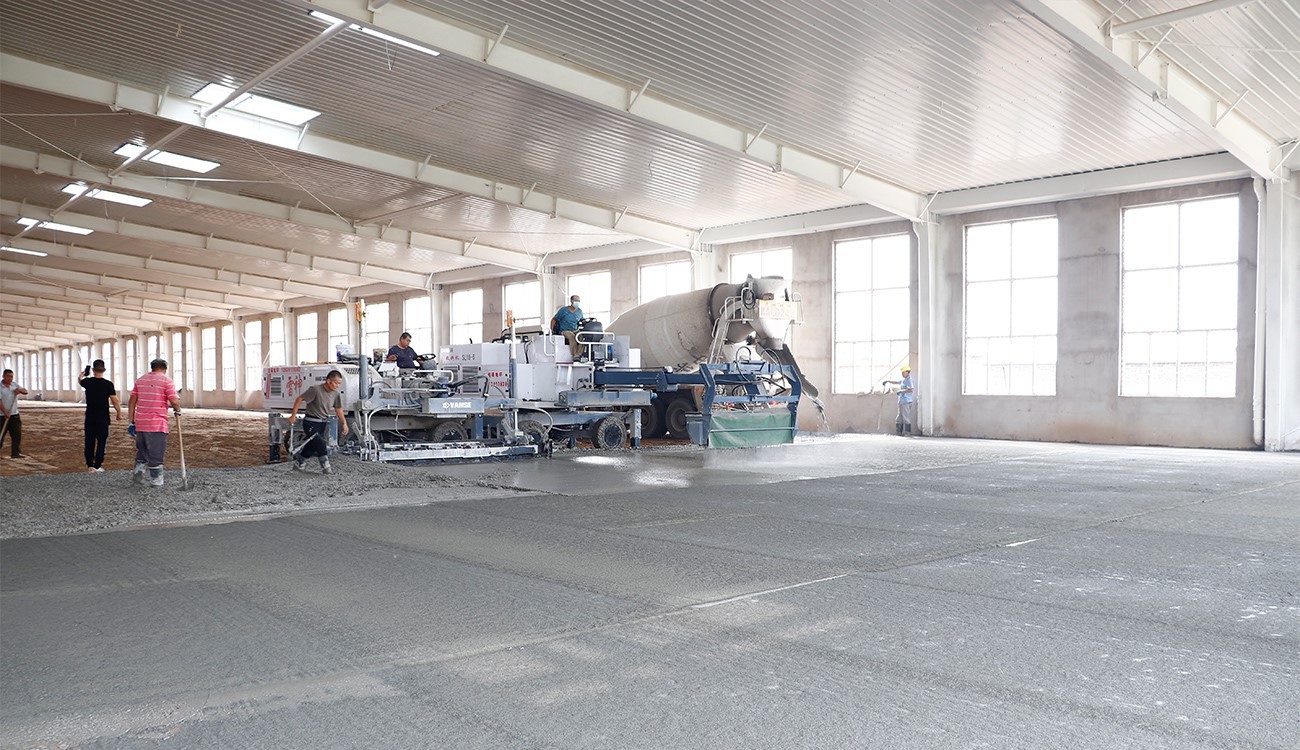
The mixed concrete is pumped and spread on the crushed stone base. The paving speed should be appropriate, and manual leveling should be assisted quickly. Ensure that the concrete construction thickness meets the design requirements.
Laser leveling:
Use a laser transmitter to determine the height of the concrete paving construction, and use a laser leveling machine to perform leveling operations. During the leveling process, one person should be responsible for moving the laser leveling machine, and two people should be responsible for the front-end auxiliary leveling to ensure that the concrete surface remains at the designed height
(4) Initial grinding and slurry breaking and throwing wear-resistant aggregates
Initial grinding and slurry breaking:
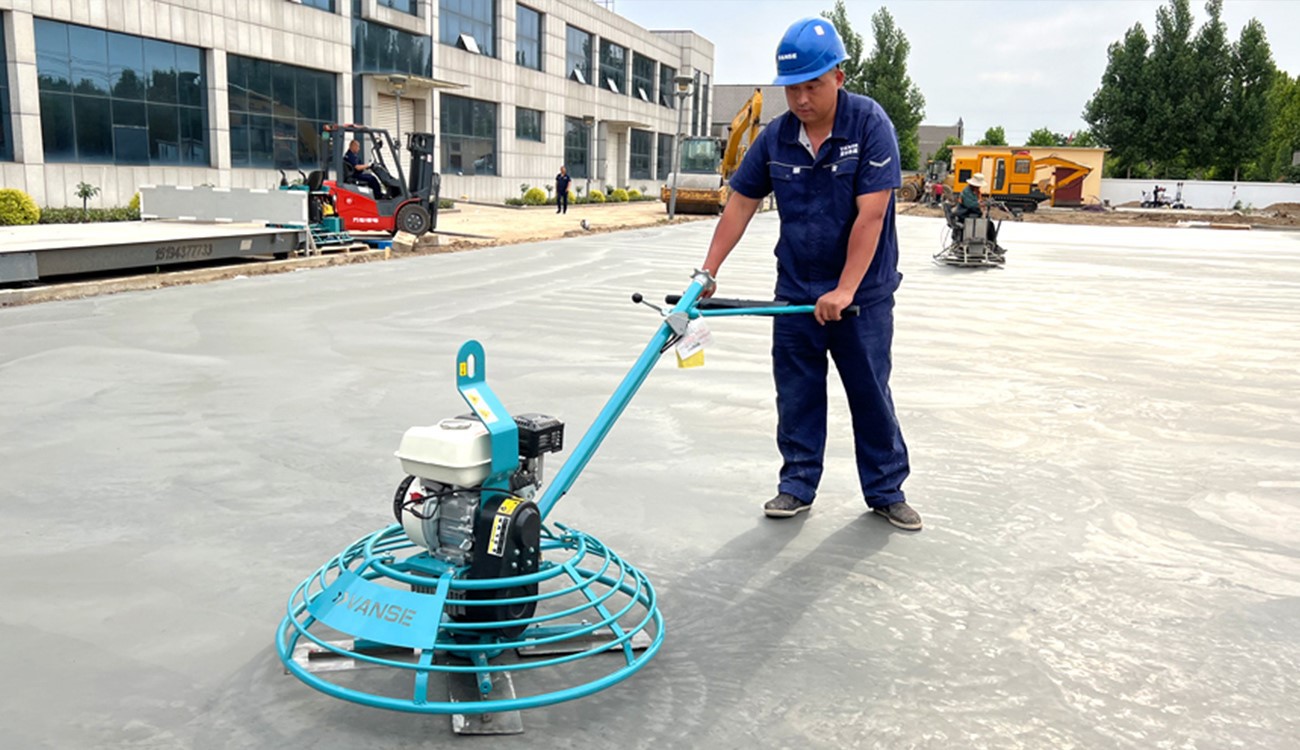
When the concrete is initially set, use a single-disc and double-disc trowel to repeatedly rub and level the concrete slurry. The best time is when there are no clear footprints left by people on the concrete.
Spreading wear-resistant aggregate:
Spread the specified amount of wear-resistant material evenly on the surface of the concrete just after the slurry is broken. Special materials can be considered as specific conditions and spread more than twice. After each spreading, use a trowel to grind and compact the aggregate.
Finishing and maintenance
Finishing operation:
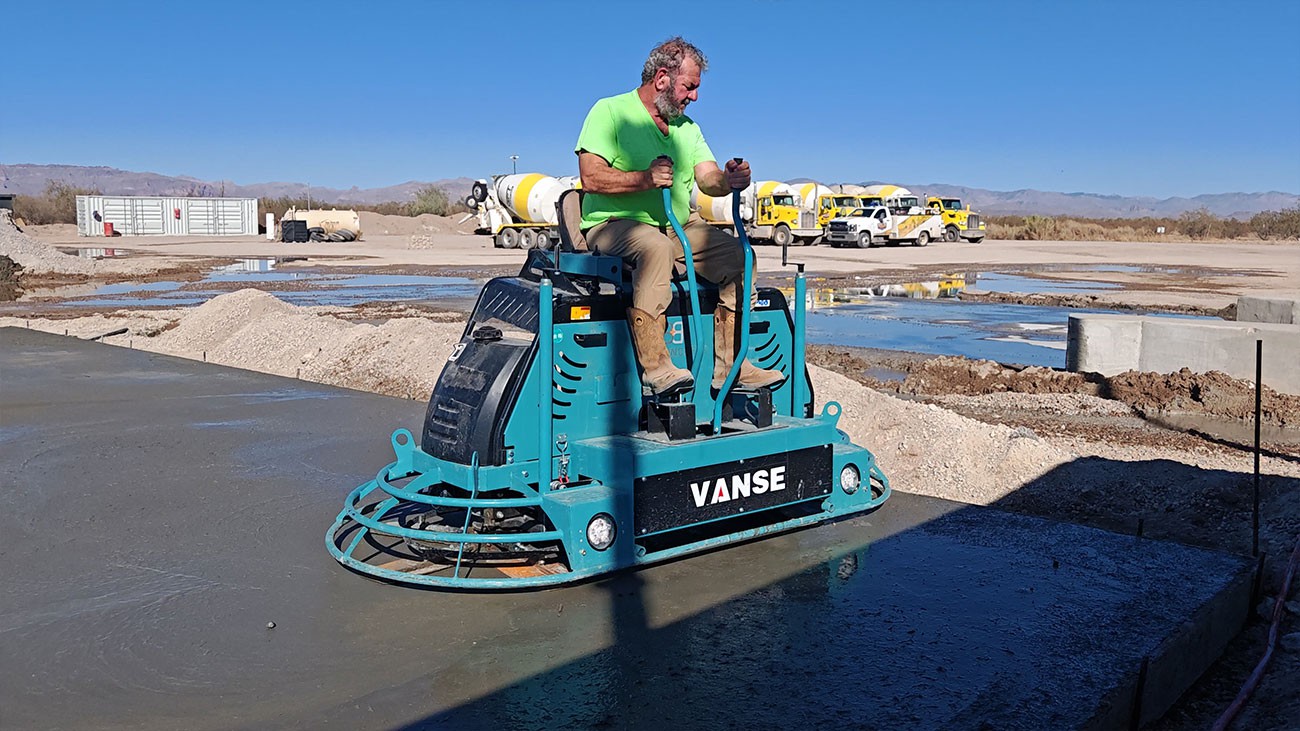
Depending on the degree of hardening of the concrete, perform at least three trowel operations without a disc. The speed and angle of the trowel should be adjusted according to the degree of hardening of the concrete. The corners can be manually scraped.
Maintenance:
After the construction is completed, it takes more than 28 days to maintain. Sprinkle water for maintenance and lay soil cloth to reduce water evaporation and keep the wear-resistant floor after construction in water.
(5) Cutting expansion joints and subsequent treatment
Cutting expansion joints:
After the concrete has been sprinkled with water for a certain period of time (such as 24 hours), cut the expansion joints according to the design requirements. The setting of expansion joints should take into account the expansion and contraction space of concrete to prevent cracking.
Subsequent treatment:
Clean and fill the expansion joints after cutting to ensure the beauty and practicality of the floor.
Requirements for the construction of laser-leveled concrete wear-resistant floor
The construction requirements of laser-leveled concrete wear-resistant floor are strict, covering material selection, construction equipment, construction process, construction environment and other aspects. The following is a detailed summary of these requirements:
(1) Material requirements:
Concrete
Strength grade:
C25~C30 concrete, 28-day strength not less than 25MPa.
Water-cement ratio: not more than 0.5, no water should be added at will during the feeding process.
Cement:
ordinary silicate cement with a grade not less than 42.5 should be used.
Bone material:
well-graded, coarse bone material is crushed granite or pebble, with a maximum diameter not more than 25mm; fine bone material is clean river sand, with a fineness modulus of 2.4~2.7.
Concrete mix ratio:
cement dosage is not less than 350Kg/m³, and the sand ratio is controlled at 35%~40%. Concrete slump: 14±2cm, maximum 16cm.
Setting time:
The initial setting time is controlled within 3-5 hours.
Wear-resistant aggregate:
The amount of wear-resistant aggregate is not less than 5kg/㎡, and it is evenly spread in batches to ensure wear resistance and flatness.
(2) Construction equipment requirements
Concrete laser leveling machine:
Ensure that the laser transmitter and receiver work normally, without dead corners, and can monitor and control the ground elevation in real time.
Other auxiliary equipment:
Including concrete mixing station, pumping equipment, trowel, trimmer, vacuum cleaner, etc., to ensure that the equipment is intact and meets the construction requirements.
(3) Construction process requirements
Preparation work:
Including laying the base, steel mesh, setting the transmission rod, placing the buffer zone, etc., to ensure that the foundation is firm and flat.
Concrete paving:
Pump concrete to the site and manually assist in leveling to ensure that the concrete is evenly distributed.
Laser leveling:
Use a laser leveling machine for high-precision leveling to ensure that the ground flatness and levelness meet the requirements.
Initial grinding and breaking of slurry: When the concrete is initially set, use a trowel to perform initial grinding and breaking of slurry to remove the concrete slurry.
Spreading of wear-resistant aggregate:
Spread wear-resistant aggregate evenly in batches and compact and grind with a trowel.
Finishing:
Perform multiple finishing operations according to the hardening of the concrete to ensure that the floor is smooth and free of defects.
Maintenance:
After the construction is completed, perform maintenance for more than 28 days to ensure the strength and durability of the concrete.
(4) Construction environment requirements
Temperature:
Avoid construction in extremely high or low temperature environments to prevent the concrete from drying or condensing too quickly.
Humidity:
Keep the construction environment moderately moist to prevent the concrete from losing water too quickly and causing cracks.
Avoid wind and rain:
The newly constructed concrete floor should not be exposed to sunlight, wind, rain and other environments that are unfavorable to the health of concrete.
(5) Other requirements
Cutting expansion joints:
Cut expansion joints in time to prevent concrete from cracking due to expansion and contraction.
Construction sequence:
Ensure that the construction sequence such as concrete feeding speed, leveling speed, polishing time is reasonable to avoid problems such as cold joints.
Personnel coordination:
Manual and mechanical construction to ensure construction quality and efficiency.
Safety requirements:
Comply with construction safety regulations to ensure the safety of personnel and equipment.
Laser leveling concrete wear-resistant floor finished product protection
(1) Protection principles
Timeliness:
After the construction is completed, protective measures should be taken as soon as possible to prevent the floor from being polluted and damaged.
Comprehensiveness:
The protective measures should cover the entire floor, leaving no dead corners, to ensure comprehensive protection.
Targetedness:
Develop targeted protection measures for different construction environments and floor uses.
(2) Protection measures
Covering protection
Maintenance blanket or non-woven fabric covering:
Within 5-10 hours after the construction is completed, use a maintenance blanket or special maintenance non-woven fabric to cover the floor and water it to keep it moist to prevent the floor from drying out too quickly and causing cracks.
Film covering:
In certain circumstances, such as before the steel structure is hoisted, a film can be used to cover the floor to prevent components from falling and damaging the floor.
Isolation protection
Set up guardrails:
Set up guardrails for the completed floor area to prohibit people from entering at will to prevent trampling and pollution.
Warning signs:
Set up eye-catching warning signs at places such as doors where people frequently enter and exit to remind people to pay attention to protecting the floor.
Anti-collision protection
Fully spread earth cloth or wooden formwork:
During the hoisting operation, the floor is protected from collision by fully spread earth cloth or densely spread wooden formwork.
Take anti-fall measures:
Small objects such as tools and screws (caps) should be packed in special tool bags to prevent them from falling and damaging the floor. Anti-pollution protection
Apply special concrete sealing wax:
Apply special concrete sealing wax on the floor surface to form a surface wax coating to prevent pollution and damage.
Receiving bucket setting:
During the hydraulic test of electromechanical installation, arrange the water inlet and outlet positions to prevent the test water from flowing into the floor. At the same time, place the receiving bucket at the joint position to prevent leakage from polluting the floor.
Repair measures
Small pit repair:
If the floor has small pits and other damage, it can be repaired with a special adhesive SBR.
Finished product protection team:
Establish a special finished product protection team to be responsible for daily inspection and maintenance of the floor, and promptly discover and deal with damage problems.
(3) Protection period and supervision
Protection period:
According to the specific situation of the floor and construction requirements, determine a reasonable protection period to ensure that the floor is fully protected during the maintenance period.
Supervision and inspection:
Regularly inspect the floor to ensure that the protection measures are effectively implemented. Violations of protection measures will be corrected and punished in a timely manner.
Precautions before construction of laser leveling concrete wear-resistant floor
①Material preparation:
Ensure the quality of concrete materials. The concrete specifications must meet the design requirements, such as C25~C30 concrete, and the 28-day strength is not less than 25MPa.
The aggregate grading is good, the maximum particle size of coarse aggregate is not more than 25mm, and the fineness modulus of fine aggregate is moderate. Ordinary silicate cement with a cement grade of not less than 42.5.
Equipment inspection:
The laser leveling machine and auxiliary equipment (such as mixing station, pumping equipment, trowel, etc.) should be intact and overhauled to ensure normal operation during construction.
Check whether the laser transmitter and receiver are working properly, ensure that the laser signal has no dead corners, and can monitor and control the ground elevation in real time.
Base treatment:
The base should be flat, solid, free of oil and debris to ensure good bonding between the concrete and the base. After the base is treated, it should be inspected and accepted, and the next step can be carried out only after it is qualified.
② Matters needing attention during construction
Concrete paving: The minimum hourly feeding speed of concrete should be determined according to the ground thickness and pouring area to avoid cold joint problems. When manually assisted leveling, attention should be paid to the uniform distribution of concrete to avoid large piles falling.
Laser leveling: When using the laser leveling machine, the measured height of the vertical pole should be accurate to ensure the leveling accuracy.
During the leveling process, the laser leveling machine should be integrated with the paving machine to maintain good rigidity and avoid excessive vibration affecting the construction quality. Operators of laser leveling machines need to undergo professional training and be familiar with the performance and operating procedures of the equipment.
Spreading of wear-resistant bone materials:
Wear-resistant bone materials should be spread evenly in batches, and after each spreading, they should be compacted and polished with a trowel to ensure wear resistance and flatness.
Finishing and maintenance:
The finishing operation should be polished multiple times according to the hardening of the concrete to ensure that the floor is smooth and flawless.
The floor should be kept moist during maintenance, and a maintenance blanket, non-woven fabric or film should be used to cover and moisturize the floor to prevent the concrete from drying out too quickly and causing cracking.
③ Precautions after construction
Cutting and expansion joint treatment:
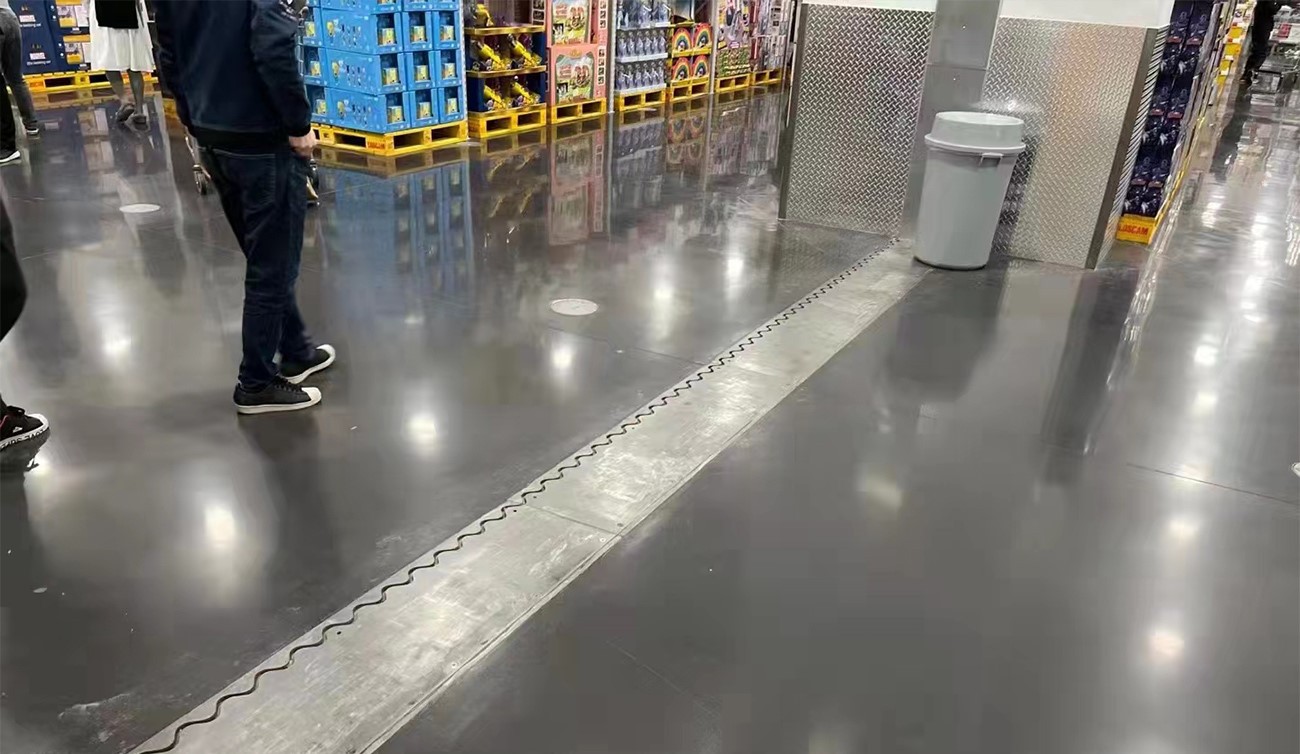
After the construction of the laser-leveled concrete wear-resistant floor is completed, the expansion joint should be cut in time to prevent the concrete from cracking due to expansion and contraction.
Professional personnel should be assigned to the cutting operation to ensure that the cutting depth and spacing meet the design requirements.
Finished product protection:
Guardrails and warning signs should be set up for the completed floor area to prevent people from stepping on and contaminating.
Use maintenance blankets, non-woven fabrics or films to cover and protect the floor from external damage.
Quality inspection and acceptance:
After the construction is completed, the floor should be inspected for quality, including flatness, levelness, density, strength and other indicators.
It can only be delivered for use after acceptance to ensure that the floor meets the design requirements and usage functions.
Thanks to All the Friends Who Support and Trust Shandong Vanse Machinery Technology Co., Ltd.
If you want to know more about Shandong Vanse Machinery Technology Co., Ltd. or have any questions, please feel free to contact us:
Our Factory
Shandong Vanse Machinery Technology Co., Ltd.








Share this article

About the Author: Shandong Vanse Machinery Technology Co., Ltd.
Shandong Vanse Machinery Technology Co., Ltd. is a high-tech manufacturer specializing in concrete construction machinery, including laser screeds and related equipment. The company integrates R&D, production, and global sales, with products exported to over 60 countries and widely used in infrastructure projects worldwide.
Previous Post
Next Post
Related Articles
You Might Also Like
How to avoid scams when buying a laser leveling machine?
Many consumers are still prone to falling into the trap of low prices when buying laser leveling machines, and buying some products of unknown brands. This way of buying is very unwise. We should still believe in the power of brands when buying products. The equipment of big brands has already left other small manufacturers behind by several streets in terms of knowledge and after-sales service. "High degree of automation, low labor intensity, saving templates and channel steel, reducing labor input, and smoother ground"… Based on various advantages, laser leveling machines are now highly sought after by the construction floor industry and have become star products in engineering machinery and equipment. Driven by unlimited business opportunities and market interests, many companies have begun to join in, and Xuancheng itself is a professional brand, a professional manufacturer, and a product expert. This phenomenon makes consumers not know how to choose when buying laser leveling machine products. Here, Shandong VANSE Machinery Editor specially sorted out several precautions for buying laser leveling machines to help users stay away from "being fooled" and find truly professional and focused good brands and good products. For high-tech products such as concrete laser leveling machines, in addition to technological innovation, there is another important factor that affects the quality of concrete laser leveling machines, that is, experience. How to define laser leveling machine products of different models and specifications? How to deal with the flatness of the ground? How to position the laser transmitter and other issues require years of long-term accumulation to accurately grasp. If users hastily buy products from entry-level brands when choosing laser leveling machine products, they are likely to become "guinea pigs" and encounter various troubles. It is very simple to identify whether this brand is just getting started. You only need to check its patent registration time and understand the real cases in the past. For the current phenomenon and confusion in the laser leveling machine industry, industry insiders believe that consumers' trust in a company in the final purchase is a comprehensive consideration. The price factor may account for 25% of it, but in the end, consumers still consider comprehensive factors. Today, when consumption habits are becoming more rational, low prices can only be a gimmick to attract consumers' attention. The real sign of measuring the success or failure of an enterprise is the product quality, after-sales service and the company's own strong strength. At present, the reshuffle trend of the laser leveling machine industry is becoming more and more obvious. For laser leveling machine companies with insufficient terminals, imperfect networks, and less well-known brands, they will face greater pressure. Shandong VANSE Machinery has been committed to the research and development and production of concrete laser leveling machines for many years. Its core components are all produced by large manufacturers in advanced countries such as Germany and the United States. The production process is strictly in accordance with national standards, enterprise standards, and quality control assurance systems to ensure that product quality meets or exceeds the requirements of enterprise standards and relevant national standards. With excellent quality, excellent performance, and superior cost performance, it has won the trust and praise of users. Shandong VANSE Machinery's series of products have been widely used in factories, and customers are all over the country, inside and outside the Great Wall, and have been recognized by partners and customers of many engineering projects such as workshops, underground garages, floors, access bridges, square floors, logistics warehousing, etc. We sincerely invite you to come toHow environmental factors affect the performance of concrete laser leveling machines
Environmental factors affect the performance of concrete laser levelings across multiple dimensions, including equipment operation, construction accuracy, efficiency, and service life. Different environmental conditions can indirectly or directly cause performance fluctuations by affecting the equipment's mechanical system, laser positioning system, and concrete working conditions. The following details the specific impact mechanisms and countermeasures based on three core categories: climate, geology, and site conditions, and electromagnetic and light environments: Climatic factors (temperature, humidity, precipitation, wind) not only affect the stability of the mechanical components of the laser leveling machine, but also change the initial setting speed and fluidity of the concrete, thereby indirectly affecting the leveling accuracy and efficiency. Climate Type Specific impact Performance differences High temperature environment (≥30℃) 1. Equipment hydraulic system: Hydraulic oil viscosity decreases, seals age faster, and leaks and pressure shortages are more likely to occur. – Increased probability of mechanical failure (e.g., decreased hydraulic pump efficiency, motor overload); 2. Engine/motor: Heat dissipation efficiency decreases, potentially triggering overheat protection and causing shutdown. – Shrinkage cracks are more likely to form on the concrete surface, increasing flatness deviation after leveling; 3. Concrete: Moisture evaporation accelerates, shortening initial setting time and narrowing the leveling window (necessitating faster vibration and leveling). – Work efficiency is forced to increase, which can lead to decreased accuracy due to hasty operation. Low temperature environment (≤5℃) 1. Hydraulic System: Increased hydraulic oil viscosity increases flow resistance in pipelines, slowing equipment response (e.g., delayed raising and lowering of the leveling blade); – Decreased equipment operational sensitivity (laser signal feedback and mechanical movement become out of sync); 2. Batteries/Circuits: Reduced lead-acid battery capacity makes circuit connectors susceptible to oxidation due to condensation, leading to poor contact; – Concrete density after leveling is insufficient, resulting in a lower surface flatness compliance rate; 3. Concrete: Prolonged initial setting time, reduced fluidity, increased difficulty in vibrating, and the tendency to develop honeycombs and rough surfaces. – Equipment startup is difficult, requiring warm-up time, and overall construction efficiency decreases by 30%-50%. High humidity/rainfall environment 1. Laser System: Condensation or water ingress on the laser transmitter/receiver lens can cause laser signal attenuation or scattering, resulting in positioning accuracy drift. – Laser positioning error increases (from ±2mm to over ±5mm), failing to meet high-precision floor requirements; 2. Electrical System: Moisture in the control panel and motor junction box can lead to short circuits or leakage. – The risk of electrical failures (such as motor failure) increases dramatically, potentially causing "faults" on the concrete surface; 3. Concrete: Excessive moisture content can lead to slow strength development and sanding and powdering of the surface after leveling. – Additional rain protection measures (such as temporary sheds) are required, increasing construction costs. Strong wind environment (≥ level 5) 1. Laser Signal: Strong winds can move the laser transmitter bracket (if not securely fixed), causing the laser reference line to shift. – Laser reference line deviation (a single operation can vary by 5-10mm), resulting in a "wavy" surface; 2. Equipment Stability: Small laser levelers (such as hand-push models) can easily tilt due to wind, affecting the leveling trajectory. – Equipment operation becomes more difficult, requiring additional manual stabilization, and accuracy fluctuations due to human intervention; 3. Concrete Surface: Wind erosion can cause rapid moisture loss from the surface, resulting in cracks. – Concrete surface quality deteriorates, requiring secondary repairs later. The geological conditions of the site (hardness, flatness), obstacle distribution and ground bearing capacity directly affect the load of the laser leveling machine's travel system and vibration system, which in turn leads to performance deviation or mechanical damage. Soft soil (e.g., uncompacted soil): The equipment is prone to "sinking" during travel, causing the leveling blade to lose its level position (although the laser positioning is correct, the machine's posture is tilted), resulting in local depressions on the leveling surface. Furthermore, the vibration force of the vibrating system may cause further subsidence, exacerbating flatness errors. Hard soil (e.g., old concrete, rock formations): Wheels/tracks wear faster, increasing the vibration amplitude of the equipment, making precise control difficult for the operator. If the foundation surface has protrusions (e.g., stones, rebar heads), these can get stuck in the leveling blade, causing "skipping" and resulting in scratches or uneven surfaces. Narrow spaces (such as indoor rooms and elevator shafts): Large laser levelings (such as ride-on models) are difficult to steer and require frequent adjustments, causing the laser receiver to frequently deviate from the baseline and reduce accuracy. Furthermore, insufficient heat dissipation space can easily lead to motor overheating. Dense obstacles (such as pre-buried pipelines and pillars): Operation requires frequent starts and stops, as well as detours. This prevents continuous leveling during the initial setting period of the concrete, leading to the appearance of "joints." Accidental collisions with obstacles can cause the laser transmitter to shift, requiring recalibration and delaying the project. If the ground's bearing capacity is lower than the equipment's own weight (e.g., temporary formwork or uncured concrete), the ground will deform as the equipment moves, causing the entire surface to deform accordingly, resulting in "wavy" patterns. In severe cases, this can cause the formwork to collapse and damage the equipment. The core accuracy of the laser leveling machine depends on the signal matching between the laser transmitter and the receiver. Electromagnetic interference, strong light or dust will directly block or distort the signal, resulting in positioning failure. Sources of interference: Strong electromagnetic equipment at the construction site, such as welding machines, tower cranes, high-voltage cables, and walkie-talkies. Mechanism of Impact: Electromagnetic signals can interfere with the laser receiver's circuitry, causing it to misinterpret the laser reference line (e.g., misinterpreting a "horizontal signal" as a "tilt signal"), leading to incorrect control of the leveling blade. Performance: Irregular height differences appear on the leveling surface, with accuracy plummeting from ±2mm to over ±10mm, or even completely disrupting normal operation. High-light environments (such as midday sun or strong spotlights): When direct sunlight shines on the laser receiver lens, the strong light can drown out the laser signal (laser is red or green visible light, and strong light reduces signal contrast). The receiver cannot accurately capture the baseline, resulting in "signal loss," causing the device to automatically shut down or enter "manual mode" (significantly reducing accuracy). High-dust environments (such as dry-mix mortar mixing and earthmoving operations): Dust adhering to the surface of the laser transmitter/receiver lens can scatter or block the laser signal, causing signal attenuation. If dust enters the lens, it can damage the optical components, permanently reducing positioning accuracy over time. In response to the above environmental factors, performance loss can be reduced through "device adaptation + environment optimization + operation adjustment": High Temperature: Use high-temperature resistant hydraulic fluid, install a cooling fan on the engine, and shorten the concrete pouring interval (to prevent initial setting). Low Temperature: Preheat the hydraulic system (e.g., with electric heating), use early-strength concrete, and cover with insulation film after work. Rainfall/High Humidity: Install a rain cover on the laser system, ensure waterproof sealing of electrical components, and clean condensation from the lens after rain. Soft soil foundation: Use a roller to compact the foundation first, or lay steel plates to distribute the load on the equipment. Hard soil foundation: Clean any surface protrusions in advance and replace wear-resistant wheels/tracks. Narrow spaces: Use a small, hand-push laser leveling, or employ a "segmented leveling + secondary finishing" process. Electromagnetic Interference: Keep the laser transmitter away from strong electromagnetic equipment (distance ≥ 10m) and use a shielded cable to connect to the receiver. Strong Light/Dust: Install a polarizing filter (to mitigate strong light) on the lens. Dedicated personnel should be assigned to clean dust from the lens during operation. Set up a dustproof booth if necessary. In summary, environmental factors impact concrete laser levelings in a multi-dimensional and interlinked manner-from the core laser positioning system to the mechanical execution system to the concrete workpiece-all of which can experience performance degradation due to environmental fluctuations. In actual construction, it's crucial to assess environmental conditions in advance and adjust equipment parameters and operating procedures accordingly to maximize the equipment's precision advantages. ARMOUR JOINT CONCRETE LASER LEVELING MACHINE POWER TROWEL SLIPFORM MACHINE STEEL FIBER TOPPING SPREADERWorking Principle Of Concrete Laser Leveling Machine
1. Laser transmitter and receiver The concrete laser leveling machine uses a laser transmitter and a receiver. The laser beam emitted by the laser transmitter is received by the receiver and converted into an electrical signal. These electrical signals are used to control the movement of the leveling and the smoothness of the concrete surface. 2. Positioning and calibration of laser beam The positioning and calibration of the laser beam is one of the important working principles of the concrete laser leveling. Before construction, the laser beam needs to be positioned and calibrated by the leveling to ensure that the laser beam can be accurately projected onto the concrete surface. This is usually achieved by setting a reference point before construction. The leveling machine receives the signal of the reference point through the receiver and aligns the laser beam with the reference point to achieve positioning and calibration of the laser beam. 3. Work flow of leveling machine The workflow of the concrete laser leveling machine includes the following steps: ★1. Preparation before construction: Before construction, the leveling machine needs to be debugged and calibrated to ensure the normal operation of the equipment. At the same time, the concrete surface also needs to be cleaned and prepared to ensure the construction effect. ★2. Laser beam positioning and calibration: By setting the reference point, the leveler receiver receives the signal of the reference point and aligns the laser beam with the reference point, thereby achieving the positioning and calibration of the laser beam. ★3. Concrete laying: After the laser beam positioning and calibration is completed, the concrete laying work can be carried out. The leveling machine can level and trim the surface of mixed soil according to preset flatness and height parameters. ★4. Surface treatment: After the concrete laying is completed, the leveling machine can further process the concrete surface, such as compaction, smoothing, lightening, etc., to ensure the flatness and smoothness of the surface. ★5. Construction completed: After completing the surface treatment, the leveler can stop working and wait for the concrete to solidify. After the concrete has solidified, subsequent construction work can be carried out. 4. Main components of leveling machine The main components of the concrete laser leveling machine include laser transmitter, receiver, mixer, scraper, trowel, etc. These components play an important role in the operation of the leveler ★1. Laser emitter: The laser emitter is one of the core components of the leveler. It is responsible for emitting a laser beam and controlling its projection onto the concrete surface. The quality and performance of the laser transmitter have an important impact on the effectiveness and service life of the leveler. ★2. Receiver: The receiver is another core component of the leveling machine. It is responsible for receiving the laser beam and converting it into an electrical signal. These electrical signals are used to control the movement of the leveling and the smoothness of the concrete surface. ★3. Mixer: The mixer is one of the auxiliary parts of the leveling machine. It is responsible for mixing the concrete evenly to ensure the construction effect. The quality and performance of the agitator also affects the effectiveness and service life of the leveler. ★4. Scraper and trowel: Scraper and trowel are tool parts of the leveling machine. They are used for smoothing and trimming the concrete surface. The quality and performance of these tools will also affect the effectiveness and longevity of the leveler. 5. Machine adjustment and operation When using a concrete laser leveling, it needs to be adjusted and operated according to specific construction requirements and equipment performance. Here are some common adjustments and how-tos ★1. Adjust the projection angle of the laser beam: According to the construction requirements and equipment performance, the projection angle of the laser beam can be adjusted to achieve different flatness and height requirements for the concrete surface. ★2. Adjust the pressure of the scraper and trowel: When using the scraper and trowel, the pressure of the scraper and trowel needs to be adjusted according to the hardness of the concrete and construction requirements to ensure the flatness and smoothness of the surface. ★3. Control the speed of the mixer: The speed of the mixer needs to be adjusted according to the hardness of the concrete and construction requirements to ensure the uniformity of mixing and construction effect of the concrete. ★4. Operation control panel: The leveling machine is usually equipped with a control panel through which the equipment can be remotely controlled and adjusted. The operator needs to choose the appropriate control mode and parameter settings according to the actual situation. 6. Machine maintenance and upkeep In order to ensure the long-term stable operation and service life of the concrete laser leveling machine, regular maintenance and upkeep work is required. The following are some common maintenance and care methods ★1. Clean equipment: Clean various parts and surfaces of the equipment regularly to prevent the impact of dust, debris and other dirt. ★2. Check components: Regularly check whether each component of the equipment is working properly, such as laser transmitter and receiver, stirrer, scraper and trowel, etc. If any damage or abnormality is found, it needs to be replaced or repaired in time ★3. Lubrication equipment: Regularly lubricate various parts of the equipment, such as bearings, chains, etc., to reduce wear and failure ★4. Adjust parameters: During use, the parameter settings of the equipment need to be adjusted according to the actual situation, such as the projection angle of the laser beam, the pressure of the scraper and trowel, etc. ★5. Storage equipment: When the equipment is not in use, it needs to be stored in a dry, well-ventilated environment to prevent moisture, corrosion and other environmental factors.