Technical Knowledge
Can Good Maintenance Habits Really Prolong The Service Life Of Laser levelings?
Is it necessary to use a laser leveling machine?
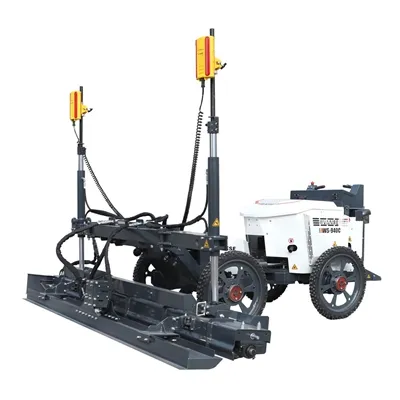
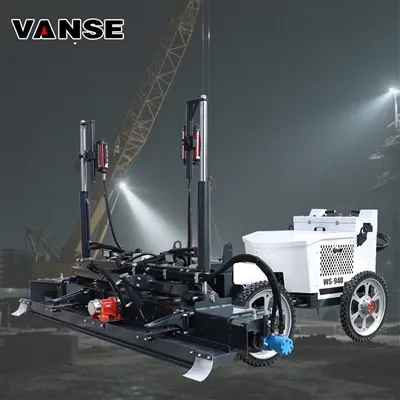
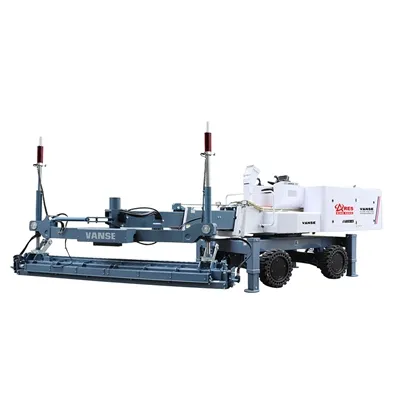
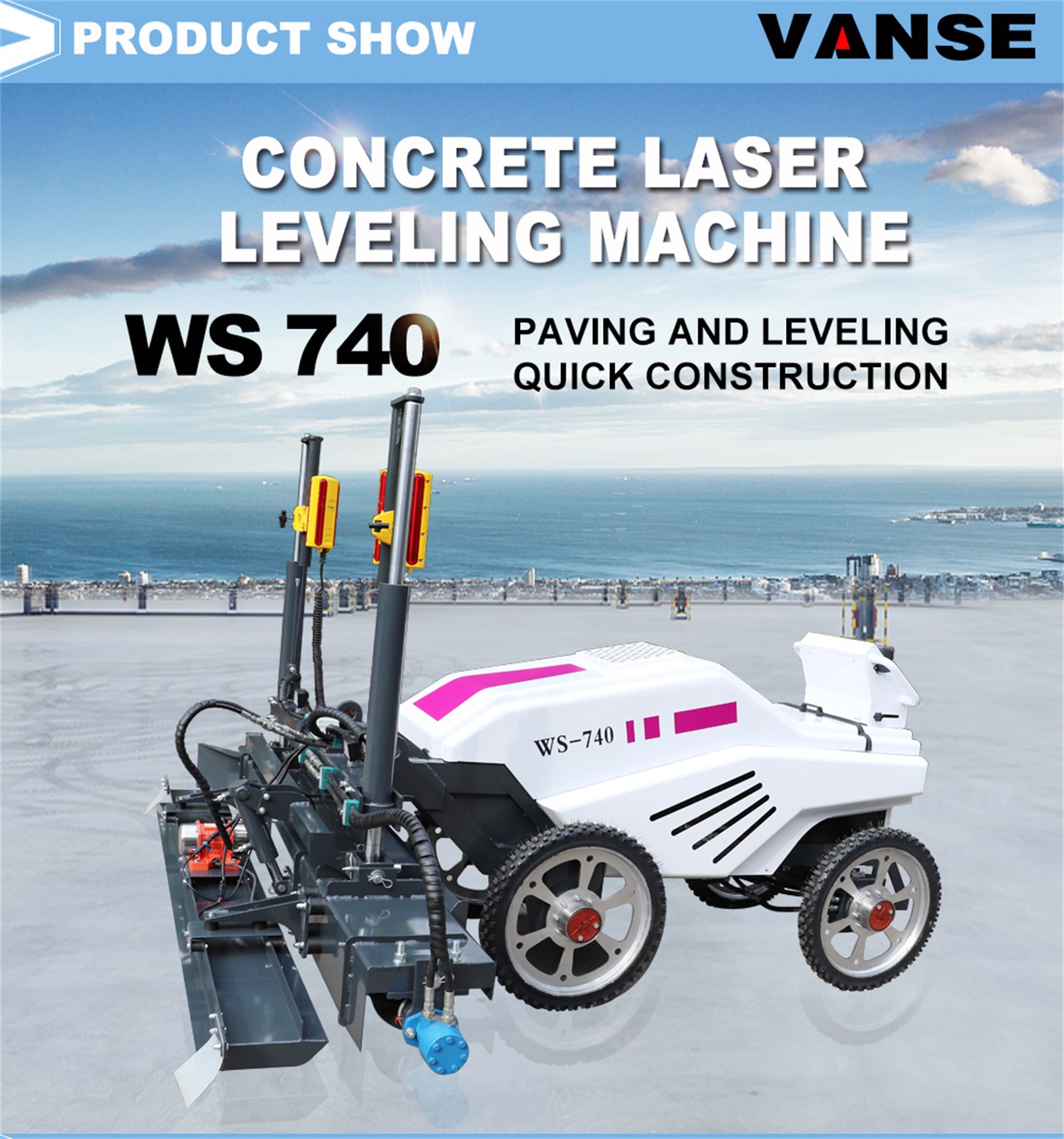
Is it necessary for concrete laser leveling machine to exist in our life? Answer: Of course there is. For some small construction sites, it is not impossible to rely solely on manual work, but once you reach a large shopping mall or a parking lot, you don't need to use machinery for construction, which not only guarantees quality but also saves time.
Laser leveling machine is an important concrete engineering machinery and equipment. It is widely used in the construction of large-area concrete floors such as modern industrial plants, large shopping malls, freight yards, airports, and squares. Levelness requires good construction. In the context of economic globalization, enterprises are under increasing pressure and challenges. Traditional construction has a large amount of labor and low production efficiency, which has always restricted the healthy and rapid development of the flooring industry. Therefore, it is urgent to promote the use of high-efficiency and intelligent laser leveling machine products. This is not only the need for enterprises to adapt to social development, but also the inevitable requirement of the international development trend of the flooring industry.
The use of laser leveling machines to make the ground has a high degree of automation, low labor intensity, saving templates and channel steel, and reducing labor input. Concrete laser leveling machines are divided into walk-behind and car-mounted types, which are very easy to operate and are used in concrete floor construction. The heavy manual labor is changed to mechanical paving, vibrating, leveling, slurry extraction, and surface plastering, which greatly reduces the number of operators and greatly reduces the labor intensity. The realization of one-time paving construction in large-scale blocks makes it unnecessary to support the formwork in the middle of the blocks. While reducing the support formwork and channel steel, it also further reduces the construction process and speeds up the construction progress. Therefore, using laser leveling machine products to make the ground can effectively save labor and reduce long-term operating costs.
In short, with the increase of large-area and high-quality floor projects such as modern industrial plants, convention centers, squares, airports, etc., traditional construction techniques and methods are difficult to meet the requirements. For example, in terms of construction techniques, advanced construction equipment, That is, the concrete laser leveling machine can not only shorten the construction period, but also ensure the construction quality to a large extent. This kind of high-grade ground can guarantee normal use for more than 20 years, which can greatly reduce the use and maintenance costs. The concrete laser leveling machine is in There will be more and more applications in large-area floor construction.
Thanks to All the Friends Who Support and Trust Shandong Vanse Machinery Technology Co., Ltd.
If you want to know more about Shandong Vanse Machinery Technology Co., Ltd. or have any questions, please feel free to contact us:
Our Factory
Shandong Vanse Machinery Technology Co., Ltd.








Share this article

About the Author: Shandong Vanse Machinery Technology Co., Ltd.
Shandong Vanse Machinery Technology Co., Ltd. is a high-tech manufacturer specializing in concrete construction machinery, including laser screeds and related equipment. The company integrates R&D, production, and global sales, with products exported to over 60 countries and widely used in infrastructure projects worldwide.
Previous Post
Next Post
Related Articles
You Might Also Like
There are many things to pay attention to when adding oil to a laser leveling machine. Don’t operate it recklessly if you don’t understand it!
Any kind of mechanical equipment needs to add an appropriate amount of oil during normal use to ensure the safe operation and service life of the machinery. This is no exception for the laser leveling machine, a new type of concrete pavement leveling equipment. Although the addition of oil to the laser leveling machine seems simple, it is actually quite a science. In order to avoid unnecessary trouble, our company has specially sorted out several common misunderstandings when adding oil to the laser leveling machine. I hope everyone will avoid them in time. ▼ Do not use the lubricating oil if it turns black: the lubricating oil turns black, which means that the lubricating oil has deteriorated: modern lubricating oils have added appropriate amounts of various additives to improve their lubrication properties. It is normal for the lubricating oil of internal combustion machinery with detergent dispersant to turn black shortly after use. It cannot be easily replaced because it is considered that the "oil has deteriorated"; lubricating oil with additives often makes the bearing surface black during use, which is also a normal phenomenon. Therefore, when we determine whether the lubricating oil has deteriorated, we cannot judge it by sight alone, but conduct a comprehensive analysis. When conditions permit, the oil should be tested and tested to ensure that the oil is changed according to the quality; ▼ The oil grade specified in the laser leveling machine manual is for general working conditions. In the practice of machine oil change and maintenance, the actual use conditions must also be considered. If the actual use conditions are more stringent than the specified use conditions, a higher grade oil should be selected (through testing) or the oil change cycle should be appropriately shortened; ▼ It is better to have more oil than less: We know that a small amount of laser leveling oil will cause insufficient oil supply and poor lubrication, leading to mechanical accidents. Therefore, when refueling, you should not "prefer to add more" for fear of insufficient oil. In fact, too much oil will not only increase the power consumption of the crankshaft due to increased rotational resistance, but also the oil is prone to bubbles, emulsification and leakage, resulting in poor lubrication; ▼ Using high-viscosity oil can solve the problems of engine powerlessness and oil leakage: Engine powerlessness, oil consumption and oil leakage are external characteristics of the deterioration of the engine's technical condition. There is insufficient basis for "using high-viscosity oil to solve the above problems". On the contrary, it will increase the starting resistance of the laser leveling machine engine, deteriorate the lubrication performance, and aggravate the wear of the parts; ▼ Oil with high viscosity is more beneficial to the engine than oil with low viscosity: If the viscosity grade of lubricating oil is too high, it will cause poor pumping performance of the oil pump, reduce flow, and deteriorate its lubricity, washing and heat dissipation, which will easily cause semi-dry friction of the laser leveling machine parts, causing failures such as burning and shaft sticking. The above are several common wrong behaviors when adding oil to the laser leveling machine. In order to ensure the normal use of the equipment and avoid unnecessary maintenance costs, it is also hoped that the relevant maintenance managers must strictly follow the product manual to reasonably add oil and actively avoid common misunderstandings.How environmental factors affect the performance of concrete laser leveling machines
Environmental factors affect the performance of concrete laser levelings across multiple dimensions, including equipment operation, construction accuracy, efficiency, and service life. Different environmental conditions can indirectly or directly cause performance fluctuations by affecting the equipment's mechanical system, laser positioning system, and concrete working conditions. The following details the specific impact mechanisms and countermeasures based on three core categories: climate, geology, and site conditions, and electromagnetic and light environments: Climatic factors (temperature, humidity, precipitation, wind) not only affect the stability of the mechanical components of the laser leveling machine, but also change the initial setting speed and fluidity of the concrete, thereby indirectly affecting the leveling accuracy and efficiency. Climate Type Specific impact Performance differences High temperature environment (≥30℃) 1. Equipment hydraulic system: Hydraulic oil viscosity decreases, seals age faster, and leaks and pressure shortages are more likely to occur. – Increased probability of mechanical failure (e.g., decreased hydraulic pump efficiency, motor overload); 2. Engine/motor: Heat dissipation efficiency decreases, potentially triggering overheat protection and causing shutdown. – Shrinkage cracks are more likely to form on the concrete surface, increasing flatness deviation after leveling; 3. Concrete: Moisture evaporation accelerates, shortening initial setting time and narrowing the leveling window (necessitating faster vibration and leveling). – Work efficiency is forced to increase, which can lead to decreased accuracy due to hasty operation. Low temperature environment (≤5℃) 1. Hydraulic System: Increased hydraulic oil viscosity increases flow resistance in pipelines, slowing equipment response (e.g., delayed raising and lowering of the leveling blade); – Decreased equipment operational sensitivity (laser signal feedback and mechanical movement become out of sync); 2. Batteries/Circuits: Reduced lead-acid battery capacity makes circuit connectors susceptible to oxidation due to condensation, leading to poor contact; – Concrete density after leveling is insufficient, resulting in a lower surface flatness compliance rate; 3. Concrete: Prolonged initial setting time, reduced fluidity, increased difficulty in vibrating, and the tendency to develop honeycombs and rough surfaces. – Equipment startup is difficult, requiring warm-up time, and overall construction efficiency decreases by 30%-50%. High humidity/rainfall environment 1. Laser System: Condensation or water ingress on the laser transmitter/receiver lens can cause laser signal attenuation or scattering, resulting in positioning accuracy drift. – Laser positioning error increases (from ±2mm to over ±5mm), failing to meet high-precision floor requirements; 2. Electrical System: Moisture in the control panel and motor junction box can lead to short circuits or leakage. – The risk of electrical failures (such as motor failure) increases dramatically, potentially causing "faults" on the concrete surface; 3. Concrete: Excessive moisture content can lead to slow strength development and sanding and powdering of the surface after leveling. – Additional rain protection measures (such as temporary sheds) are required, increasing construction costs. Strong wind environment (≥ level 5) 1. Laser Signal: Strong winds can move the laser transmitter bracket (if not securely fixed), causing the laser reference line to shift. – Laser reference line deviation (a single operation can vary by 5-10mm), resulting in a "wavy" surface; 2. Equipment Stability: Small laser levelers (such as hand-push models) can easily tilt due to wind, affecting the leveling trajectory. – Equipment operation becomes more difficult, requiring additional manual stabilization, and accuracy fluctuations due to human intervention; 3. Concrete Surface: Wind erosion can cause rapid moisture loss from the surface, resulting in cracks. – Concrete surface quality deteriorates, requiring secondary repairs later. The geological conditions of the site (hardness, flatness), obstacle distribution and ground bearing capacity directly affect the load of the laser leveling machine's travel system and vibration system, which in turn leads to performance deviation or mechanical damage. Soft soil (e.g., uncompacted soil): The equipment is prone to "sinking" during travel, causing the leveling blade to lose its level position (although the laser positioning is correct, the machine's posture is tilted), resulting in local depressions on the leveling surface. Furthermore, the vibration force of the vibrating system may cause further subsidence, exacerbating flatness errors. Hard soil (e.g., old concrete, rock formations): Wheels/tracks wear faster, increasing the vibration amplitude of the equipment, making precise control difficult for the operator. If the foundation surface has protrusions (e.g., stones, rebar heads), these can get stuck in the leveling blade, causing "skipping" and resulting in scratches or uneven surfaces. Narrow spaces (such as indoor rooms and elevator shafts): Large laser levelings (such as ride-on models) are difficult to steer and require frequent adjustments, causing the laser receiver to frequently deviate from the baseline and reduce accuracy. Furthermore, insufficient heat dissipation space can easily lead to motor overheating. Dense obstacles (such as pre-buried pipelines and pillars): Operation requires frequent starts and stops, as well as detours. This prevents continuous leveling during the initial setting period of the concrete, leading to the appearance of "joints." Accidental collisions with obstacles can cause the laser transmitter to shift, requiring recalibration and delaying the project. If the ground's bearing capacity is lower than the equipment's own weight (e.g., temporary formwork or uncured concrete), the ground will deform as the equipment moves, causing the entire surface to deform accordingly, resulting in "wavy" patterns. In severe cases, this can cause the formwork to collapse and damage the equipment. The core accuracy of the laser leveling machine depends on the signal matching between the laser transmitter and the receiver. Electromagnetic interference, strong light or dust will directly block or distort the signal, resulting in positioning failure. Sources of interference: Strong electromagnetic equipment at the construction site, such as welding machines, tower cranes, high-voltage cables, and walkie-talkies. Mechanism of Impact: Electromagnetic signals can interfere with the laser receiver's circuitry, causing it to misinterpret the laser reference line (e.g., misinterpreting a "horizontal signal" as a "tilt signal"), leading to incorrect control of the leveling blade. Performance: Irregular height differences appear on the leveling surface, with accuracy plummeting from ±2mm to over ±10mm, or even completely disrupting normal operation. High-light environments (such as midday sun or strong spotlights): When direct sunlight shines on the laser receiver lens, the strong light can drown out the laser signal (laser is red or green visible light, and strong light reduces signal contrast). The receiver cannot accurately capture the baseline, resulting in "signal loss," causing the device to automatically shut down or enter "manual mode" (significantly reducing accuracy). High-dust environments (such as dry-mix mortar mixing and earthmoving operations): Dust adhering to the surface of the laser transmitter/receiver lens can scatter or block the laser signal, causing signal attenuation. If dust enters the lens, it can damage the optical components, permanently reducing positioning accuracy over time. In response to the above environmental factors, performance loss can be reduced through "device adaptation + environment optimization + operation adjustment": High Temperature: Use high-temperature resistant hydraulic fluid, install a cooling fan on the engine, and shorten the concrete pouring interval (to prevent initial setting). Low Temperature: Preheat the hydraulic system (e.g., with electric heating), use early-strength concrete, and cover with insulation film after work. Rainfall/High Humidity: Install a rain cover on the laser system, ensure waterproof sealing of electrical components, and clean condensation from the lens after rain. Soft soil foundation: Use a roller to compact the foundation first, or lay steel plates to distribute the load on the equipment. Hard soil foundation: Clean any surface protrusions in advance and replace wear-resistant wheels/tracks. Narrow spaces: Use a small, hand-push laser leveling, or employ a "segmented leveling + secondary finishing" process. Electromagnetic Interference: Keep the laser transmitter away from strong electromagnetic equipment (distance ≥ 10m) and use a shielded cable to connect to the receiver. Strong Light/Dust: Install a polarizing filter (to mitigate strong light) on the lens. Dedicated personnel should be assigned to clean dust from the lens during operation. Set up a dustproof booth if necessary. In summary, environmental factors impact concrete laser levelings in a multi-dimensional and interlinked manner-from the core laser positioning system to the mechanical execution system to the concrete workpiece-all of which can experience performance degradation due to environmental fluctuations. In actual construction, it's crucial to assess environmental conditions in advance and adjust equipment parameters and operating procedures accordingly to maximize the equipment's precision advantages. ARMOUR JOINT CONCRETE LASER LEVELING MACHINE POWER TROWEL SLIPFORM MACHINE STEEL FIBER TOPPING SPREADERHow to effectively prevent and solve the problem of cracks in diamond wear-resistant floor?
How to effectively prevent and solve the problem of cracks in diamond wear-resistant floor Abstract: Diamond wear-resistant floor is widely used in the construction industry due to its high strength and good wear resistance. However, the problem of floor cracks has always been a key factor affecting its service life and aesthetics. This article will focus on how to effectively prevent and solve the problem of diamond wear-resistant floor cracks, and put forward specific and practical methods and suggestions from the aspects of cause analysis, material selection, construction technology, preventive measures, treatment and repair, and maintenance. 1. Analysis of the causes of floor cracks The causes of diamond wear-resistant floor cracks are varied, mainly including the following points: ☑ Improper foundation treatment: The ground foundation treatment is not thorough, and there are impurities such as oil, dust, etc., which leads to the weak bonding between the floor and the base layer, and cracks are easy to occur. ☑ Material quality problem: The quality of diamond wear-resistant materials does not meet the standards, such as excessive mud content and uneven particles, which will reduce the strength and wear resistance of the floor, and then cause cracks. ☑ Irregular construction process: If the construction process is not strictly carried out in accordance with the operating procedures, such as uneven pouring and insufficient vibration, cracks may occur in the floor. ☑ Changes in temperature and humidity: Changes in ambient temperature and humidity will cause thermal expansion and contraction of the floor material, resulting in cracks. 2. Material selection and quality control In order to prevent cracks in corundum wear-resistant floor, the material selection and quality control links should be strictly controlled: ☑ Select high-quality corundum wear-resistant materials: Ensure that the materials meet national standards and industry specifications and have good strength and wear resistance ☑ Strictly control the quality of raw materials: Inspect the incoming raw materials to ensure that indicators such as mud content and particle uniformity meet the requirements. ☑ Control the concrete mix ratio: According to the design requirements and actual conditions, reasonably adjust the concrete mix ratio to ensure the strength and durability of the floor. 3. Construction process optimization Optimizing the construction process is a key measure to prevent floor cracks: ☑ Strengthen foundation treatment: Thoroughly clean the ground foundation to ensure that there are no impurities such as oil and dust, and improve the adhesion between the floor and the base. ☑ Pouring and vibrating: Use layered pouring and uniform vibration to ensure that the concrete is dense inside and avoid hollowing and cracks. ☑ Smoothing and finishing: Smoothing is performed before the initial setting of the concrete to ensure the surface is flat; finishing is performed before the final setting to improve the gloss and wear resistance of the floor. ☑ Maintenance and cutting: After the floor construction is completed, timely maintenance is carried out to maintain appropriate temperature and humidity; at the same time, according to the design requirements and actual conditions, the cutting seams are reasonably set to reduce the impact of temperature stress on the floor. 4. Crack prevention measures In order to effectively prevent the occurrence of cracks in diamond wear-resistant floor, the following measures can be taken: ☑ Strengthen construction supervision: Establish a strict construction supervision system to ensure that construction personnel perform operations in accordance with operating procedures to avoid cracks caused by human factors. ☑ Control the construction environment: Try to carry out construction in an environment with suitable temperature and humidity to avoid the impact of extreme weather on the quality of the floor. ☑ Add anti-cracking measures: Add anti-cracking agent to concrete to improve the anti-cracking performance of the floor; at the same time, set anti-slip and anti-cracking textures on the floor surface to enhance the safety of the floor. 5. Crack treatment and repair When cracks appear on the floor, they should be treated and repaired in time: ☑ Clean the cracks: First remove the debris and oil in the cracks to ensure that the cracks are dry and clean. ☑ Fill and repair materials: Select suitable repair materials (such as epoxy mortar, polymer repair agent, etc.) to fill and repair the cracks. The repair material should have good adhesion, wear resistance and crack resistance. ☑ Polishing and finishing: After the repair is completed, polish and finish the repaired part to keep it consistent with the surrounding floor surface to ensure the overall aesthetics. 6. Maintenance recommendations In order to extend the service life of diamond wear-resistant floor and reduce the possibility of cracks, it is recommended to strengthen daily maintenance work: ☑ Regular cleaning: Clean the floor regularly to remove impurities such as oil and dust to keep the floor surface clean and tidy. ☑ Avoid heavy objects rolling: Avoid placing heavy objects on the floor or performing high-intensity rolling operations to avoid damage to the floor. ☑ Repair damaged parts in time: When the floor is damaged or cracked, it should be treated and repaired in time to prevent the problem from expanding. 7. Case analysis and experience summary Through the analysis of actual cases, we can summarize some experiences and lessons in preventing and solving the problem of cracks in diamond wear-resistant floors: ☑ In a certain project, due to the excessive humidity in the construction environment, many cracks appeared after the floor construction. In response to this problem, we strengthened the control of the construction environment in subsequent projects, and ensured the appropriate humidity of the construction environment by building temporary rainproof facilities and using hygrometers for monitoring, which effectively reduced the occurrence of cracks. ☑ In another project, we used high-quality diamond wear-resistant materials and advanced construction technology, and at the same time conducted professional training for construction personnel to ensure standardized construction operations. Through the implementation of these measures, the floor quality of the project has been significantly improved, and the crack problem has been effectively controlled. In summary, effective prevention and solution of cracks in diamond wear-resistant flooring needs to start from multiple aspects. By optimizing material selection, strengthening quality control, improving construction technology, taking preventive measures, and timely handling and repairing cracks, we can improve the quality and durability of the floor and reduce the occurrence of cracks. At the same time, maintenance is also an important step to maintain floor performance and extend service life. Regular cleaning and inspection, and timely handling of possible problems can effectively prevent the expansion of cracks and further damage to the floor. In the case analysis, it is not difficult to find that the specific conditions of each project are different, so the prevention and solution of floor cracks needs to be flexibly responded to according to the actual situation. Summarizing experience and lessons, and constantly improving and optimizing prevention and repair measures are the key to improving floor quality. In addition, with the advancement of science and technology and the continuous emergence of new materials, the construction technology and materials of diamond wear-resistant flooring are also constantly updated. We should actively pay attention to industry development and the latest research results, introduce advanced construction technology and materials, and improve the quality and performance of the floor. In the design and construction stage of diamond wear-resistant flooring, it is also necessary to fully consider the use environment and use requirements. For example, in places with heavy loads and high frequency of use, higher strength and more wear-resistant materials should be selected, and more stringent construction processes and quality control measures should be adopted. In addition, environmental protection and sustainable development are also important issues in the current construction industry. When selecting floor materials and construction processes, materials and processes with excellent environmental performance and low energy consumption should be selected as much as possible to reduce the impact on the environment. In short, the effective prevention and solution of the problem of cracks in diamond wear-resistant floors requires comprehensive measures from multiple aspects such as material selection, construction process, preventive measures, treatment and repair, and maintenance. By constantly summarizing experience, introducing new technologies and new materials, paying attention to environmental protection and sustainable development, we can continuously improve the quality and performance of the floor, meet the needs of customers, and contribute to the sustainable development of the construction industry. Looking to the future, with the continuous development of the construction industry and the advancement of technology, the application scope of diamond wear-resistant floors will be wider, and its performance and quality will be further improved. We have reason to believe that through continuous efforts and innovation, the problem of cracks in diamond wear-resistant floors will be better solved, providing a safer, more comfortable and beautiful environment for people's lives and work. Before concluding this article, it should be emphasized that the prevention and solution of cracks in diamond wear-resistant floor is not a one-shot process, but requires long-term efforts and continuous improvement. Therefore, we should keep an open mind and continue to learn and explore new methods and technologies to cope with various challenges and problems that may arise. Finally, it should be pointed out that although this article has made a relatively comprehensive discussion on the prevention and solution of cracks in diamond wear-resistant floor, due to the complexity and diversity of actual projects, there may still be some situations that have not been involved or fully considered. Therefore, in actual projects, we should flexibly apply the measures and suggestions mentioned in this article according to the specific situation, and carry out targeted treatment and improvement in combination with the actual situation. In summary, the prevention and solution of cracks in diamond wear-resistant floor is a systematic project, which requires us to start from multiple aspects, take comprehensive measures, and continuously improve and innovate. Only in this way can we ensure that the quality and performance of the floor are effectively improved and create a better environment for people's life and work. The above is an in-depth discussion on how to effectively prevent and solve the problem of cracks in diamond abrasive wear-resistant flooring. We hope that it can provide certain reference and reference value to relevant practitioners and readers. At the same time, we also look forward to more research and innovative results in the field of diamond abrasive wear-resistant flooring in the future to promote the sustainable development and progress of the industry.