Technical Knowledge
What should be paid attention to when adding oil to laser leveling machine?
Any kind of mechanical equipment, in the process of normal use, needs to add an appropriate amount of oil to ensure the safe operation and service life of the machinery, which is no exception for the laser leveling machine, a new type of concrete road leveling equipment. Although the addition of laser leveling machine oil seems simple, it is actually quite knowledgeable. In order to avoid unnecessary troubles, our company has sorted out in detail several common misunderstandings when adding oil to laser leveling machines. To avoid in time.

▼Do not use the lubricating oil if it turns black: the lubricating oil turns black, which means that the lubricating oil has deteriorated: modern lubricating oils are added with various additives in order to improve their lubricating performance. It is a normal phenomenon that the lubricating oil of internal combustion machinery with detergent and dispersant will turn black shortly after use, and it cannot be replaced easily as "the oil has deteriorated"; the lubricating oil with additives will often make the surface of the bearing black during use. It is also a normal phenomenon. Therefore, when we determine whether the lubricating oil has deteriorated, we cannot judge by vision alone, but must conduct a comprehensive analysis. When conditions permit, the oil should be inspected and tested to change the oil according to the quality;
▼Always change the oil according to the requirements of the machine: the oil level stipulated in the instruction manual of the laser leveling machine is for general working conditions. In the practice of machine oil change and maintenance, the actual conditions of use should also be considered , if the actual service conditions are harsher than the specified service conditions, you should (through the test) choose a higher grade of oil, or appropriately shorten the oil change interval;
▼More engine oil than less: We know that less oil in the laser leveling machine will cause insufficient oil supply, poor lubrication, and lead to mechanical accidents. Therefore, when refueling, you should not "prefer to add more" because you are afraid of insufficient oil. In fact, too much oil will not only increase the power consumption of the crankshaft due to the increased rotational resistance, but also the oil is prone to air bubbles, emulsification and leakage, resulting in poor lubrication;
▼The use of high-viscosity engine oil can solve the problems of engine weakness and oil leakage: engine weakness, oil consumption, and engine oil leakage are external characteristics of engine technical deterioration. There is insufficient evidence for "using high-viscosity engine oil to solve the above problems". On the contrary, it will increase the starting resistance of the laser leveling machine engine, deteriorate the lubrication performance, and aggravate the wear of the machine parts;
▼The engine oil with high viscosity is more beneficial to the engine than the oil with low viscosity: If the viscosity grade of lubricating oil is too high, the pumping performance of the oil pump will be poor, the flow rate will be reduced, and its lubricity, washing and heat dissipation will be deteriorated. It is easy to cause semi-dry friction of laser leveling machine parts, causing failures such as tile burning and shaft holding.
The above are some common wrong behaviors when adding oil to the laser leveling machine. In order to ensure the normal use of the equipment and avoid unnecessary maintenance costs, it is also hoped that the relevant maintenance and management personnel must strictly follow the product manual to add engine oil reasonably, and actively avoid common misunderstandings.


Thanks to All the Friends Who Support and Trust Shandong Vanse Machinery Technology Co., Ltd.
If you want to know more about Shandong Vanse Machinery Technology Co., Ltd. or have any questions, please feel free to contact us:
Our Factory
Shandong Vanse Machinery Technology Co., Ltd.








Share this article

About the Author: Shandong Vanse Machinery Technology Co., Ltd.
Shandong Vanse Machinery Technology Co., Ltd. is a high-tech manufacturer specializing in concrete construction machinery, including laser screeds and related equipment. The company integrates R&D, production, and global sales, with products exported to over 60 countries and widely used in infrastructure projects worldwide.
Previous Post
Next Post
Related Articles
You Might Also Like
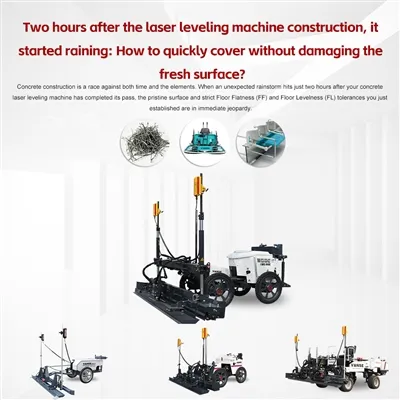
Two hours after the laser leveling machine construction, it started raining: How to quickly cover without damaging the fresh surface?
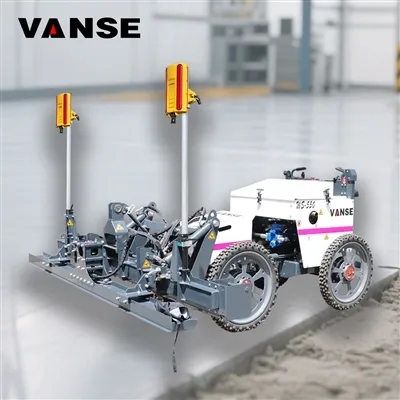
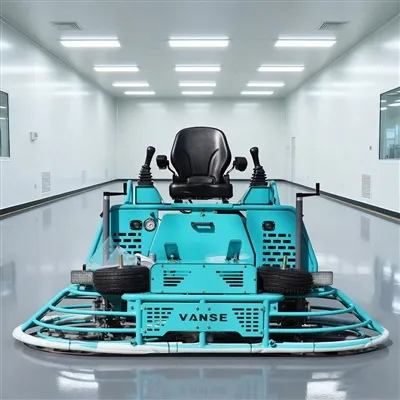
Concrete construction is a race against both time and the elements. When an unexpected rainstorm hits just two hours after your concrete laser leveling machine has completed its pass, the pristine surface and strict Floor Flatness (FF) and Floor Levelness (FL) tolerances you just established are in immediate jeopardy. Two hours post-pour is a highly vulnerable stage: the concrete has likely stopped bleeding, but it has not reached its final set. Heavy rain can wash away the critical cement paste (creating a weak, dusting surface) and cause severe pitting. At the two-hour mark, the slab is typically in the "initial set" phase. The Risk: The surface cannot support human weight without leaving deep footprints, yet it is soft enough that heavy raindrops will physically punch holes in the cream (cement paste). The Goal: You must create a waterproof barrier that floats lightly on the surface or hovers just above it, without dragging or scraping the concrete texture. Do not use heavy canvas tarpaulins or thick, rigid construction blankets. They are too heavy and will leave permanent drag marks and wrinkles in the slab. The Solution: Use 4-mil to 6-mil clear or white polyethylene sheeting (plastic visqueen). It is entirely waterproof, incredibly lightweight, and can be pulled taut over wide expanses. To maintain the precise FF/FL metrics established by your laser Leveling, no worker can step onto the concrete. You must deploy the sheeting from the perimeter. Step 1: The PVC Roller Method. Wrap the roll of poly sheeting around a long, lightweight PVC pipe (or a straight, light aluminum Leveling board). Step 2: Perimeter Deployment. Position workers on opposite sides of the slab (off the concrete, on the formwork, or on pre-existing adjacent slabs). Step 3: Unroll in Mid-Air. Pull the plastic sheeting across the slab, keeping it elevated. Once the sheet is pulled taut across the designated area, gently lower it straight down onto the wet concrete. Step 4: Secure the Edges. Weight down the edges of the plastic with lumber, sandbags, or excess rebar resting outside the formwork so the wind does not lift it. Do not attempt to smooth out minor wrinkles in the middle of the slab; the pressure will cause more damage than the wrinkle itself. Once the rain passes and the ambient temperature begins to dry the slab, carefully peel back the plastic sheeting. If the deployment was successful, the concrete paste will still be intact, though there may be minor surface blemishes or wrinkles from the plastic. This is where the right finishing equipment salvages the project. As engineered by Shandong Vanse Machinery Technology Co., Ltd. (www.vansemac.com), achieving a seamless industrial floor requires a synergistic equipment ecosystem. Preserving the Grade: By deploying the plastic correctly, you protected the macro-levelness achieved by your Vanse YZ30-4E or YZ40-4E telescopic boom laser Leveling. Mechanical Correction: To erase the minor wrinkles or light rain pitting left behind by the plastic, deploy a heavy-duty ride-on power trowel (such as the Vanse VS836/ VS1046). The high-speed, dual-rotor mechanical compaction will aggressively knead the surface paste, burnishing out the superficial rain/plastic marks and restoring the dense, highly wear-resistant finish required for commercial floors. A sudden downpour does not have to be a disaster. By stocking lightweight poly sheeting on every job site and utilizing a "no-step" deployment method, contractors can protect the fresh paste. Relying on advanced, heavy-duty finishing equipment afterward ensures that the final floor still meets rigorous international specifications. Note: The parameters provided in this document are for reference only and are not mandatory. Due to differences in technical characteristics between different brands and models of laser levelers, please consult the manufacturer for a suitable solution before actual operation. This reference document assumes no responsibility for any issues arising from failure to follow the manufacturer's instructions.New technology application of concrete laser leveling machine
Based on the current application of new technologies and major trends in the construction industry, its future development will focus on the core dimensions of "intelligence," "unmanned operation," "greening," and "integration." The following is a detailed outlook: This is one of the ultimate goals of future development. Current automation only assists operators, but in the future, true "unmanned operation" will be achieved. Environmental Perception and Obstacle Avoidance: leveling machines will be integrated with advanced sensors such as LiDAR, millimeter-wave radar, and computer vision cameras, enabling real-time perception of their surroundings, identifying obstacles (such as materials, workers, and other equipment), and automatically planning paths or initiating emergency braking to ensure construction safety. High-Precision Navigation and Positioning: Combining GNSS (Global Navigation Satellite System), RTK (Real-Time Kinematic), and SLAM (Simultaneous Localization and Mapping) technologies, leveling machines will achieve centimeter-level positioning and autonomous movement in the dynamic and unstructured environment of construction sites, without the need for human intervention. Cluster collaborative work: On a large construction site, multiple unmanned leveling machines, unmanned trowels, and unmanned transport vehicles will be uniformly dispatched and directed by a central control system ("honeycomb brain"), working together like a swarm of bees, automatically dividing areas, and efficiently and seamlessly connecting to achieve 24-hour uninterrupted construction. AI will be upgraded from a "support" role to a "decision-making" one. AI Predicting Construction Quality: Using machine learning models, AI can analyze data such as vibration frequency, concrete slump feedback, and ambient temperature and humidity during the leveling process in real time to predict potential quality issues (such as cracking and sanding) in the final floor, and instantly adjust leveling parameters (such as speed and vibration intensity) to avoid defects. Intelligent Path Planning and Optimization: AI algorithms will automatically calculate and select the most efficient and appropriate leveling path and sequence based on factors such as the work area shape and the initial setting time of concrete, maximizing equipment utilization and construction efficiency. Predictive Maintenance Upgrade: Future systems will not only generate alarms but also accurately predict the remaining life of components (such as engines and hydraulic pumps) by analyzing historical data and real-time operating status (such as hydraulic oil temperature and engine vibration spectrum). This allows for pre-ordering of parts and scheduling of repairs, significantly reducing the risk of unplanned downtime. The leveling machine will become a key data collection terminal for building a "digital twin construction site." Real-time Mapping: Sensors on the leveling machine will simultaneously generate a high-precision digital twin model of the physical floor during construction. This model includes not only geometric dimensions but also attribute data such as construction time and compaction level. Full Traceability: Owners and project managers can review every moment of floor construction and access construction data at any point, enabling precise tracing of quality issues and significantly streamlining the acceptance process. Providing a Foundation for Subsequent Processes: The resulting high-precision digital model can be directly used for subsequent automated construction (such as AGV navigation and rack installation), facilities management (FM), and operations and maintenance (BIM operations and maintenance), becoming the data cornerstone for building lifecycle management. Full-Scale Adoption of Pure Electric Vehicles: With increasing battery energy density and decreasing costs, pure electric levelings will become mainstream, particularly in indoor applications and areas with stringent environmental requirements. Their advantages of quiet operation, zero emissions, and low operating costs are irreplaceable. Exploring Hydrogen Fuel Cells: For large-scale, outdoor projects requiring long, continuous operations, hydrogen fuel cells may become a complementary solution, offering faster energy replenishment and longer battery life, enabling truly zero-carbon construction. Lightweighting and New Material Applications: The use of more advanced composite materials and optimized structural designs can reduce equipment weight, reducing stress on unpaved floors and improving energy efficiency. Quick-Change Attachments: The main machine design will be more modular, allowing for quick connection and replacement of actuators with different functions, such as switching from a "leveling head" to a "dry hardener spreader" or "curing agent sprayer." This allows for multiple uses of one machine and reduces equipment investment costs. Adaptability to Diverse Materials: With the increasing use of new concrete materials (such as self-leveling, ultra-high-strength, and fiber-reinforced concrete), the leveling machine's vibration system and scraper design will become more intelligent and adjustable to adapt to the rheological properties of different materials for optimal application results. The future concrete laser leveling will no longer be a single-function construction machine, but a self-driving robot with an integrated AI brain and perceptual capabilities. It will be an intelligent node in the smart construction site network, seamlessly connected to all aspects of the process, including design, scheduling, and operations and maintenance, via the cloud. For construction companies, this means: Ultimate Quality: Construction results will closely resemble the perfect design of the digital model. Maximize Efficiency: Labor costs will drop dramatically, and construction cycles will be significantly shortened. Digital Management: Decisions will be based on real, comprehensive data, resulting in more transparent and precise management. Safer/Greener Operations: Reduced manual labor risks will enable low-carbon, environmentally friendly construction. Click the below to jump immediately!!!Analysis of the demand differences and preferences for power trowels in key regional markets such as North America, Europe, and Asia
Below, I will conduct a detailed analysis of the demand differences and preferences for matting machines in the three key regional markets of North America, Europe, and Asia. The North American market: It pursues high efficiency, high power and durability, prefers large-scale and automated equipment, has a high brand loyalty, and the rental market is an important driving force. The European market: Emphasizing safety, environmental friendliness, and precise craftsmanship, it prefers well-designed, energy-efficient, and environmentally friendly small and medium-sized equipment that meets strict standards. The Asian market: Demand is highly polarized. The high-end market pursues brand and performance, while the mainstream market pays extreme attention to cost-effectiveness and multi-functionality, and is extremely sensitive to price. North America, especially the United States, is one of the world's largest markets for trowels, characterized by its vast territory, sparse population, high labor costs, and large-scale construction projects. High efficiency and large-scale: As they are commonly used in large-scale concrete floor construction in large warehouses, shopping centers, industrial plants, etc., the market strongly prefers large riding trowelers and large-diameter hand-held trowelers. Strive to complete the construction of the largest area within the shortest initial setting time of concrete. Power and durability: Large-displacement gasoline engines (such as the Honda GX series) are widely used, aiming for strong power and reliability during long-term continuous operation. The structure of the equipment must be sturdy and durable to withstand high-intensity use and potential rough operation. Automation and ease of use: Interested in automation functions that can reduce the skill requirements for operators, such as the integration of laser leveling systems and automatic leveling functions, etc. The ergonomic design of operation is also very important. Brand preference: Extremely high brand recognition, an established brand (regarded as the industry's gold standard). Users have a strong loyalty to the brand and believe that the brand represents quality and reliability. Drive mode: Gasoline drive is the absolute mainstream as it offers the best power and mobility. Electric models are mainly limited to small-scale indoor construction with strict emission requirements. Procurement channels: The leasing market is extremely developed. A large number of contractors choose to lease equipment from large leasing companies rather than purchase it directly. This, in turn, affects the product design and marketing strategies of manufacturers (which need to meet the durability and standardization requirements of leasing companies). Safety standards: Strictly comply with safety regulations such as OSHA, and require equipment to be equipped with necessary protective devices and emergency stop switches. The European market is renowned for its strict regulations, high environmental protection standards and exquisite craftsmanship requirements. Environmental protection and low noise: The world's strictest control over emissions and noise. Therefore, there is a strong demand for electric trowelers (including battery-powered and cable-powered types) and low-emission gasoline/diesel engines. In urban construction and interior decoration, electric equipment is almost the only option. Safety and Health: Strictly adhere to CE certification and mechanical directives, with extremely high requirements for operator safety protection. The equipment must be equipped with complete protective measures, such as cutter head guards, vibration isolation handles, etc. The focus on ergonomics far exceeds that of other markets to prevent occupational injuries and illnesses. Precision and high-quality construction: For commercial Spaces, residences and other projects, extremely high ground flatness and smoothness are pursued. Therefore, there are strict requirements for the precise adjustment functions of the trowel machine (such as fine-tuning the blade Angle), smooth operation and the final trowel effect. Compact and multi-functional: In European cities, streets are narrow and construction sites have limited space, so there is a greater preference for equipment that is compact in structure and lightweight. There is also a certain demand for multi-functional models that can adapt to various working conditions. Brand preference: Domestic brands have an advantage. Users attach great importance to the "German craftsmanship" or "Italian design" of the product. Drive mode: Electric and gasoline/diesel are given equal weight, and the trend of electrification is much faster than that in North America. The market acceptance of medium-sized three-phase electric trowels and light-duty trowels driven by lithium batteries is very high. Technical preference: Tends to choose products that are technologically advanced and well-designed, even if they are relatively expensive. There is a good acceptance of equipment that integrates technologies such as frequency converters (to achieve stepless speed regulation) and lightweight composite material bodies. The Asian market is the most complex, presenting a typical "pyramid" structure with both high-end and low-end demands coexisting. Extreme cost sensitivity: In mainstream markets other than developed regions such as Japan, South Korea, and Singapore (such as China, India, and Southeast Asia), price is the primary determining factor. This has given rise to a huge domestic mid-to-low-end manufacturing industry, with products mainly meeting basic functions. Polarized market demand High-end market: Large-scale infrastructure projects (airports, ports), high-end commercial complexes, foreign-funded projects, etc. Its demand is similar to that of the North American market, pursuing high-performance and highly reliable products from international first-line brands. The mid-to-low-end market: A large number of civil buildings and small and medium-sized projects mainly use domestic brands with low prices. There is no high demand for durability and fineness. What is more valued is "usable, sufficient and quick return on investment". Versatility and adaptability: As construction teams often need a single machine for multiple uses, there are requirements for the adaptability of the equipment, such as the ability to replace different blades to adapt to concrete of different hardness. The emerging trend of electrification: With the rise of China's manufacturing industry and the tightening of environmental protection policies, cost-effective lithium battery polishing machines are rapidly gaining popularity, especially in interior decoration and urban renewal projects. Brand preference High-end: Similar to the North American market, the brand holds an unshakable position in top-tier projects and is a symbol of quality and credibility. Mid-range/mainstream: Chinese domestic brands have occupied the vast majority of the market share with their extremely high cost performance. Japanese brands also have a certain influence in Southeast Asia and other regions. Procurement behavior: Price-driven is very obvious. The purchase decision-making cycle is short, and the requirements for after-sales service are gradually increasing, but price remains the overwhelming factor. The rental market is developing, but not as mature as that in North America. Product preference: Prefers models with simple structures, easy maintenance, and inexpensive and readily available spare parts. The pursuit of operational comfort and advanced functions is limited to high-end customers. Characteristic dimension The North American market European market The Asian market Core requirements Efficiency, power, durability Safety, environmental protection and precision Cost-effectiveness, multi-functionality (polarization) Product preference Large riding type, large-diameter hand-guided type Compact, electric/low-emission, precision The main type is the economical hand-guided type, and the high-end demand is on par with that in North America Motivation preference Gasoline engines are the main type. Equal emphasis is placed on electric and gasoline/diesel Gasoline engines are dominant, while electric (lithium battery) vehicles are growing rapidly Brand landscape Dominated by international giants, the brand loyalty is high Strong domestic high-end brands, technology-oriented International brands dominate the high-end market, while domestic brands are in the mainstream. The competition is highly intense Price sensitivity Moderately low (emphasis on value Medium (emphasizing quality and compliance Extremely high (mainstream market Procurement channel The rental market is key Professional distributors, direct sales Dealers, online platforms, direct sales from manufacturers Regulation-driven OSHA safety standards CE certification, environmental protection directive (the strictest Standards vary from country to country, but those of China and other countries are rapidly improving Advice for manufacturers/exporters: Entering North America: It is necessary to offer durable and powerful products and cooperate with a strong distribution and after-sales network. Brand building and gaining recognition from leasing giants are the keys to success. Entering the European market: Products must be 100% compliant with CE and other regulations, with a focus on investing in electric and low-noise technologies, emphasizing the safety, precision and environmental friendliness of the products. Entering Asia: Flexible strategies are needed. Either position it at the high end and rely on brand and technological advantages; Either enter the mainstream, design highly cost-competitive products, and establish an efficient supply chain and distribution system. Pay close attention to the market transformation opportunities brought about by lithium battery technology. Note: The parameters provided in this document are for reference only and are not mandatory. Due to differences in technical characteristics between different brands and models of laser levelers, please consult the manufacturer for a suitable solution before actual operation. This reference document assumes no responsibility for any issues arising from failure to follow the manufacturer's instructions.