Technical Knowledge
What are the risks in construction safety of laser leveling machines and pavers?
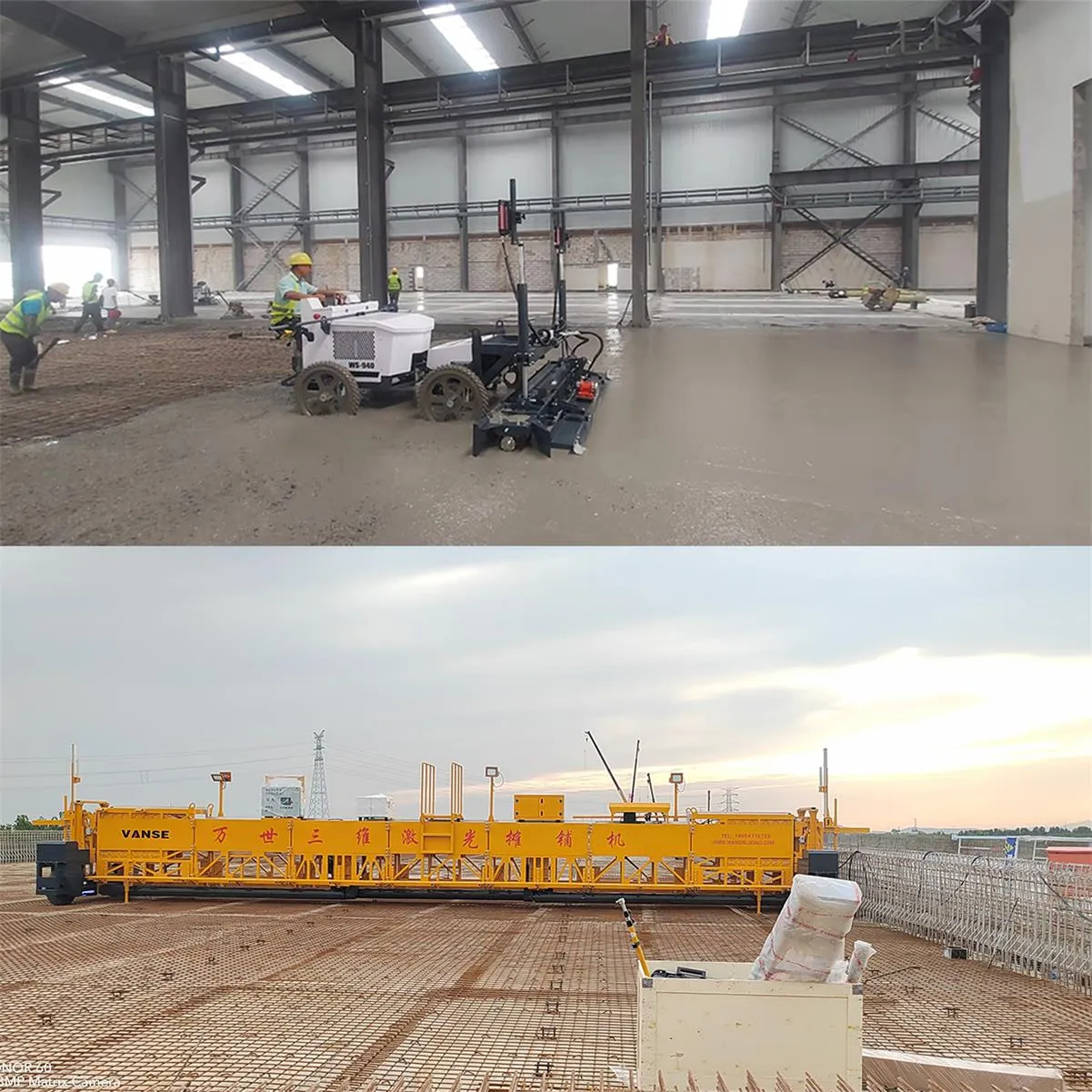
Both laser levelings and pavers present certain risks in terms of construction safety. Here are some of the main security risks they each face:
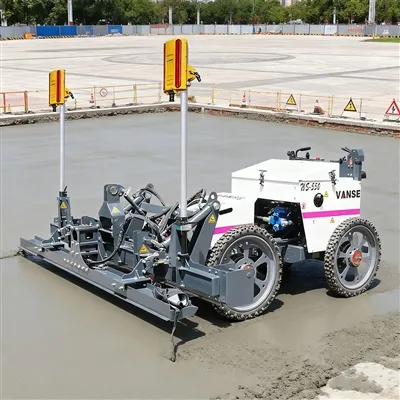
Safety risks of laser leveling machines:
1. Equipment operation errors: Incorrect operation may cause the equipment to lose control and cause an accident.
2. Laser system interference: The accuracy of the laser system is crucial to the leveling quality. If it is interfered with, it may lead to substandard construction or cause an accident.
3. Poor road conditions: Operating on soft, slippery or uneven roads may cause equipment instability or damage.
4. Power supply and electrical safety: The equipment needs to be connected to electricity to work, and there is a risk of electric shock and electrical fire.
5. Improper maintenance and care: Equipment that is not maintained and maintained in a timely manner may increase the risk of failure.
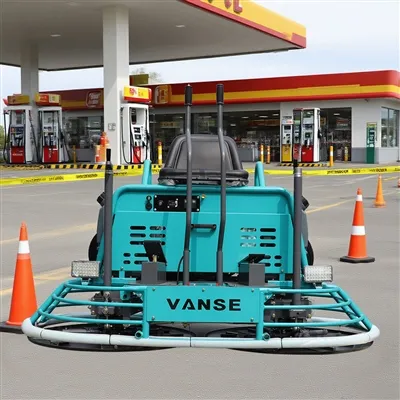
Paver safety risks:
1. Equipment overturning: Due to the large weight and complex structure of the paver, if it becomes unstable during operation, it may overturn.
2. High-temperature oil: The paver needs to use high-temperature oil during operation, which may lead to accidents such as fire or burns.
3. Mechanical damage: Rotating parts of the paver, conveyor belts, etc. may cause mechanical damage.
4. Construction environmental risks: Bad weather, road conditions and other factors may increase construction risks.
5. Traffic safety: At the road construction site, the paver may interact with passing vehicles, posing traffic safety risks. In order to reduce these risks, the construction unit should ensure that the operators have received professional training, the equipment is regularly maintained and maintained, and safety is strictly observed operating procedures.
In addition, on-site safety management personnel should monitor the entire construction process to promptly discover and correct possible safety hazards.
Thanks to All the Friends Who Support and Trust Shandong Vanse Machinery Technology Co., Ltd.
If you want to know more about Shandong Vanse Machinery Technology Co., Ltd. or have any questions, please feel free to contact us:
Our Factory
Shandong Vanse Machinery Technology Co., Ltd.








Share this article

About the Author: Shandong Vanse Machinery Technology Co., Ltd.
Shandong Vanse Machinery Technology Co., Ltd. is a high-tech manufacturer specializing in concrete construction machinery, including laser screeds and related equipment. The company integrates R&D, production, and global sales, with products exported to over 60 countries and widely used in infrastructure projects worldwide.
Previous Post
Next Post
Related Articles
You Might Also Like
Construction Precautions for Concrete Laser Leveling Machines in Extreme Temperature Environments
In extreme temperature environments (high or low), the performance of concrete laser Leveling machines and the setting state of concrete are significantly affected. Based on professional guidance from Vanse Machinery, the following are key precautions for construction in extreme temperature environments: In high-temperature environments, rapid water loss from the concrete and overheating of the hydraulic system are the biggest challenges. Oil Selection: High viscosity index hydraulic oil (such as No. 68 hydraulic oil) must be used to prevent the oil from thinning and causing insufficient pressure due to high temperatures. Radiator Cleaning: Inspect and clean the cooling fins of the engine and hydraulic system before daily operation to prevent dust and cement slurry from clogging them and affecting heat dissipation. Intermittent Operation: Under extremely high temperatures, avoid continuous operation of the machine under overload; if necessary, take measures to stop the machine and cool it down. High temperatures cause concrete slump to drop extremely quickly. During construction, the travel speed of the laser Leveling should be strictly controlled to ensure leveling is completed before the concrete initially sets. Substrate Moistening: The substrate (base) must be thoroughly moistened before construction to prevent it from absorbing moisture from the concrete, which could lead to shrinkage cracks in the underlying layer. High temperatures can cause ground-level heat waves (heat waves) to refract the laser beam, resulting in a "drift" phenomenon. Solution: Erect the laser transmitter in the highest and coolest possible location, and minimize the distance between the transmitter and receiver (ideally within 30-40 meters) to ensure accuracy. Low temperatures can affect machine start-up performance and the hardening speed of concrete. Low-viscosity oil: Replace with low-temperature special engine oil (such as 5W-40) and low-pour-point hydraulic oil (such as No. 32 aviation hydraulic oil) to prevent oil solidification that could damage the pump head. Start-up preheating: Do not operate at high speed immediately after starting. Allow the machine to idle for 10-15 minutes until the hydraulic oil temperature rises above 20°C before beginning leveling operations. Batteries experience a significant capacity reduction at low temperatures. After construction is completed, the batteries and laser emitter should be removed and stored in a warm indoor environment to prevent power loss or freezing and cracking of the LCD screen. When using a laser Leveling, ensure the concrete temperature upon placement is not lower than 5°C. Post-screing treatment: After the machine completes the screing, immediately cover the concrete with plastic film and insulating straw mats to prevent freezing and subsequent surface sanding or cracking. Laser Accuracy Verification: Drastic temperature changes can cause thermal expansion and contraction of precision components inside the laser emitter. It is recommended to recalibrate the reference level every 2-3 hours of continuous operation. Seal Inspection: Extreme high temperatures accelerate seal aging, while extreme low temperatures make seals brittle. Special attention should be paid to checking all hydraulic cylinder joints for leaks. Personnel Safety: In extreme environments, heatstroke prevention and frostbite protection for construction personnel are equally important. If you are carrying out special flooring construction (such as cold storage floors or outdoor plazas) in extremely cold regions (such as below -10°C) or tropical regions, it is recommended to contact WanShi Machinery's technical support to obtain an oil change list and parameter setting guidance for specific machine models. Note: The parameters provided in this document are for reference only and are not mandatory. Due to differences in technical characteristics between different brands and models of laser levelers, please consult the manufacturer for a suitable solution before actual operation. This reference document assumes no responsibility for any issues arising from failure to follow the manufacturer's instructions.The standardized construction process of coarse grinding followed by fine grinding, and the timing for switching between the trowel disc and the trowel on the power trowel.
Let's take a detailed look at the standardized construction process of concrete plastering, especially the technique of "rough grinding first and then fine grinding", as well as the key switching timing between the grinding plate and the power trowel. This is the core link to ensure that the concrete floor (especially the industrial floor) achieves a dense, flat and high-strength surface. This process is a dynamic one that advances based on the setting state of the concrete. The entire process can be summarized into the following stages: Concrete pouring: Ensure that the concrete pouring is smooth and slightly higher than the designed elevation. Vibration and leveling: Use a vibration rod to compact it tightly, and then perform an initial leveling with a long straightedge or a laser screed. Natural settlement and bleeding: Let the concrete settle naturally and bleed out. No mechanical operations are allowed before the bleeding water has completely evaporated. Core objective Slurry lifting: Bringing the slurry rich in cement and fine aggregates on the surface to the surface layer. Preliminary leveling: Eliminate the large undulations left by the straightedge, and slightly press the aggregate down to make the large area basically flat. Seal the pores: Compact the surface layer to lay a solid foundation for subsequent fine grinding. Entry timing (first disc operation) : Concrete condition: When a person stands on it, it sinks by 3 to 5 millimeters, with clear footprints but no obvious overflow of slurry water. This is the critical point of "initial condensation". Test method: The same as the finger pressure method and scratch method mentioned above. This is the signal for the first entry of the power trowel machine. Key points of operation Installation disc: Ensure that the power trowel machine is equipped with a plastic or magnesium alloy power trowel disc. Blade Angle: Adjust the power trowel blade (even if not in use) or keep the chassis parallel to the ground. Operation mode Start the machine and slowly cut into the concrete area at an Angle. Operate along an overlapping route to ensure that each path overlaps with the previous one by one-third. Maintain a slow and steady moving speed to allow the disc sufficient time to knead and lift the slurry. When encountering uneven areas, you can appropriately increase the rotational speed or stay in the local area for a while longer. Effect inspection: After rough grinding is completed, the surface should be a uniform and moist layer of cement slurry, without obvious exposed stones, and the large area should be smooth. Core objective Compact the surface layer: Further enhance the surface density and strength. Final leveling and smoothing: Eliminate the fine scratches left by the disc to achieve the designed flatness and smoothness. Surface sealing: Seal the surface capillary pores to enhance wear resistance, impermeability and dust resistance. Entry timing (first blade operation) : Concrete condition: This is the most crucial judgment throughout the entire process. After completing the first disc operation, it is necessary to wait for the concrete to continue hardening. When the following phenomena occur, it can be switched to blade: Surface moisture disappearance: The previously moist and reflective surface layer has become dull and lackluster. When people walk on it, they leave only very shallow marks or no footprints at all. When touched by hand, there is a distinct sense of resistance (roughness), but it does not stick to the slurry. In simple terms: When the surface of the concrete changes from "wet bright" to "dry dark" and has a certain load-bearing capacity. Key points of operation Switch the power trowel: Remove the disc and install the metal power trowel (blade). Make sure the blade is installed flat. Adjust the Angle: For the final finishing, you can slightly lift the tail of the power trowel to form a small Angle (about 5°) between the front edge of the blade and the ground. This will achieve a better shearing and calendering effect. Operation mode Cross-operation methods (for example, one horizontal pass and one vertical pass) can be adopted to ensure flatness. Increase the machine's rotational speed appropriately and speed up the lateral movement. Perform multiple rounds of polishing, each lighter and faster than the previous one, with the aim of "flattening" the surface. Final polishing: Before the concrete is about to set, a final fine polishing is carried out. At this time, the best bright effect can be achieved. For a more intuitive understanding, we can summarize the switching timing as follows: Component Homework stage Core role Judgment of switching timing (Key signal) Description of concrete state Grinding plate/disc Rough grinding Slurry extraction and initial leveling First entry: The concrete reaches initial setting. "Wet soft and malleable" Subsequent disc operation: When the surface is damaged due to operation and slurry needs to be lifted again. • The footprint depth is 3 to 5mm • Scratches can be maintained • No free bleeding Spatula/blade Fine grinding Compact and finally smooth The first switch: After rough grinding, the moisture on the surface of the concrete evaporates and its hardness increases. "Dry, dark, tough and astringent" • The surface water luster disappears • The footprints are extremely shallow or non-existent • It feels rough when touched and is not sticky to the hand Important Notes: Dynamic adjustment: This process is not static. If, after the first blade operation, it is found that the surface is not hard enough and "waves" or "blade marks" appear, it indicates that the switch was made too early. The disc should be switched back or wait further. If the switch is too late and the surface has hardened, it will not be able to effectively collect light and is prone to surface cracking. Environmental sensitivity: Temperature, wind speed and humidity can greatly affect the time Windows of each stage. In summer, on sunny days, the window period is very short and needs to be closely connected. In winter or humid environments, a long wait is required. The "Better late than early" principle: When it comes to the timing of switching blades, it is better to do it a little later (as long as it can still produce luster) than too early. Switching too early will tear the surface, causing irreparable damage. Summarize the process chain Pouring → Leveling → standing (waiting for initial setting) → Rough grinding of [disc] (lifting slurry) → Waiting (surface dries and darkens) → Fine grinding of [blade] (finishing) → curing Mastering this process and timing judgment proficiently is an essential skill for producing high-quality concrete floors. Note: The parameters provided in this document are for reference only and are not mandatory. Due to differences in technical characteristics between different brands and models of laser levelers, please consult the manufacturer for a suitable solution before actual operation. This reference document assumes no responsibility for any issues arising from failure to follow the manufacturer's instructions.Economic analysis of ride-on power trowels and walk-behind power trowels in Projects of different scales
The economic choice between ride-on and walk-behind power trowels is far more than just about the unit price of the equipment; it is a systematic decision based on the scale of the project, overall cost and efficiency. The following is the economic analysis of the two in projects of different scales. Walk-behind power trowel: Low initial investment, strong flexibility, but high labor cost per unit area and low efficiency. Its economy is reflected in small-scale, complex-shaped or projects that require a large amount of edge work. Ride-on power trowel: High initial investment, but extremely low construction cost per unit area and high efficiency. Its economy has an overwhelming advantage in large-scale and large-scale projects. Comparison dimension Walk-behind power trowel Ride-on power trowel Economic analysis Initial purchase cost Low (unit price only tens of thousands of yuan) High (Unit price of hundreds of thousands of yuan, more than 5 to 10 times that of the hand-held type) The hand-holding style wins. This is the primary consideration for contractors with tight budgets and unstable sources of work. 2. Labor costs High (Requires 1 experienced operator +1 assistant worker, with extremely high labor intensity) Extremely low (only one operator is needed, with low labor intensity) The riding style wins. In the long term, the savings in labor costs are the greatest economic advantage of ride-on vehicles, especially against the backdrop of rising labor costs. 3. Work efficiency Low (about 100-200 square meters per hour, relying on the physical strength of the workers) Extremely high (reaching over 1,000 to 2,000 square meters per hour) The riding style wins. The efficiency gap can reach 5 to 10 times, directly affecting the construction period. 4. Construction quality and consistency Relying on the skills and experience of the operators, it is difficult to ensure complete flatness during large-scale construction. Guaranteed by machines, the flatness and smoothness are extremely high and uniform. The riding style wins. High quality reduces the risks and costs of subsequent repairs, which is particularly crucial for high-standard floors such as warehouses and logistics centers. 5. Applicability and flexibility High (capable of handling complex areas such as corners, column bases, and small rooms) Low (Unable to handle edges and narrow areas, usually needs to be used in conjunction with a hand-held type) The hand-holding style wins. The vehicle-mounted type cannot completely replace the walk-behind type in edge processing. 6. Operator requirements and fatigue levels Workers with high skills and abundant physical strength are prone to fatigue and their efficiency will decline over time. It has low physical requirements. Ordinary people can operate it after training and can maintain high efficiency for a long time. The riding style wins. The reliance on workers with special skills has been reduced, and the personnel are more stable. 7. Maintenance and operation costs Low (simple structure, low maintenance cost) Higher (Complex structure, higher maintenance costs for hydraulic systems, etc.) The hand-holding style wins. However, compared with the labor costs it saves, this increase is usually acceptable. Recommended equipment: walk-behind power trowel Economic analysis Sufficient efficiency: For small areas, the hand-held type can be completed within a reasonable time. Flexibility is essential: Such projects usually have many partitions and corners, making it impossible to carry them out in a ride-on style. Optimal cost: The high initial investment in a car cannot be diluted through this small project, and renting a car may not be cost-effective either. Using the hand-held type is the solution with the lowest total cost. Economic analysis Combination strategy: Use the ride-on type to handle the rapid slurry lifting, compaction and finishing of large areas, and use 1-2 walk-behind types to handle areas such as edges and column roots that machines cannot reach. The way of balance: This combination can not only take advantage of the high efficiency of the ride-on type in large areas, but also make up for the lack of flexibility of the hand-held type. It is the golden combination for achieving the best economic benefits and construction progress. At this point, the return on investment in the form of a vehicle begins to become very significant. Recommended equipment: Multiple ride-on power trowels and walk-behind power trowels working in formation Economic analysis Only efficiency can meet the construction period: Only vehicle-like high efficiency can complete the work within the required construction period of such projects. Economies of scale are reflected in the fact that the initial investment in a ride-on vehicle is diluted by the vast area, and the depreciation cost per unit area of equipment becomes very low. Meanwhile, the labor cost savings and the construction period advantage it brings are extremely significant. Quality Assurance: For the extremely demanding flatness of the floor, only the ride-on type can ensure the uniformity of quality and avoid huge repair costs caused by quality issues. Project scale Recommended plan Core economic logic Small and complex shapes Walk-behind type Control the initial investment and leverage the advantage of flexibility. Medium-sized, regular large-area 1 Ride-on power trowel + walk-behind type Reduce equipment investment through efficiency improvement to achieve the optimal total cost. Large and extra-large ride-on power trowel team + walk-behind type Efficiency is the only option, maximizing economies of scale and achieving the highest return on investment. The final decision should also take into account: Business model: If you have been undertaking large-scale floor projects for many years, investing in ride-on flooring is an inevitable choice. If the projects are scattered and mainly small in scale, walk-behind or rental vehicle types are more economical choices. Schedule pressure: Tight schedules often force you to choose more efficient equipment, even if the initial investment is higher. Trend of labor costs: In the long run, labor costs will only keep rising. Investing in mechanized and automated equipment is an inevitable trend for cost reduction and efficiency improvement. Therefore, choosing which equipment to use is essentially a precise financial calculation of your business type, project scale and long-term development strategy. Note: The parameters provided in this document are for reference only and are not mandatory. Due to differences in technical characteristics between different brands and models of laser levelers, please consult the manufacturer for a suitable solution before actual operation. This reference document assumes no responsibility for any issues arising from failure to follow the manufacturer's instructions.