Technical Knowledge
The key technical points of using power trowel to handle large-span floor slabs, high-standard factories, airports, large parking lots and other projects
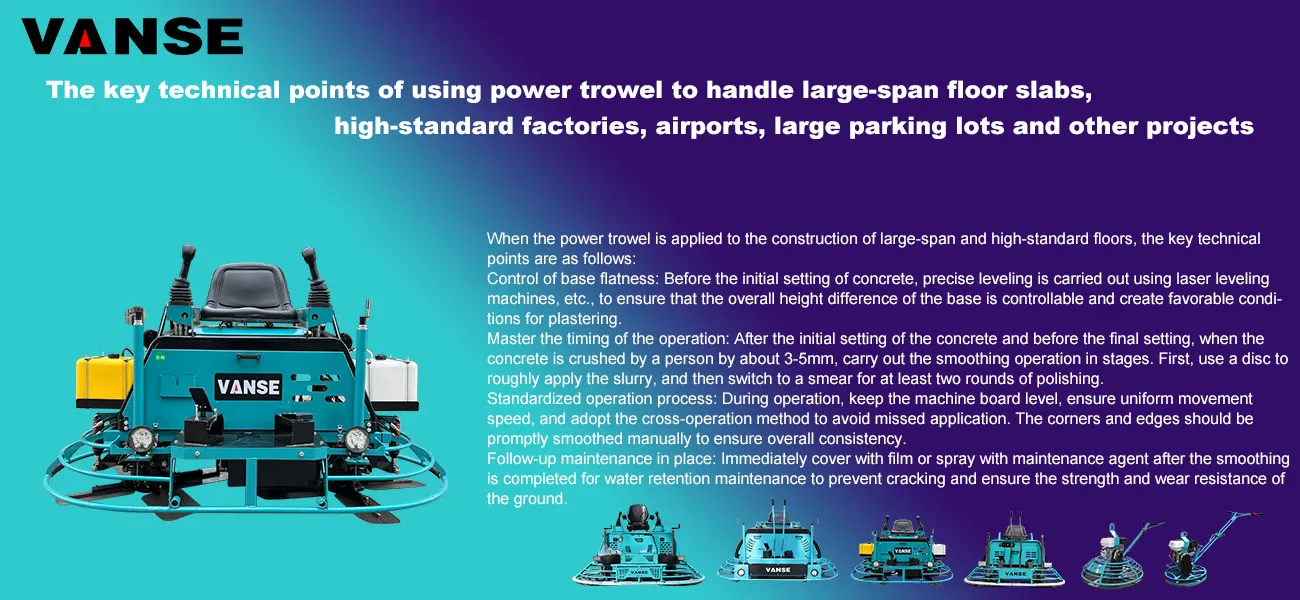
Using a power trowel to handle large-span and high-standard floor projects is a systematic project, and it is by no means as simple as "starting up and smoothing". It involves the meticulous management of the entire process from the initial preparation, concrete batching, laser leveling to power troweling and finishing.
The following are the key technical points of these large-scale and high-standard projects, which are elaborated at three levels: "Basic guarantee", "core control", and "advanced advancement".
Ⅰ. Basic Guarantee: Laying the Foundation for Success
These key points are the prerequisites for success or failure. If they cannot be achieved, there is no need to talk about anything else.
Foundation and bedding treatment
Density and flatness: The foundation must be uniformly compacted to prevent uneven settlement in the later stage. The flatness of the cushion layer (usually gravel or plain concrete) is of vital importance. Its elevation error should be strictly controlled (such as within ±10mm), otherwise a large amount of concrete will be wasted and the final flatness will be affected.
Waterproofing and moisture-proofing: In areas with high groundwater levels, reliable waterproof and moisture-proof layers must be applied to prevent water vapor from rising and affecting the quality and service life of concrete.
Concrete mix proportion and quality
Low water-binder ratio: This is the lifeline of high-strength and wear-resistant floors. The water-cement ratio is usually required to be controlled below 0.45, and the lower the better. A low water-cement ratio can reduce bleeding, enhance strength and wear resistance, and minimize shrinkage cracks.
Aggregate selection: Choose coarse and fine aggregates with good gradation and high hardness. The maximum aggregate particle size should not be too large (usually ≤25mm) to ensure the uniformity of the surface slurry.
Admixtures and additives
Mineral powder/fly ash: Reasonable use can improve workability, reduce hydration heat, and decrease temperature difference cracks.
Water reducing agent: Highly efficient water reducing agents must be used to significantly reduce water consumption while ensuring fluidity.
Fiber: In large-span floor slabs, it is strongly recommended to add polypropylene synthetic fibers, which can effectively suppress plastic shrinkage cracks in concrete.
The scientific pouring plan
Reasonable pouring sequence and direction: Develop a detailed pouring plan to ensure continuous supply of concrete and avoid cold joints. For large-scale construction, it is necessary to pour in separate compartments and arrange the construction joints reasonably.
Ⅱ. Core Control: Laser leveling and polishing process
This is the core operational step to achieve high flatness and high finish.
High-precision laser leveling
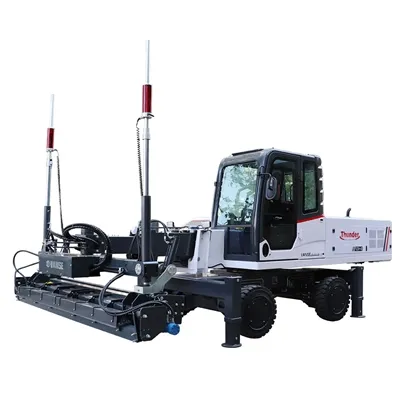
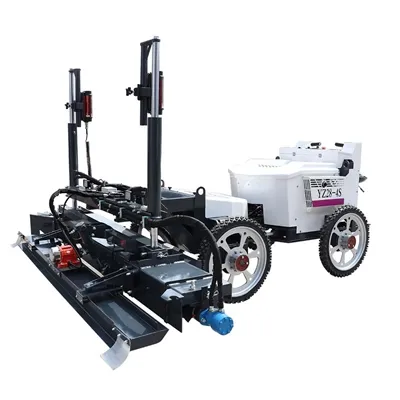
Equipment selection: A laser leveler with a laser emitter + laser receiver + automatic control hydraulic system must be used. This is the only way to achieve ultra-high flatness.
Reference setting: The position of the laser emitter must be stable to ensure that there is no signal obstruction throughout the entire operation area. The elevation control points need to be rechecked multiple times.
The "one-time molding" concept: The laser screed integrates scraping, vibration and leveling into one, leveling the concrete at the designed elevation in one go to form a dense and uniform base layer. This is the foundation for the subsequent work of the polishing machine.
The "golden time window" for operating a power trowel machine
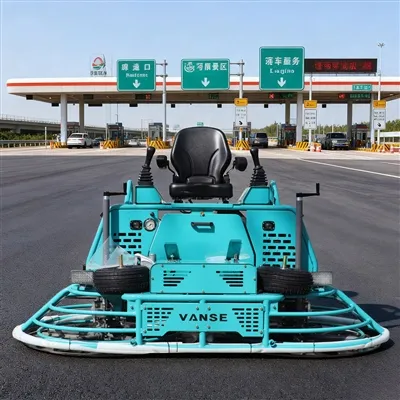
The operation of the power trowel must closely follow the initial setting process of the concrete and be carried out in stages:
Phase One: Preliminary slurry extraction (before initial setting)
Timing: After the concrete pouring and laser leveling, when a person stands on it and sinks by about 3-5mm.
Equipment: Use a disc smear.
Operation: Run at low speed, press down the protruding aggregates on the surface, bring up the slurry, eliminate the slight tooth marks left by the screed, and make the surface tend to be uniform. The aim is not to smooth it out, but to compact and lift the slurry.
Phase Two: Compaction and Polishing (initial setting to final setting)
Timing: When a person stands and sinks about 1-2mm, there is no standing water on the surface, and a slight indentation appears when pressed with a finger. This is the most crucial moment.
Equipment: Replace with a blade (power trowel).
Operation
Angle control: At the beginning, the Angle between the power trowel blade and the ground should be small (almost parallel) to perform low-speed and large-area finishing.
Multiple cross-operation: Cross the light at least 2 to 3 times along both the longitudinal and transverse directions. Each time, increase the blade Angle appropriately compared to the previous time and raise the rotational speed.
Objective: Eliminate the marks left by the disc, fully compact the surface slurry, and achieve a dense and bright effect.
Phase Three: Final Calendering (before final setting)
Timing: When standing on it, there is almost no sinking. Only by pressing hard with fingers can marks be left.
Operation: The blade is at the maximum Angle to the ground and runs at high speed. This polishing is done to achieve an extremely high degree of smoothness and eliminate all spatula marks.
Note: All operations must be completed before the concrete loses its plasticity. It is strictly prohibited to sprinkle water or cement for finishing.
Ⅲ. Advanced: Addressing Special Requirements and Enhancing Durability
For airports, high-standard factories, etc., the following key points also need to be considered:
Seam treatment technology
Precise joint cutting: Cutting should be carried out immediately when the concrete reaches a certain strength (usually 6 to 12 hours after pouring, when it can be cut with a toothless saw without chipping). The depth of the cut seam should be 1/3 to 1/4 of the plate thickness, aiming to induce shrinkage cracks to occur at the predetermined position.
Grouting material: Use high-quality and durable grouting glue to protect the seam edge from being damaged by hard objects such as forklifts.
A complete maintenance system
Timeliness: Start curing immediately after the final finishing is completed and the concrete surface is about to dry.
Method selection
Spray curing agent: Most suitable for large-scale construction, it can form a film to prevent water evaporation. It is necessary to ensure that the spraying is uniform and full coverage.
Covering and water retention maintenance: If geotextiles, films, etc. are used for covering and continuous watering for moisture retention, the effect is the best but the cost is relatively high.
Curing period: At least 7 days. For high-grade concrete with crack resistance requirements, it is recommended to cure for 14 days.
Construction of special functional layers (if necessary)
Wear-resistant aggregates (quartz sand, metal, alloy) :
The timing of spreading: It should be carried out after laser leveling and before initial setting when the base concrete reaches a state "sufficient to bear the weight of people and spreader".
Spread in several portions: Spread at least twice (60%/40% of the total amount) to ensure even distribution.
Integrated finishing: After spreading, the wear-resistant aggregate is completely pressed into the surface layer of the concrete through the disc and blade operation of the power trowel machine and integrates with it.
Sealant curing agent
Construction should be carried out after the curing period has expired and the floor is completely dry.
Through effective penetration and chemical reactions with the components in concrete, it can significantly enhance surface hardness, wear resistance and impermeability, making it a powerful tool for creating ultra-long-life floors.
Summary: List of key technical points
| Stage | Key points | Objectives and Descriptions |
| Preparatory work | The foundation cushion layer is flat and dense | Provide a stable foundation for the floor |
| Low water-cement ratio concrete + fiber | Ensure the material's own strength and crack resistance | |
| Core construction | High-precision laser leveling | The foundation for achieving ultra-high flatness (FF/FL value) |
| Master the "Three Stages" of polishing | The initial setting involves extracting the slurry, finishing before the final setting, and finally calendering to achieve a smooth finish | |
| Post-processing | Cut the seams accurately and promptly | Guide and control shrinkage cracks |
| Maintain with sufficient time and materials | Ensure the development of concrete strength and prevent cracking | |
| Function improvement | Wear-resistant aggregates are evenly spread and integrated | Enhance the surface wear resistance and impact resistance |
| Penetrating sealant curing agent | Significantly enhance hardness, density and chemical resistance |
The key to success lies in integrating all the above points into a seamless and controlled process. Any oversight in any link may lead to all previous efforts being wasted. Therefore, a high-quality construction team, advanced equipment and strict on-site management are all indispensable.
Note: The parameters provided in this document are for reference only and are not mandatory. Due to differences in technical characteristics between different brands and models of laser levelers, please consult the manufacturer for a suitable solution before actual operation. This reference document assumes no responsibility for any issues arising from failure to follow the manufacturer's instructions.
Thanks to All the Friends Who Support and Trust Shandong Vanse Machinery Technology Co., Ltd.
If you want to know more about Shandong Vanse Machinery Technology Co., Ltd. or have any questions, please feel free to contact us:
Our Factory
Shandong Vanse Machinery Technology Co., Ltd.








Share this article

About the Author: Shandong Vanse Machinery Technology Co., Ltd.
Shandong Vanse Machinery Technology Co., Ltd. is a high-tech manufacturer specializing in concrete construction machinery, including laser screeds and related equipment. The company integrates R&D, production, and global sales, with products exported to over 60 countries and widely used in infrastructure projects worldwide.
Previous Post
Next Post
Related Articles
You Might Also Like
Is it expensive to use a concrete laser leveling?
Concrete leveler is a mechanical equipment widely used in concrete surface treatment and construction. It is mainly used for leveling, polishing and polishing the concrete surface. Using a concrete leveler can improve the flatness and quality of the concrete surface, reduce manual labor intensity, and improve construction efficiency. However, the cost of using a concrete leveling is an issue that needs to be considered. The cost of using a concrete leveling machine will be analyzed from the following aspects. 1. Equipment purchase cost The purchase cost of concrete leveling machines is relatively high, and the prices vary greatly depending on different models and specifications. Generally speaking, the price of ordinary concrete leveling machines ranges from tens to hundreds of thousands, while some high-end imported leveling machines are even more expensive. In addition, factors such as performance, reliability, and after-sales service need to be considered when purchasing a leveling machine, so choosing the right equipment is an important cost expenditure. 2. Equipment maintenance costs The maintenance cost of a concrete leveling is also a significant expense. Equipment maintenance includes regular inspection, maintenance, replacement of wearing parts, etc. Generally speaking, the maintenance cost of imported equipment is relatively high, while the maintenance cost of domestic equipment is relatively low. In addition, when using a concrete leveling, you need to pay attention to the correct operation and use of the equipment to avoid equipment damage and fault repair, which is also an important part of maintenance costs. 3. Construction cost When using a concrete leveler for construction, a certain amount of construction cost is required. This includes wages of construction personnel, rental costs of equipment, consumption of materials, etc. Among construction costs, wages and equipment rental costs are relatively fixed, while material consumption is related to the performance and use efficiency of the equipment. Therefore, choosing a concrete leveling with excellent performance and high efficiency can reduce construction costs. 4. Energy consumption cost The concrete leveling needs to consume a certain amount of energy during use, such as electricity, fuel, etc. Generally speaking, the energy consumption of a device is related to its power and performance. Imported equipment has larger power and relatively higher energy consumption, while domestic equipment has smaller power and relatively lower energy consumption. Therefore, choosing the right equipment can reduce energy consumption costs. 5. Other costs In addition to the above costs, there are other costs that need to be considered when using a concrete leveling, such as equipment depreciation costs, transportation costs, insurance costs, etc. These costs vary on a case-by-case basis but need to be taken into consideration. In summary, the cost of using a concrete leveling is relatively high, but with the continuous development of technology and the continuous improvement of equipment, the cost of using a concrete leveling is gradually decreasing. When choosing to use a concrete leveling, it is necessary to comprehensively consider the actual situation, select the appropriate equipment model and specifications, and pay attention to the correct operation and use of the equipment to reduce usage costs and improve construction efficiency.How to strengthen construction management in floor construction to ensure the smooth progress of the construction process?
🎨 Technical preparation: Organize technical personnel to be familiar with the construction drawings, master the floor design requirements, technical standards and construction technology. Prepare a detailed floor construction plan, covering the construction process, quality standards, safety measures, progress plan, etc., and submit it to the supervision and construction unit for review and approval. At the same time, conduct a comprehensive technical briefing for the construction personnel to make them clear about the construction process, quality requirements and safety precautions. 🎨 Material preparation: According to the construction drawings and plans, accurately determine the variety, specifications, and quantity of the required floor materials and purchase them. Strictly inspect the purchased floor materials, check whether the quality certification documents and specifications are consistent, and strictly prohibit unqualified materials from entering the site. According to the material storage requirements, keep them properly to prevent moisture, deterioration, and damage. 🎨 Staff preparation: Establish a professional floor construction team, and the construction personnel should have the corresponding skills and experience, and be qualified after training. Clarify the job responsibilities of each construction personnel, and make sure that the division of labor is clear and the responsibility is assigned to the person. Provide safety education and training for construction personnel to improve safety awareness and self-protection ability. 🎨 Equipment and tool preparation: According to construction needs, equip with complete floor construction equipment and tools, such as concrete laser leveling machine, floor grinder, vacuum cleaner, mixer, trowel, etc., and ensure that the equipment is in good performance and can operate normally. Regularly inspect, maintain and service the construction equipment and tools, and replace damaged parts in time to ensure safety and reliability. For the concrete laser leveling machine, you must be familiar with its performance and operation methods, debug it before use, and ensure that the laser system, hydraulic system, etc. work normally. 🎨 Site preparation: Clean the construction site, remove obstacles, level the site, and ensure that the construction site is solid and flat. Take drainage measures at the construction site to prevent water accumulation from affecting the quality of floor construction. Set up obvious construction signs and warning signs, demarcate the construction area, implement closed management, and prevent unrelated personnel from entering. 🎨 Base treatment: Clean the surface of the base, remove debris, dust, oil, etc., to ensure that the surface of the base is clean, flat, and crack-free. Check and accept the base, the flatness deviation should meet the design requirements, and the non-compliant parts should be processed. According to the conditions of the base layer, take appropriate treatment measures, such as applying interface agent, repairing cracks, etc., to enhance the bonding force between the base layer and the floor. 🎨 Floor material laying: Lay the floor material according to the construction plan and material instructions, pay attention to the uniformity and density of the material, and avoid defects such as hollowing and cracks. Control the laying thickness of the floor material to ensure that it meets the design requirements and the deviation is within the allowable range. If it exceeds, make corrections. During the laying of the floor material, vibrate and compact it in time to remove air so that the material is closely combined with the base layer. If a concrete laser leveler is used, after pouring the concrete, use it for rapid leveling to improve the flatness and density. 🎨 Floor construction process control: According to the flatness of the floor, reasonably select grinding equipment and grinding discs for floor grinding, control the grinding speed and pressure, and ensure that the surface is flat and smooth. After grinding, vacuum and clean in time. Mix the materials according to the requirements of the floor material mix ratio to ensure uniform mixing and consistent performance. After the mixed floor material is laid, smooth it in time and control the speed and angle of the smoothing machine. When using a concrete laser leveler, it is necessary to operate it in accordance with its operating procedures to ensure that the laser system accurately controls the elevation of the leveling head and achieves high-precision leveling. 🎨 Construction quality control: Establish a quality management system, clarify the responsibilities of quality management personnel, and strengthen quality control during the construction process. Strictly follow the construction specifications and quality standards for construction, conduct quality self-inspection after each process is completed, and report to the supervision unit and the construction unit for acceptance after passing the inspection. For quality problems that arise during construction, promptly analyze the causes and take measures to rectify them to ensure the quality of floor construction. For example, the use of a concrete laser leveler can improve the flatness and levelness of the floor. Regularly check its leveling effect and make timely adjustments if there is any deviation. 🎨 Construction safety management: Establish a safety management system, clarify the responsibilities of safety management personnel, and strengthen safety management at the construction site. Conduct safety education and training for construction personnel to improve safety awareness and self-protection capabilities, and require construction personnel to comply with safety operating procedures and correctly wear and use personal safety protection equipment. Set up obvious safety warning signs at the construction site and equip it with necessary fire-fighting equipment and first-aid medicines. Strengthen safety inspections, timely discover and eliminate safety hazards, immediately stop construction at locations with safety hazards, and take measures to rectify them. 🎨 Construction progress management: Develop a construction progress plan, clarify the construction tasks and time nodes at each stage, and report to the supervision unit and the construction unit for review and approval. According to the progress plan, reasonably arrange construction personnel and construction equipment to ensure smooth progress. Regularly check and analyze the construction progress, promptly discover factors that affect the progress, and take effective measures to adjust to ensure that the floor construction is completed on time. For example, the use of concrete laser leveling machines can improve construction efficiency. It is necessary to reasonably arrange its working hours, give full play to its role, and speed up the construction progress. 🎨 Construction cost management: Establish a cost management system, clarify the responsibilities of cost management personnel, and strengthen cost control during the construction process. Strictly control the procurement cost of floor materials, and select material suppliers with reliable quality and reasonable prices. Reasonably arrange construction personnel and construction equipment to improve construction efficiency and reduce costs. Strengthen cost accounting at the construction site, keep abreast of cost trends, analyze and adjust cost deviations, and ensure that construction costs are controlled within the budget. 🎨 Acceptance standards: After the floor construction is completed, the acceptance shall be carried out in accordance with the design requirements and relevant construction specifications. The acceptance content includes that the floor surface is flat and smooth, without defects such as cracks, hollows, and sanding; the floor color is uniform and consistent, without obvious color difference; the floor strength meets the design requirements, and the compressive strength test report should be complete; the floor slope meets the design requirements, the drainage is smooth, and there is no water accumulation. 🎨 Acceptance procedures: After the construction unit completes the floor construction, it will first conduct a self-inspection. After passing the self-inspection, it will submit the project inspection form to the supervision unit, and attach construction records, quality inspection reports and other materials. After receiving the inspection form, the supervision unit will organize the construction unit, construction unit and other relevant personnel to conduct acceptance. The acceptance personnel will inspect the floor according to the acceptance standards and fill in the acceptance records. For the problems found during the acceptance, the construction unit will promptly rectify them, and resubmit the acceptance application after the rectification is completed until the acceptance is qualified. 🎨 Acceptance materials: Floor construction acceptance materials should include construction drawings, construction plans, technical briefing records; floor material quality certification documents, inspection reports; construction records, such as base treatment records, floor material laying records, construction process control records, etc.; quality inspection reports, including floor flatness test reports, floor strength test reports, etc.; project inspection reports, acceptance records, etc. 🎨 Protection measures: After the floor construction is completed, take protective measures in time to prevent the floor surface from being polluted and damaged. When performing other operations on the completed floor, take protective measures such as paving and covering to avoid damaging the floor. It is strictly forbidden to stack heavy objects, drag tools, etc. on the completed floor to prevent scratches, dents and other defects. 🎨 Protection responsibility: The construction unit is responsible for the protection of the finished floor, formulates finished product protection measures and organizes their implementation. Each construction team shall do a good job in the protection of the finished floor within the construction scope of the team, and repair it in time if there is any damage. The supervision unit shall strengthen the supervision and inspection of the protection of the finished floor, and require rectification in time if problems are found. Click the below to jump immediately!!! ARMOUR JOINT CONCRETE LASER LEVELING MACHINE LIGHT TOWER POWER TROWEL SLIPFORM MACHINE STEEL FIBER TOPPING SPREADER TRACKED MINI DUMPERRoutine inspection of the power trowel’s hydraulic system
The hydraulic system is the heart of a ride-on power trowel, controlling critical functions like steering, blade pitch, and drive, which makes routine inspection essential for safety and performance. Here is a comprehensive checklist for the routine inspection of a power trowel's hydraulic system, divided by frequency. The manufacturer's manual always provides the definitive schedule and procedures. The following is a general guide. These checks are performed before starting the machine for the day. Component Inspection Focus Action/Symptom to Look For Hydraulic Fluid Level Reservoir Check the sight glass or dipstick for the correct level. Low fluid can cause the pump to draw in air (aeration). Fluid Condition Fluid Sample Visually check the fluid color. Look for milky/cloudy fluid (water contamination) or black/burnt fluid (overheating/oxidation). Hoses, Lines, and Fittings Entire System Inspect all hoses, tubes, and connections. Look for leaks (oil seepage or drips), bulges, cracks, abrasions, or chafing where lines rub against the frame. Pump and Motor Pump Casing Check the pump and connections for signs of oil seepage or external leaks. Hydraulic Cylinders Rod Surfaces Inspect the exposed cylinder rods for pitting, scoring, or corrosion. A film of oil around the rod seals indicates a potential leak. Initial Operation Auditory Check Start the engine and listen to the pump. Listen for unusual noises like a loud whining/gurgling (aeration/cavitation), knocking, or vibration. These checks often require the machine to be running or a closer look at specific components. Component Inspection Focus Action/Symptom to Look For System Performance Controls Test the pitch control, steering, and any hydraulic drive functions. Movement should be smooth and responsive. Slow, erratic, or jerky operation suggests low pressure or air in the system. System Temperature Reservoir/Hoses After running the machine, check the temperature of the reservoir (using an infrared thermometer, if available). Excessive heat ($>180^\circ$F or per manual) indicates an issue with the cooler or internal leakage. Filter Indicator Pressure Gauge/Button Check the filter's differential pressure indicator (if equipped) for a "pop-out" button or high reading, which signals a clogged filter that needs immediate replacement. Breathers and Vents Reservoir Inspect the breather caps and fill screens. Ensure they are clean and not allowing dirt or contaminants to enter the reservoir. Pressure Relief Valve (PRV) Under Load (Advanced/Technician) Verify the set pressure using a calibrated gauge and listen for chattering noise under load, which suggests a possible malfunction. These tasks are crucial for preventing long-term damage caused by contamination and fluid breakdown. Always consult the manufacturer's maintenance hour guide. Service Task Typical Interval Rationale Hydraulic Fluid Change Annually or Every 1,000–2,000 Hours Old oil loses its viscosity, anti-wear properties, and thermal stability, leading to excessive wear and heat. Hydraulic Filter Replacement First Change: 50–100 Hours (Break-In) Removes contaminants generated during the initial break-in period. Hydraulic Filter Replacement Every 250–500 Hours (or with oil change) Filters are essential for removing abrasive particulate contamination which is the #1 cause of component wear. Reservoir Cleaning With every major oil change Cleaning the reservoir removes settled sludge and debris, including cleaning the suction strainer. Fluid Sampling (Oil Analysis) Every 500–1,000 Hours A lab analysis provides the most accurate measure of contamination (particulate count, water, metal) and fluid health, allowing you to safely extend change intervals. Symptom Probable Cause Immediate Action Erratic or Slow Operation Air in the system (aeration), low fluid level, or worn pump/valve. Bleed the system to remove air; check fluid level and top off. Excessive Noise (Whining/Gurgling) Air ingestion (leak in the suction line) or low fluid level causing cavitation. Find and seal the air leak (often a loose fitting); check and fill the fluid. Overheating Fluid Low fluid level, clogged oil cooler/fins, or internal component leakage (e.g., in a cylinder or valve). Clean cooler fins; check fluid level; inspect for internal leaks. Blade Pitch Drift/Will Not Hold Angle Internal leakage within the hydraulic cylinder seals or the pitch control valve. Consult a technician for seal replacement or valve repair. Would you like to review the engine maintenance checklist for a ride-on power trowel, as it is closely tied to hydraulic pump performance? Note: The parameters provided in this document are for reference only and are not mandatory. Due to differences in technical characteristics between different brands and models of laser levelers, please consult the manufacturer for a suitable solution before actual operation. This reference document assumes no responsibility for any issues arising from failure to follow the manufacturer's instructions.