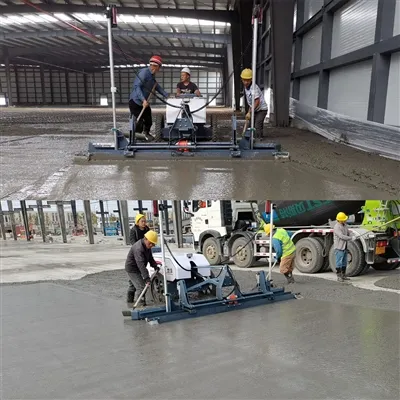
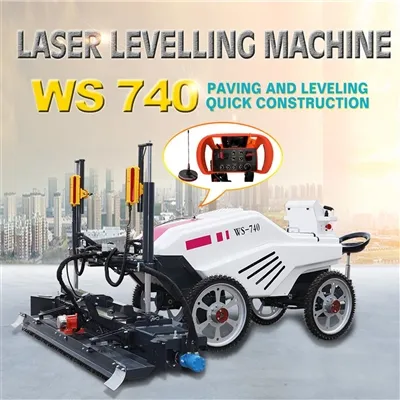
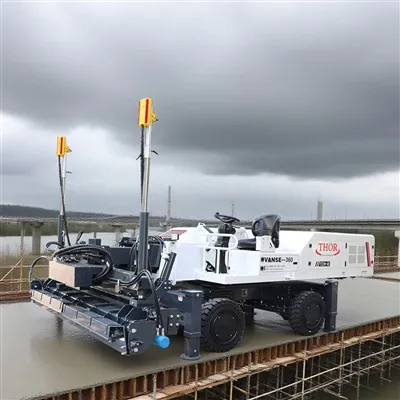
Technical Knowledge
Just a few steps to teach you how to operate a ride-on trowel
The car-mounted trowel, which plays a dominant role in pavement engineering, has a wide range of applications and can be applied to many construction sites such as squares,
airports, workshops, factories, parking lots, etc., and is deeply loved and welcomed by users.
Using this equipment Finishing and smoothing the concrete floor can greatly reduce the labor intensity of workers,
and the construction work becomes easier and more efficient.
The road surface constructed by the ride-on trowel is smooth and flat,
and the concrete surface has good compactness and wear resistance.
Car trowel
1. Start the troweling machine and operate the handle;
2. Hold the joystick tightly to keep the body balanced;
3. When the troweling machine is working, be sure to hold the troweling machine steady, and adjust the direction in time when working on the floor. To prevent the machine from losing control;
4. First coarse grinding, then fine grinding. After the bottom grinding disc is roughly ground, remove the grinding disc when the ground is suitable for fine grinding, and finely grind with a spatula.
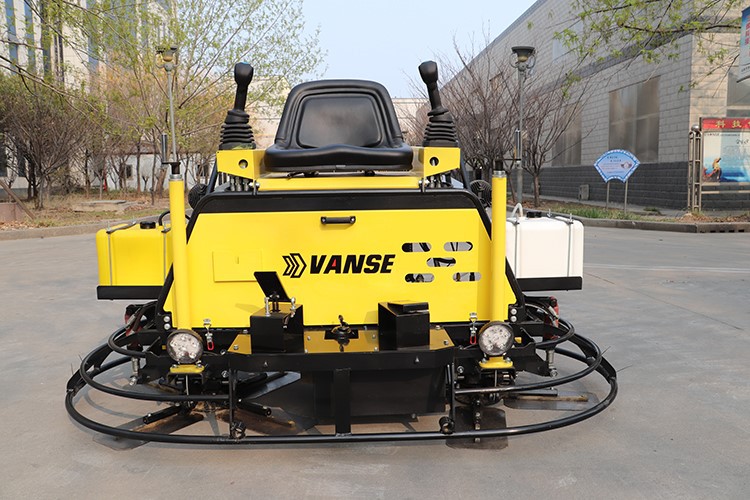
Driving trowel
The ride-on troweling machine has high working efficiency and good finishing effect, and can easily meet the engineering construction standards.
This car troweling machine is easy to operate and calmly cope with different harsh working conditions.
It is an indispensable good equipment in concrete troweling construction!
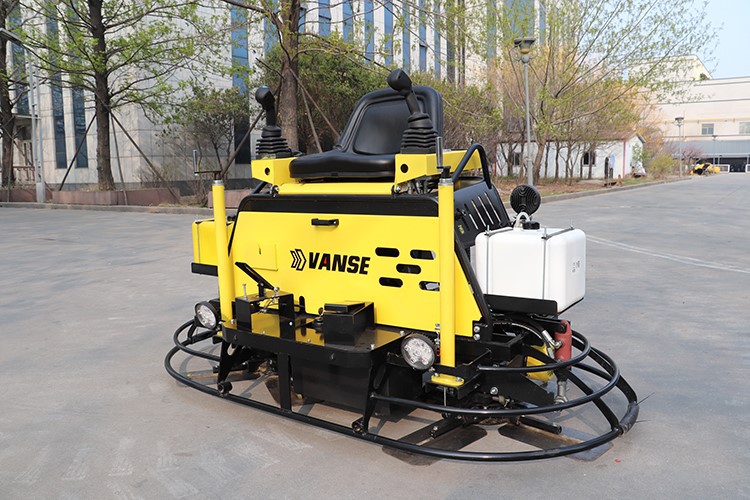
Full hydraulic troweling machine
Thanks to All the Friends Who Support and Trust Shandong Vanse Machinery Technology Co., Ltd.
If you want to know more about Shandong Vanse Machinery Technology Co., Ltd. or have any questions, please feel free to contact us:
Our Factory
Shandong Vanse Machinery Technology Co., Ltd.








Share this article

About the Author: Shandong Vanse Machinery Technology Co., Ltd.
Shandong Vanse Machinery Technology Co., Ltd. is a high-tech manufacturer specializing in concrete construction machinery, including laser screeds and related equipment. The company integrates R&D, production, and global sales, with products exported to over 60 countries and widely used in infrastructure projects worldwide.
Previous Post
Next Post
Related Articles
You Might Also Like
How to deal with common technical problems during the construction process of concrete laser leveling?
Solution to common technical problems during the construction process of concrete laser leveling machine ▶●●●★●●●◀ Laser positioning error During the construction process of concrete laser leveling machine, the accuracy of laser positioning is crucial. Laser positioning errors may lead to substandard ground flatness and affect the overall project quality. Solution: 1. Regularly check and calibrate the laser rangefinder to ensure that its accuracy meets construction requirements. 2. Set up multiple control points at the construction site to conduct laser positioning verification to detect and correct errors in a timely manner. 3. Strengthen the training of operators and improve their proficiency in using the laser positioning system. ▶●●●★●●●◀ Concrete fluidity control The flowing parts of concrete directly affect the leveling effect. Insufficient fluidity may cause the concrete to be difficult to distribute evenly, and excessive fluidity may cause problems such as flowing and settling of the concrete. Solution: 1. Select the appropriate concrete mix ratio according to Stinging requirements to ensure that the concrete has good fluidity. 2. During the construction process, the water-cement ratio of concrete should be adjusted in time according to weather, temperature and other factors to keep its fluidity stable. 3. Use a concrete vibrator to vibrate to improve the density and uniformity of concrete. ▶●●●★●●●◀ Ground flatness adjustment Ground flatness is an important indicator to measure the leveling effect. If the ground flatness is not up to standard, it will affect subsequent decoration and use. Solution: 1. Treat the foundation floor before construction to ensure that the foundation is smooth, free of oil stains, and free of debris. 2. Use a laser leveling machine for multiple levels. After each leveling, check the flatness of the ground promptly and deal with any unevenness in a timely manner. 3. During the leveling process, adjust the speed and height of the leveling machine according to the data displayed by the laser control system to ensure that the ground flatness meets the requirements. ▶●●●★●●●◀ Construction speed optimization Increasing the construction speed can effectively reduce project costs, but too fast a construction speed may result in poor concrete leveling results. Solution: 1. Arrange the construction schedule reasonably according to the solidification time of the concrete and the performance of the leveler to avoid too fast or too slow construction speed. 2. Strengthen on-site coordination to ensure close cooperation among all links and reduce unnecessary waiting and delays. 3. Improve the proficiency and work efficiency of operators and shorten the construction cycle. ▶●●●★●●●◀ Equipment maintenance and debugging The normal operation of equipment is crucial to ensuring construction quality. Equipment maintenance and debugging are a part of the construction process that cannot be ignored. Solution: 1. Carry out regular maintenance and maintenance on the laser leveling machine, and check whether the performance indicators of the equipment are normal. 2. Conduct periodic debugging of the laser leveling machine to ensure its optimal working condition. 3. Establish equipment maintenance files to record equipment repair and maintenance status to provide reference for future equipment management and maintenance. ▶●●●★●●●◀ Construction safety measures Safety regulations and operating procedures must be strictly observed during the construction process to ensure the safety and health of construction workers. Solution: 1. Set up obvious safety warning signs and protective measures at the construction site to ensure the safety of construction workers. 2. Provide safety education and training to construction personnel to improve their safety awareness and self-protection capabilities. 3. Develop emergency plans to ensure that measures can be taken quickly in emergencies to ensure the safety of construction workers. In short, during the construction process of concrete laser leveling machine, it is necessary to formulate corresponding treatment plans for various common technical problems to ensure construction quality and safety. At the same time, measures such as strengthening on-site management, improving the quality of operators, and optimizing the construction process are also An effective way to improve construction efficiency and quality.Floor slab construction adopts the concrete laser leveling/ leveling technology
With the continuous advancement of construction technology, concrete laser leveling technology has been widely used in floor slab construction due to its high precision and high efficiency. This technology uses a laser control system to achieve precise leveling of the concrete surface, effectively improving the construction quality of floor slabs. This article will discuss in detail the specific application of concrete laser leveling technology in floor slab construction, including its working principle, technical advantages, implementation steps and quality control. •••◆••• How Concrete Laser Leveling Technology Works Concrete laser leveling technology mainly uses the principle of laser ranging, emitting a laser beam through a laser transmitter, and the laser receiver receives the reflected laser signal, thereby achieving high-precision measurement of the concrete surface. During the construction process, the laser leveler automatically adjusts the height and angle of the leveling blade based on the data provided by the laser control system, so that the concrete surface reaches the preset flatness requirements. •••◆••• Advantages of Concrete Laser Leveling Technology ① High precision: Laser leveling technology can achieve millimeter-level precision control to ensure the flatness and parallelism of the floor board surface. ② High efficiency: Compared with traditional manual leveling methods, laser leveling machines can greatly improve construction efficiency and shorten construction periods. ③Save materials: By accurately controlling the thickness and distribution of concrete, you can reduce the waste of concrete and reduce project costs. ④Stable quality: Laser leveling technology can reduce the impact of human factors on construction quality and ensure the stability and consistency of floor slab quality. •••◆••• Implementation steps of concrete laser leveling technology ①Construction preparation: Before construction, the base layer of the floor slab needs to be processed to ensure that the base layer is flat, dry, and free of oil stains. At the same time, prepare laser leveling machines, laser transmitters, laser receivers and other equipment and work bodies. ② Lay out laser transmitters and receivers: Arrange laser transmitters and receivers reasonably according to the size and shape of the floor board. Ensure that the laser beam can cover the entire construction area and the receiver can accurately receive the reflected laser signal. ③Adjust the laser control system: According to the construction requirements, set the parameters of the laser control system, such as flatness, slope, etc. Ensure that the laser leveling machine can perform leveling operations according to preset requirements. ④Concrete laying: Lay the concrete evenly on the floor slab, paying attention to controlling the thickness and distribution of the concrete. During the laying process, adjust the position and height of the laser leveler in time to ensure the leveling effect. ⑤ Leveling operation: Start the laser leveling machine and automatically adjust the height and angle of the leveling blade according to the data provided by the laser control system. During the leveling process, keep the laser leveler moving forward at a constant speed to ensure that the concrete surface is evenly leveled. ⑥ Inspection and adjustment: During the leveling process, the construction area should be inspected regularly to detect and deal with unevenness, waves and other problems in a timely manner. According to the inspection results, adjust the parameters of the laser control system or adjust the operating mode of the laser leveling machine to achieve the best leveling effect. ⑦ Maintenance and protection: After leveling is completed, maintain and protect the concrete surface in time. Avoid damage or contamination of the concrete surface during curing and ensure the quality and service life of the floor slabs. •••◆••• Quality Control Points ① Equipment calibration and maintenance: Ensure that laser leveling machines, laser transmitters, receivers and other equipment are in good working condition, and perform regular calibration and maintenance to ensure the accuracy and reliability of the equipment. ②Construction environment control: During the construction process, pay close attention to changes in the construction environment, such as temperature, humidity, wind speed, etc. Timely adjust construction technology and equipment parameters according to environmental changes to ensure the stability and reliability of leveling operations. ③Operator training: Strengthen the training and education of operators to improve their skill level and sense of responsibility. Ensure that the operators are proficient in the operating skills of laser leveling technology and operate in strict accordance with the construction requirements. ④ Process monitoring and recording: During the leveling process, monitor the construction progress and quality in real time, and make records and analyses. Timely discover and deal with problems that arise during the construction process to ensure the continuity and stability of leveling operations. •••◆••• Conclusion The application of medium-temperature concrete laser leveling technology in floor slab construction has significantly improved construction quality and efficiency and reduced project costs. Through the precise measurement of the laser control system and the automatic adjustment of the leveling machine, high-precision leveling of the warm concrete surface is achieved. During the construction process, attention needs to be paid to quality control points such as equipment calibration and maintenance, construction environment control, operator training, and process monitoring and recording. In the future, with the continuous advancement of technology and the upgrading of equipment, concrete laser leveling technology will play a greater role in floor slab construction and contribute to the sustainable development of the construction industry.Know about the 20/30/40 rule in concrete
The 20-30-40 rule in concrete is a crucial guideline, primarily used for flatwork projects like driveways, sidewalks, patios, and slabs. It refers to the general specifications for the aggregate (stone) size within the concrete mix. Here's what each number means: Number Meaning Typical Application 20 The maximum aggregate size should be 20 mm (about 3/4 inch). This ensures the mix can flow properly around rebar and into forms without creating voids or honeycombing. It's a standard size for general-purpose concrete. 30 The average aggregate size is around 30 mm (about 1 1/4 inch). This indicates the mix uses a gradation of stones, with an average size larger than the maximum to ensure good interlock and strength. 40 The minimum cement content should be 40 kg per cubic meter of concrete. This guarantees sufficient cement paste to coat all aggregates, bind them together, and achieve the desired strength and durability. Essentially, it's a shorthand for specifying a strong, workable, and durable concrete mix by controlling: How big the biggest rocks can be (20mm max). The general size of the mix of rocks (30mm avg). How much "glue" (cement) is in the mix (40kg minimum per m³). It's a Guideline, Not an Absolute Law: Exact mix designs are determined by structural engineers based on compressive strength (e.g., 3000 psi, 4000 psi), exposure conditions (freeze-thaw, sulfates), and placement method. The 20-30-40 rule provides a good starting point for typical residential and light commercial flatwork. Local Standards Vary: In the US, specifications are often in psi strength and slump rather than this exact ratio. However, the principle is the same: control aggregate size and cement content for performance. Common Related "Rules": You may also hear the "20-20 Rule" for placing concrete, which states: Slump should be a maximum of 20 cm (8 inches). (Too wet leads to shrinkage and cracking). The maximum aggregate size should be 20 mm (3/4 inch). Purpose: This rule helps prevent common problems: Too large aggregate: Makes finishing difficult and can cause surface flaws. Too little cement: Results in weak, permeable, and non-durable concrete. When ordering concrete for a project like a driveway, you can use this rule as a checklist when talking to your ready-mix supplier. You might say: *"I need a 4000 psi mix for a driveway, with a 3/4" max aggregate and a 4-5 inch slump."* This communicates the same intent as the 20-30-40 rule-you're asking for a mix with appropriately sized stone and sufficient cement for a strong, durable finish. IN SUMMARY: The 20-30-40 rule is a mix design guideline that balances aggregate size and cement content to produce workable, strong, and crack-resistant concrete for flatwork. It emphasizes that quality concrete isn't just about strength, but about the right proportions of its components. Note: The parameters provided in this document are for reference only and are not mandatory. Due to differences in technical characteristics between different brands and models of laser levelers, please consult the manufacturer for a suitable solution before actual operation. This reference document assumes no responsibility for any issues arising from failure to follow the manufacturer's instructions.