Technical Knowledge
In what scenarios is the concrete laser leveling used?
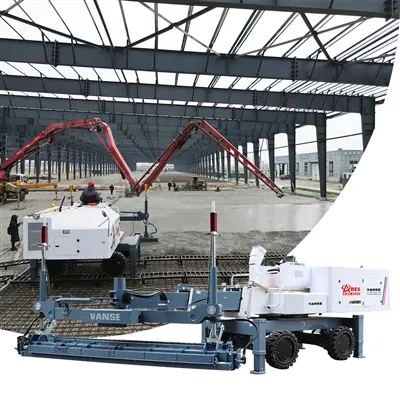
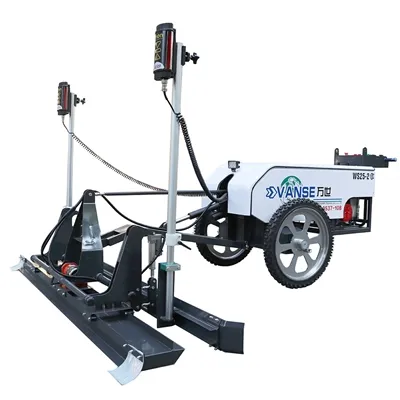
Concrete laser leveling machine, also known as floor laser leveling machine, ground laser leveling machine, concrete paver, etc., is an advanced machine for leveling concrete floors. Its application range is very wide, mainly including indoor flooring engineering and outdoor flooring engineering.
In indoor flooring projects,
concrete laser leveling machines can be used in large industrial plants, workshops, automated three-dimensional warehouses, as well as clean workshops such as electronic appliances, food materials, and medicine. In addition, it can also be used in large warehouse supermarkets, logistics centers, convention and exhibition centers and other scenarios.
In outdoor flooring projects,
concrete laser leveling machines are also widely used. For example, it can be used in terminals, container yards, cargo yards, airport runways, aprons, parking lots, squares, residential grounds, municipal roads, etc.
It can be seen that concrete laser leveling machines have been widely used in construction, logistics, transportation and other fields since 2000. However, specific application scenarios and methods may vary depending on specific engineering needs and conditions. Therefore, in practical applications, selection and adjustment need to be made according to specific conditions.


Thanks to All the Friends Who Support and Trust Shandong Vanse Machinery Technology Co., Ltd.
If you want to know more about Shandong Vanse Machinery Technology Co., Ltd. or have any questions, please feel free to contact us:
Our Factory
Shandong Vanse Machinery Technology Co., Ltd.








Share this article

About the Author: Shandong Vanse Machinery Technology Co., Ltd.
Shandong Vanse Machinery Technology Co., Ltd. is a high-tech manufacturer specializing in concrete construction machinery, including laser screeds and related equipment. The company integrates R&D, production, and global sales, with products exported to over 60 countries and widely used in infrastructure projects worldwide.
Previous Post
Next Post
Related Articles
You Might Also Like
How to improve the smoothness of concrete pavement?
The flatness of concrete pavement directly affects driving comfort, safety and pavement service life. As a key equipment in modern construction, the Concrete Laser Leveling Machine can significantly improve the accuracy of flatness control. The following analyzes how to improve flatness from the entire construction process, and focuses on the application points of the laser leveling machine: – Cleaning and compaction: Thoroughly remove the debris and loose soil of the base to ensure that the base is solid and stable. If it is a soil base, it needs to be compacted layer by layer to the designed compaction degree (such as more than 95%) to avoid cracking of the surface layer due to later settlement; if it is an old road reconstruction, it needs to be milled or repaired to eliminate the height difference. – Measurement and layout: Use a laser measurement system (matched with a laser leveling machine) to accurately measure the base elevation, set elevation control points (such as steel drills or aluminum alloy brackets) every 3-5 meters to ensure that the base elevation error is ≤±5mm. – Equipment principle: The laser leveling machine automatically adjusts the height of the leveling beam by receiving the horizontal laser signal emitted by the laser transmitter, and realizes the precise control of the concrete paving thickness (the error can be controlled within ±2mm), which is more than 50% higher than the traditional manual paving efficiency. – Debugging points: – Check the signal coverage range of the laser transmitter before starting the machine (usually the radius can reach more than 100 meters) to ensure that there is no obstruction; – Calibrate the leveling beam level of the leveling machine, test run it in manual mode, and observe the response sensitivity of the sensor and actuator; – Adjust the travel speed of the leveling machine (generally 0.5-1.5m/min) according to the slump of the concrete (recommended 120-160mm). The larger the slump, the slower the speed should be to avoid water seepage. – Putting principle: Use dump trucks with loaders or paver to spread concrete to avoid concrete segregation. The spreading height should be slightly higher than the design elevation (3-5cm) to reserve leveling space for the laser leveling machine. – Partition spreading: For large-area roads (such as parking lots and squares), construction zones can be divided (about 500-1000㎡ per zone), and channel steel or steel templates are set at the boundaries of the zones to ensure that the laser leveling machine can operate continuously in a single zone. – Preliminary leveling stage: The leveling machine travels at a uniform speed in the longitudinal direction, and uses the front-end spiral spreader to initially level the concrete. At the same time, the laser system monitors the elevation in real time, and automatically adjusts the leveling beam height through the hydraulic cylinder to eliminate obvious height differences (as shown in Figure 1). – Fine leveling stage: 15-20 minutes after the initial leveling (before the initial setting of the concrete), start the vibration function of the leveling machine (vibration frequency 20-50Hz), further vibrate and compact and eliminate surface bubbles, and perform the second laser leveling at the same time to ensure that the surface flatness error is ≤3mm/3m (national standard requirements). – Edge processing: The edge areas that the laser leveling machine cannot cover (such as those close to the template) need to be manually leveled with an aluminum alloy scraper and a small vibration beam to ensure the overall flatness is consistent. – Equipment used: After the laser leveling machine is operated, a disc slurry lifting machine (speed 10-15r/min) can be used immediately for slurry lifting, and the depth is controlled at 2-3cm, so that the cement slurry evenly covers the surface and provides a good base for plastering. – Notes: Avoid excessive rolling during slurry lifting to prevent concrete from bleeding or aggregate sinking, which will affect the flatness. – Some high-end laser leveling machines are equipped with finishing module, which can be used for mechanical finishing directly after slurry lifting. The speed of the trowel is controlled by the variable frequency motor (low speed 10-20r/min, high speed 30-50r/min), and rough and fine finishing are completed in 2-3 times to further eliminate the track marks of the leveling machine and improve the surface finish. – 2-4 hours after finishing the finishing (depending on the temperature), cover with plastic film or geotextile, and sprinkle water for 7-14 days to ensure uniform growth of concrete strength and avoid uneven surface due to shrinkage cracking. – Laser monitoring assistance: During the maintenance period, a laser rangefinder can be used to regularly monitor the changes in the road elevation. If local settlement (>5mm) is found, the cause must be analyzed and remedied in time (such as local grouting or rework). – During the maintenance period, personnel and vehicles are strictly prohibited from passing through, and warning signs are set up at the edge of the road surface; – When cutting expansion joints (it is recommended to cut when the concrete strength reaches 25%-30%), use a laser marking instrument to locate the seam to ensure that the seam width is consistent (5-8mm) and straight, so as to avoid affecting the integrity of the road surface due to seam cutting deviation. Comparison Dimensions Traditional manual leveling Laser leveling machine leveling Flatness error ±5-8mm/3m ±2-3mm/3m Construction efficiency Daily construction area 200-500㎡ Daily construction area 1000-2000㎡ Labor cost Requires a large number of workers (5-8 people/group) Only 2-3 people are needed to operate the equipment Applicable scenarios Small area or non-critical road surface Highways, airport runways, industrial plants and other scenes with high precision requirements – Power and paving width: Small machines (paving width 3-5m) are suitable for narrow areas, and large machines (width 6-10m) are suitable for large-scale construction; – Intelligent functions: Give priority to models with automatic obstacle avoidance and data recording functions (such as the ability to store concrete consumption and elevation data per square meter) for easy quality traceability; – Supporting equipment: Ensure that the laser transmitter, receiver and leveling machine are compatible to avoid signal interference and reduce accuracy. – Cause: The laser signal is blocked, the equipment sensor fails, or the concrete slump fluctuates too much; – Solution: Regularly check the laser coverage during construction, calibrate the sensor once an hour, and strictly control the concrete mix ratio. – Reason: The screed machine travels too fast and the vibration is insufficient; – Solution: Reduce the travel speed to below 0.8m/min and increase the vibration time (single-pass vibration duration ≥ 10 seconds). The improvement of the flatness of concrete pavement is the comprehensive result of "precise equipment + standardized process + strict management". The laser screed machine fundamentally reduces the error of manual intervention through automatic elevation control and efficient vibration and leveling, which is especially suitable for projects with strict flatness requirements (such as municipal trunk roads and industrial floors). During construction, attention should be paid to equipment debugging, concrete performance matching and maintenance details to maximize its technical advantages and create high-quality pavement projects. Click the below to jump immediately!!! ARMOUR JOINT LASER LEVELING MACHINE LIGHT TOWER POWER TROWEL SLIPFORM MACHINE STEEL FIBER TOPPING SPREADER TRACKED MINI DUMPERHow to perform troubleshooting and routine maintenance during use of concrete laser leveling machine?
Concrete laser leveling machine is an indispensable large-scale equipment in the construction industry. Its stability and durability play a decisive role in construction quality and efficiency. However, during use, the equipment may malfunction due to various reasons. In order to ensure the normal operation and extend the service life of the equipment, timely troubleshooting and routine maintenance are crucial. This article will introduce in detail how to perform troubleshooting and routine maintenance during use of the concrete laser leveling. •••◆ Troubleshooting ◆••• 1. Troubleshooting When a concrete laser leveling machine fails, fault diagnosis needs to be performed first. You can initially determine the type and possible cause of the fault by observing the working status of the equipment, listening to abnormal noises, and checking the instrument panel. 2. Check the power supply and circuit Power supply and circuits are the basis for the normal operation of equipment. If the equipment has problems such as difficulty in starting up and unstable operation, you first need to check whether the power supply and circuit are normal. You can check whether the electrical system is damaged, whether the contact is good, whether the fuse is blown, etc. 3. Check the hydraulic system The hydraulic system of a concrete laser leveling is at the heart of its operation. If the equipment has problems such as difficulty in lifting or walking, it is necessary to check whether the hydraulic oil is sufficient, whether the wave pressure pump is working properly, whether the hydraulic valve is flexible, etc. 4. Check the laser system The laser system is a key component of the concrete laser leveling machine and is responsible for providing the ultimate leveling reference line. If the laser line is abnormal, you need to check whether the laser transmitter, receiver, reflector and other components are normal. 5. Replace worn parts After the equipment is used for a long time, some wearable parts may become worn or damaged. If problems are found with these parts, they should be replaced in time to ensure the normal operation of the equipment. •••◆ Routine maintenance ◆••• 1. Cleaning and maintenance After each day's work, the equipment should be cleaned and maintained. You can use a soft cloth to wipe the surface of the device to remove dust and dirt. For hydraulic and electrical systems, special cleaning agents should be used to clean them to ensure their normal operation. 2. Lubrication and maintenance Regular lubrication and maintenance of the lubrication points of the equipment can reduce wear and friction and extend the service life of the equipment. Appropriate lubricating oil and lubrication intervals should be selected for maintenance according to the equipment's instruction manual. 3. Check fasteners The fasteners of the equipment may become loose during use, and if not tightened in time, the equipment may malfunction. Therefore, the fasteners of the equipment should be checked regularly to see if they are firm, and if they are loose, they should be tightened in time. 4. Check the hydraulic system The hydraulic system is the core part of the concrete laser leveling and should be inspected and maintained regularly. You can check the oil level, color and cleanliness of the hydraulic oil, and replace it in time if there is any abnormality. At the same time, the working status of the hydraulic pump and the flexibility of the hydraulic valve should also be checked. 5. Check the electrical system The proper operation of the electrical system is crucial to the stability and safety of the equipment. The integrity of the cable, the contact of the connector and the working status of the electrical components should be checked regularly. If there are any abnormalities, they should be dealt with promptly. 6. Check the laser system regularly The accuracy of the laser system is decisive for the leveling result. The status of laser transmitters, receivers and reflectors should be checked regularly to ensure they are functioning properly. At the same time, the accuracy and stability of the laser line should also be checked. 7. Record maintenance status In order to better understand the maintenance status and usage status of equipment, a maintenance record system should be established. Every time maintenance is performed, the content and time of the maintenance, as well as the problems discovered and their handling should be recorded in detail. This helps to detect potential problems promptly and take appropriate measures 8.Train operators The skill level of the operator is critical to the care and maintenance of the equipment. Operators should be trained regularly to improve their skill level and maintenance awareness. The training content includes the basic principles of equipment, operation methods, common faults and treatment methods, etc. To sum up, the troubleshooting and daily maintenance of the concrete laser leveling machine are the key to ensuring its normal operation and extending its service life. Through regular fault diagnosis, cleaning and maintenance, lubrication maintenance and fastener inspection, Potential problems can be discovered and dealt with in time to ensure the stability and safety of the equipment. At the same time, strengthening the training of operators and improving their maintenance awareness are also important measures to ensure the normal operation of the equipment.Which concrete cutting machines are suitable for making joint cuts on ultra-flat floors without damaging the flatness?
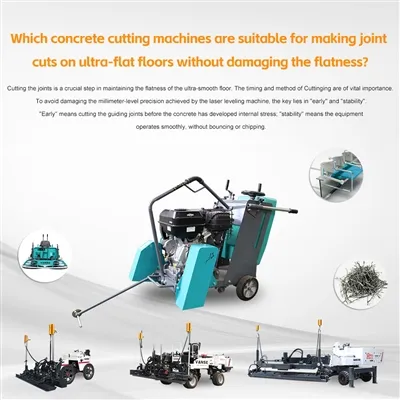
Cutting the joints is a crucial step in maintaining the flatness of the ultra-smooth floor. The timing and method of Cuttinging are of vital importance. To avoid damaging the millimeter-level precision achieved by the laser leveling machine, the key lies in "early" and "stability". "Early" means cutting the guiding joints before the concrete has developed internal stress; "stability" means the equipment operates smoothly, without bouncing or chipping. Based on this principle, there are mainly two types of equipment available on the market that are suitable for cutting joints in ultra-smooth floors. The core difference between them lies in the time window for cutting. To make it easier for you to compare, I have listed their features as follows: Comparison dimension Early-Entry Cutting Conventional Cutting The timing of the cut Within 1-4 hours after the concrete has been polished (commonly known as the "initial setting" stage) After 6-12 hours or longer of concrete curing (usually overnight waiting) Core Strengths Prevent cracks from forming at their source: Cut the joints before the concrete begins to contract, guiding the cracks to develop in a regular pattern. This is the best way to protect the flatness of the super-level floor. High flexibility: Suitable for all types of concrete, including hardened floors. Smooth cuts: Special blades and patented sliding plates are used, resulting in almost no chipping during cutting, and the joints are aesthetically pleasing. Adjustable depth and width: Capable of cutting deeper and wider joints. Potential risks The time window is narrow, and high requirements are placed on construction organization. Special cutting blades must be equipped. May cause random cracks: If the cutting is done too late, the internal stress of the concrete may have already caused micro-cracks or warping on the floor before the joint is made, thus damaging the flatness. The key to the decision lies in your ultimate pursuit of flatness and the scheduling of the project. Preferred solution: Early Cutting If your project aims for a super-flat floor with FF/FL 35 or above, or if the floor will be used in high-shelf warehouses or precision instrument workshops, then the early Cutting is the only recommended option. It actively guides the cracks before stress is formed, maximizing the protection of the perfect foundation created by the laser leveling machine. Alternative solution: Traditional precision joint Cutting If your project requires a slightly lower level of flatness (such as for ordinary commercial floors), or if you missed the early Cutting window due to construction schedule reasons, then choosing a high-precision, smooth-running traditional joint Cutting is necessary. The key lies in the stability of the equipment. No matter which equipment you choose, there are two points to keep in mind: Special blades: For the initial cutting, you must use the blades specifically designed for this purpose. The blade head connection and formula are specially tailored for un-hardened concrete, which can prevent the blade head from falling off and ensure the cutting quality. Smooth operation: The weight balance of the equipment and the design of the blade guard (such as whether it has a stabilizing slide) will directly affect the stability during cutting, and thereby influence the final flatness. I hope the above information can help you make a clearer choice. If you want to know more about how to select the appropriate blade type based on the specific concrete mix ratio (such as whether fibers are added), I can help you organize more detailed information for you. Contact us NOW Note: The parameters provided in this document are for reference only and are not mandatory. Due to differences in technical characteristics between different brands and models of laser levelers, please consult the manufacturer for a suitable solution before actual operation. This reference document assumes no responsibility for any issues arising from failure to follow the manufacturer's instructions.