Technical Knowledge
How does concrete laser leveling technology achieve precise leveling of concrete surfaces?
The core of concrete laser leveling technology is to use laser as a reference. The laser beam emitted by the laser transmitter forms a horizontal plane in the construction area. The construction personnel or machines adjust the laying thickness and flatness of the concrete according to this horizontal plane.

Working Principle

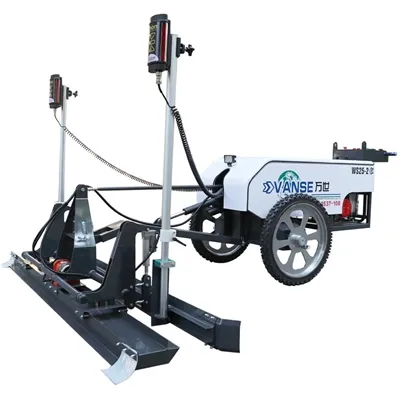
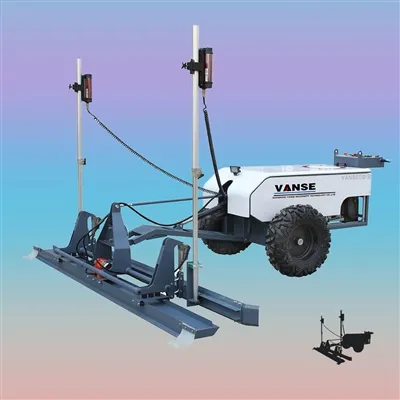
The laser leveling machine usually consists of the following parts:
– **Laser transmitter**: emits a stable laser beam to form a horizontal reference plane.
– **Receiver**: installed on the leveling machine, receives laser signals and converts them into electrical signals.
– **Control system**: automatically adjusts the working state of the leveling machine according to the received electrical signal to ensure that the concrete surface is consistent with the laser plane.
– **Leveling machine**: According to the instructions of the control system, the concrete surface is leveled through vibration and scraping functions.
– **High efficiency**: The laser leveling machine can quickly complete the leveling of large-area concrete, saving manpower and time.
– **High precision**: Laser leveling technology can ensure that the flatness of the concrete surface reaches extremely high standards and reduce subsequent finishing work.
– **Reduce material waste**: Reduce material waste by accurately controlling the laying thickness of concrete.
– **Improve construction quality**: A flat concrete surface can improve the overall quality and service life of the building.

Construction process

1. **Site preparation**: Clean the construction site to ensure that the ground is clean and flat.
2. **Laser transmitter setting**: Set the position and angle of the laser transmitter according to construction requirements.
3. **Concrete pouring**: Concrete is poured with the assistance of the laser leveling machine.
4. **Leveling operation**: The laser leveling machine automatically adjusts the scraper height according to the laser signal for leveling.
5. **Surface treatment**: After leveling, the concrete surface is smoothed and calendered to improve the surface quality.
6. **Quality inspection**: Use professional equipment to inspect the flatness and levelness of the concrete surface.
Laser leveling technology is widely used in the following fields:
– **Industrial plants**: Large, flat floors are required for mechanical operation and cargo storage.
– **Commercial facilities**: Such as shopping malls, exhibition halls, etc., require flat floors to provide a good customer experience.
– **Airport runways**: There are extremely high requirements for flatness and strength to ensure the safe takeoff and landing of aircraft.
– **Roads and bridges**: Precise flatness is required to ensure the smoothness and safety of vehicle driving.

Technical challenges and solutions

– **Environmental factors**: Such as wind force, temperature changes, etc. may affect the stability of the laser. The solution is to improve the stability of the laser transmitter through technical improvements.
– **Equipment maintenance**: Laser leveling machines require regular maintenance to ensure their performance. The solution is to establish a complete maintenance system and train operators.
– **Training of construction personnel**: Operating a laser leveling machine requires professional knowledge and skills. The solution is to provide professional training courses.
With the advancement of science and technology, laser leveling technology is also developing. Future development directions may include:
– **Intelligentization**: Improving the automation level of leveling machines by integrating more intelligent sensors and control systems.
– **Multifunctionality**: Developing leveling machines that can complete multiple construction tasks at the same time.
– **Environmentally friendly materials**: Researching and using more environmentally friendly concrete materials to reduce the impact of construction on the environment.

Conclusion

Concrete laser leveling technology has become an indispensable part of modern construction with its advantages of high efficiency, high precision and construction quality. With the continuous advancement and innovation of technology, this technology will play a greater role in the future and bring more possibilities to the construction industry.
This article provides a comprehensive introduction to concrete laser leveling technology, including its working principle, technical advantages, construction process, application areas, challenges faced, and future development directions. The article avoids the use of clichés and shows how this technology plays a role in the modern construction industry through specific technical details and practical application cases. I hope this article can provide readers with valuable information and in-depth understanding.
Thanks to All the Friends Who Support and Trust Shandong Vanse Machinery Technology Co., Ltd.
If you want to know more about Shandong Vanse Machinery Technology Co., Ltd. or have any questions, please feel free to contact us:
Our Factory
Shandong Vanse Machinery Technology Co., Ltd.








Share this article

About the Author: Shandong Vanse Machinery Technology Co., Ltd.
Shandong Vanse Machinery Technology Co., Ltd. is a high-tech manufacturer specializing in concrete construction machinery, including laser screeds and related equipment. The company integrates R&D, production, and global sales, with products exported to over 60 countries and widely used in infrastructure projects worldwide.
Previous Post
Next Post
Related Articles
You Might Also Like
In order to reduce the probability of accidents, the laser leveling machine should be operated in this way
If the laser leveler is used improperly, it is easy to cause danger, especially if it rolls over, it is likely to cause casualties. Therefore, when using the leveler, you should always maintain the correct operation method, because only in this way can the safety of the laser leveler be guaranteed to the greatest extent, and the construction quality of the leveler can be well exerted. Please see the following for the correct operation method. ◀ Before the laser leveler moves, check the road conditions, remove obstacles on the road, keep irrelevant personnel away from the leveler, and then retract the telescopic arm to start. ◀ Check the direction of travel, determine the position of the drive wheel, and then honk the horn, and the laser leveler will start to move slowly. ◀ When reversing the laser leveler, estimate the space behind the car in advance. If the blind spot is too large, ask a special person to direct and coordinate behind. ◀ The driver controls the walking speed according to the road conditions. When walking on an open flat ground, you can select "1" gear, and the walking speed of the laser leveler will automatically increase or decrease according to the working pressure of the hydraulic walking circuit; when going up and downhill, you can select "0" gear, and the laser leveler will walk at a low speed and high torque. ◀ Try to choose a flat road when the laser leveler is walking. ◀ Avoid walking the leveler in water as much as possible. If you must wade, remember to explore the water depth and the soft and hard platform of the bottom of the water in advance. It is not suitable to walk if the underwater silt is too deep or the water surface exceeds the wheels The above is the correct operation method of the laser leveler. I hope you can get some substantial reference value from this article. If you have other questions, please feel free to consult us at any time, and we will answer them one by one.Rotary power trowel VS ride-on power trowel: Which is better for polishing super flat concrete floors?
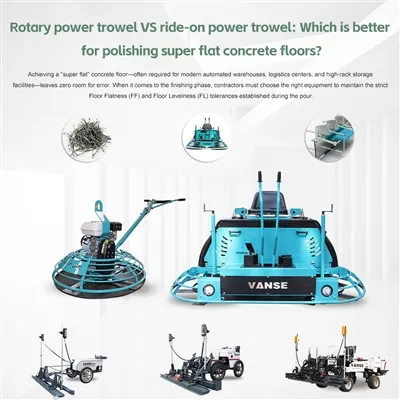
Achieving a "super flat" concrete floor-often required for modern automated warehouses, logistics centers, and high-rack storage facilities-leaves zero room for error. When it comes to the finishing phase, contractors must choose the right equipment to maintain the strict Floor Flatness (FF) and Floor Levelness (FL) tolerances established during the pour. So, in the debate between a standard walk-behind (rotary) power trowel and a ride-on power trowel, which is the superior choice for super flat commercial floors? For large-scale, high-tolerance projects, the ride-on power trowel is unequivocally the better choice. Here is a comprehensive, SEO-optimized breakdown of why ride-on equipment dominates the commercial sector, and how to choose the right machinery for your next pour. Walk-behind power trowels are operated by a single worker walking behind the machine, guiding a single rotating rotor. The Pros: These machines are highly maneuverable, lightweight, and cost-effective. They are absolutely essential for finishing edges, tight corners, around plumbing or structural columns, and in small residential spaces where a larger machine cannot fit. The Cons for Super Flat Floors: For large, super flat applications, walk-behind trowels fall short. The operator must physically walk on the semi-cured concrete, leaving footprints that the machine then has to erase. Furthermore, the lighter weight and single-rotor design do not provide the uniform, heavy-duty compaction required to meet aggressive FF/FL specifications across a massive slab. Ride-on power trowels feature dual (or sometimes triple) rotors and are operated by a driver seated on top of the machine., Unmatched Compaction and Density: The sheer weight of a ride-on trowel-often exceeding hundreds of kilograms-is its greatest asset. When equipped with float pans, this heavy, mechanized downward pressure violently kneads the concrete surface, driving the coarse aggregate down and bringing a rich layer of cement paste to the surface. This deep compaction creates a denser, more wear-resistant "burnished" finish that manual or lightweight tools simply cannot achieve. Preserving FF and FL Metrics: To get a super flat floor, you typically start with a concrete laser leveling (a specialty of manufacturers like Vanse Machinery). The laser leveling sets the perfect level. The ride-on trowel preserves it. Because the operator is seated on the machine, there are no footprints to fix. The wide wheelbase and overlapping dual-rotor footprint bridge minor undulations, acting like a massive smoothing plane that actually improves the FF numbers as it works. Massive Output and Efficiency: Concrete sets on its own schedule. If a contractor is pouring thousands of square meters in a single day, the finishing equipment must keep up before the slab cures. A high-performance ride-on trowel can cover vast areas exponentially faster than a walk-behind unit, ensuring the entire slab is finished during the optimal curing window, preventing cold joints and surface defects. To consistently win bids for high-end commercial floors, contractors must look at their equipment as an integrated system. According to the engineering and product parameters found at Vanse Machinery (vansemac.com), achieving top-tier industrial flooring requires a combination of precision and power. Using an advanced telescopic boom concrete laser leveling (like the YZ30-4E or YZ40-4E) guarantees initial levelness. Following that immediately with a heavy-duty, engine-driven ride-on power trowel ensures that the precise leveling is locked in with a hardened, highly polished surface. Using a walk-behind trowel to finish a massive, laser-levelinged commercial floor is a bottleneck that risks ruining the tight tolerances you just paid to establish. If your project demands a super flat floor for commercial, industrial, or logistics applications, a ride-on power trowel is not just better; it is a mandatory investment. Walk-behind trowels should be strictly reserved for complementary edge work and confined spaces. Note: The parameters provided in this document are for reference only and are not mandatory. Due to differences in technical characteristics between different brands and models of laser levelers, please consult the manufacturer for a suitable solution before actual operation. This reference document assumes no responsibility for any issues arising from failure to follow the manufacturer's instructions.Quality Control Requirements for Ultra-Large Laser-Leveled Wear-Resistant Concrete Floors
Ultra-large laser-leveled, wear-resistant concrete floors combine precise laser leveling technology with the enhanced properties of wear-resistant materials. They are widely used in industrial plants, logistics warehouses, large commercial spaces, and other applications. Quality control must be implemented throughout the entire process: design, materials, construction, maintenance, and acceptance. The core goal is to achieve high flatness, high wear resistance, low cracking, and strong durability. The following details the quality control requirements from seven key perspectives: Ultra-large flooring (typically >1000 m2) is prone to cracking due to concrete shrinkage. Therefore, the initial design plan must focus on deformation control and construction feasibility. Specific requirements are as follows: Compartment Area: The size of a single compartment should be considered based on concrete shrinkage characteristics, typically ranging from 6m x 6m to 12m x 12m (aspect ratio ≤ 1.5) to avoid thermal stress cracking caused by excessive area. Joint Type Requirements: Expansion joints should be 8-12mm wide and ≥ 1/3 the floor thickness (or continuous). Use foam strips and sealant to prevent debris from entering and mitigate deformation. False Joint Installation: For long floors (e.g., >30m in length), false joints (cut depth 5-8mm) with intervals of ≤ 6m between compartment joints should be added to guide shrinkage cracks along the false joints. Clearly define the floor design elevation (±0.000 relative to the reference point). The laser leveling's reference line must be calibrated with a high-precision level (±1mm accuracy) to avoid cumulative errors. Flatness requirements: According to the "Code for Design of Building Floors" GB 50037, the allowable flatness deviation for industrial floors is ≤3mm/2m (laser detection), and for commercial floors, ≤2mm/2m. Strength Grade: Determined based on the application scenario. Industrial plants (load-bearing capacity 5-10t): ≥C30; logistics warehouses (load-bearing capacity >10t): ≥C35. Slump: Laser leveling requires low-slump concrete, controlled within 120±20mm (on-site measurement) to avoid delamination and sanding caused by excessive slump. Crack Resistance: Add polypropylene fiber (0.9-1.2kg/m³) or steel fiber (20-30kg/m³) to reduce plastic shrinkage cracking. Use a slow-setting water-reducing admixture to extend the initial setting time (≥6h) to ensure continuous construction over large areas. Material Type Core Control Indicators Inspection Requirements Commodity Concrete 1. Strength Grade (C30/C35); 2. Slump (120 ± 20 mm); 3. Initial Setting Time (≥ 6 hours); 4. Air Content (≤ 3%) One set of compression test blocks must be collected for every 500m³ of material. Slump must be measured on each truck upon arrival; any exceeding the standard must be immediately returned. Metal Wear-Resistant Materials 1. Metal Aggregate Content (≥ 60%, e.g., corundum, chromite sand); 2. Mohs Hardness (≥ 6); 3. Compressive Strength (≥ 80 MPa) Three sets of samples must be collected from each batch to test for hardness and strength. The appearance must be free of lumps and impurities. Non-Metal Wear-Resistant Materials 1. Quartz Sand Particle Size (0.3-1.2 mm, Continuous Grading); 2. Abrasion Resistance (Abrasion Loss ≤ 0.3 g/cm²); 3. Color Consistency Material within the same batch must exhibit no color variation. Abrasion resistance must be tested in accordance with GB/T 12988, "Test Method for Abrasion Resistance of Building Floor Materials." Auxiliary Materials 1. Polypropylene Fiber (Length 6-12 mm, Tensile Strength ≥ 300 MPa); 2. Sealant (Elastic Modulus ≥ 0.8 MPa) Fibers must be evenly dispersed and free of agglomerates. Sealant must comply with GB/T 14683, "Building Sealing Materials." Laser leveling is key to ensuring floor flatness. The entire "concrete paving – laser leveling – vibration – slurry preparation" process requires strict control. Specific requirements include: Construction Preparation and Equipment Calibration The concern laser leveling machine must be preheated one hour in advance. Use two independent reference points to calibrate the laser transmitter (with an error of ≤0.5mm) to avoid deviation from a single reference point. Base Preparation: The base layer (such as lime soil or gravel cushion) must be compacted (compaction degree ≥95%), with a surface flatness of ≤5mm/2m and no water accumulation or loose debris. Apply plastic sheeting (thickness ≥0.12mm) to prevent water absorption from the base layer, which could lead to rapid dehydration of the concrete. Paving Order: Divide the area by the gaps between the paving bays, and proceed from far to near, high to low, to avoid trampling on the already paved concrete. Thickness Control: Pave according to the designed thickness (usually 100-150mm) + 5% of the void thickness. Control the laser leveling speed between 0.8-1.2m/min, ensuring sufficient vibration with the vibrator (vibration frequency ≥ 50Hz) to remove air bubbles. Smoothness Monitoring: After every 50㎡ of paving, check the smoothness with a 2m straightedge and a feeler gauge. If the deviation exceeds 3mm, immediately use the laser leveling to level the surface. Manual repairs are strictly prohibited. Spreading and finishing of wear-resistant materials Spreading Timing: Before the concrete begins to set (press the concrete surface with your finger, leaving a 3-5mm indentation). Spread the concrete in two passes (60% for the first pass and 40% for the second pass) to avoid sinking if spread too early or preventing the concrete from bonding if spread too late. Spreading Uniformity: Use a "plum blossom dot" method with manual leveling to ensure the material dosage per square meter meets the design (usually 5-8kg/square meter for wear-resistant metals and 3-5kg/square meter for non-metals). Mechanical Finishing: After the first pass, smooth the surface with a disc trowel (150-200 rpm). After the second pass, finish the surface with a blade trowel (250-300 rpm). The surface should be free of smear marks, exposed areas, and have a uniform gloss. Large-scale floors are most susceptible to "plastic shrinkage cracks" (during construction) and "thermal shrinkage cracks" (during curing). These cracks must be controlled from three perspectives: Controlling Plastic Cracks During Construction Environmental Control: In high temperatures (>30°C) or strong winds (>5m/s), erect a sunshade and apply moisturizing spray (the temperature difference between the water and concrete should be ≤10°C) to prevent rapid surface water loss. Pre-setting Treatment: Within 30 minutes after paving, vibrate the concrete a second time using a vibrating beam to eliminate surface bubbles. If fine cracks are found, immediately re-press and close them with a trowel. Curing Time: 1-2 hours after finishing (initial setting of the surface), immediately cover with a moisture-retaining film and geotextile (or flame-retardant straw mat). Avoid direct sunlight exposure. Curning Time: ≥7 days for ordinary concrete, ≥14 days for concrete with admixtures or waterproofing. Water 3-4 times daily (keep the geotextile moist), and avoid sudden temperature drops. (If the temperature difference between day and night exceeds 15°C, cover with an insulation layer.) Post-Crack Treatment Fine cracks (width < 0.3mm): Seal with epoxy putty. Wide cracks (width ≥ 0.3mm): Cut a V-shaped groove (depth ≥ 10mm, width ≥ 8mm) along the crack, clean it, fill it with elastic sealant, and smooth the surface with wear-resistant material. After construction (during the curing period), the floor is susceptible to external damage and requires strict protective measures: Premature loading is prohibited: No personnel (except maintenance personnel) are allowed to move about within 7 days of curing, and no vehicles (including carts) are allowed to pass through within 14 days. Loading can only be carried after the floor has fully reached its design strength (28 days). Machinery protection: Machinery that requires operation on the floor (such as forklifts) must have rubber mats on their tires. Sharp turns and sudden braking are strictly prohibited to avoid scratching the surface. Pollution protection: Paint, engine oil, and other chemicals must not be piled on the floor. If spilled, rinse immediately with clean water (use a dedicated degreaser to remove oil stains) to prevent penetration and corrosion. Acceptance must be conducted in accordance with the "Concrete Structure Construction Quality Acceptance Code" (GB 50204) and the "Building Floor Construction Quality Acceptance Code" (GB 50209). Core testing items are as follows: Acceptance Items Quality Requirements Testing Methods: Smoothness Tolerance: ≤3mm/2m (industrial flooring), ≤2mm/2m (commercial flooring) Laser flatness tester (measure one point per 100 m2) or 2m straightedge + feeler gauge (measure three points per 50 m2). Abrasion Resistance Abrasion loss: ≤0.15g/cm² for metal wear-resistant flooring, ≤0.3g/cm² for non-metallic flooring Testing with an abrasion resistance testing machine in accordance with GB/T 12988 (measure one point per 1000 m2). Strength Concrete compressive strength: ≥ design value (C30/C35), surface hardness (rebound value): ≥35MPa (metal wear-resistant flooring) 28-day compression test of concrete specimens; surface hardness test with a rebound hammer (measure 10 points per 500 m2). Appearance Quality 1. No exposed surfaces, sanding, or hollows; 2. Uniform color variation (no significant differences within the same batch); 3. Crack width: <0.3mm Visual inspection (full inspection); tapping with a small hammer to detect hollows (measure 10 points per 100 m2, hollow rate ≤ 2%). Partition Joints/Expansion Joints Joint width and depth must meet design requirements, sealant must be fully applied without flaking, and no foreign matter must be present. Measurement with a tape measure (measure one point every 10 m); visual inspection of the sealant appearance. Common Problems Causes: Preventative Measures Surface Sanding 1. Excessive concrete slump; 2. Premature application of wear-resistant material; 3. Inadequate curing; Control slump at 120 ± 20 mm; apply wear-resistant material at the time of initial setting; apply moisturizing coating within 1 hour of finishing. Excessive Flatness 1. Uncalibrated laser leveling; 2. Uneven base layer; 3. Uneven paving thickness; Calibrate laser equipment (double reference points) before construction; compact and level the base layer (≤ 5 mm/2 m); apply paving according to the required thickness. Cracks (Width > 0.3mm) 1. Excessively large slab area; 2. Large temperature differences during curing; 3. High concrete shrinkage; Block size ≤ 12 m × 12 m; apply insulation when the temperature difference between day and night exceeds 15°C; incorporate polypropylene fiber to reduce shrinkage. Hollowing 1. Inadequate base layer cleaning; 2. Poor adhesion between concrete and base layer. Remove loose debris from the base layer and moisten it with water. When laying plastic film for insulation, partially cut the film to facilitate bonding. In summary, the quality control of ultra-large area laser-leveled wear-resistant concrete floors should focus on "prevention first, process control". Through strict material inspection, precise laser construction, and scientific maintenance and protection, the ultimate goal of "flatness, wear resistance, crack resistance, and durability" of the floor can be achieved. Note: The parameters provided in this document are for reference only and are not mandatory. Due to differences in technical characteristics between different brands and models of laser levelers, please consult the manufacturer for a suitable solution before actual operation. This reference document assumes no responsibility for any issues arising from failure to follow the manufacturer's instructions.